
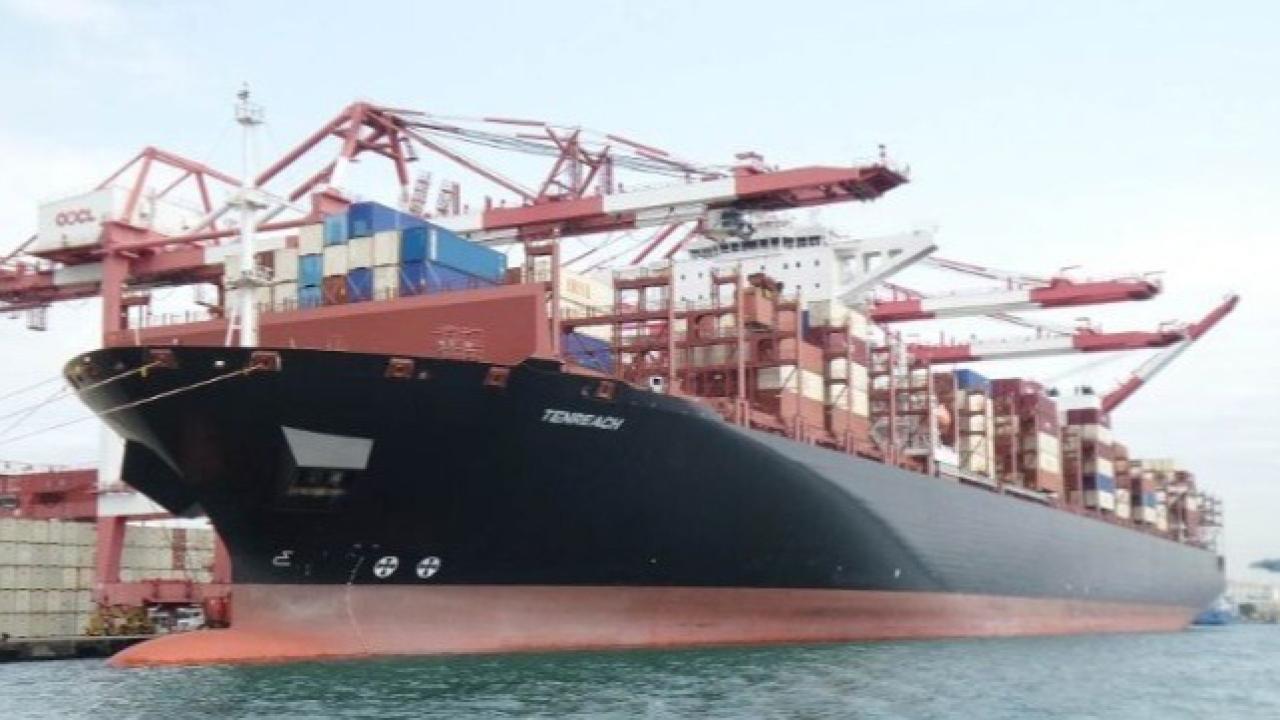
Iran's state-owned shipping fleet thrives despite U.S. sanctions, with increased port activity and oil shipments resuming to India.
The Iranian Islamic Republic Shipping Company (IRISL), which is under U.S. sanctions, and its subsidiaries dominate the Iranian commercial fleet. The ongoing war has not created an exception for this situation, as the fleet's activities continue uninterrupted.
The most concrete indication of this situation is the congestion at Iranian ports. Following the war that began on February 28, more than 20 cargo ships entered and exited Bandar Abbas Trade Port on a daily average throughout March. For instance, on April 4, the number of ships that docked at the port was recorded as 22. Outside the Gulf, at Chabahar Port near the Pakistan border, there were 10 ships as of April 5, while in recent weeks, an average of 2-3 ships have been seen entering and exiting the port daily.
The sharp increase in oil and LNG prices following the outbreak of war has also accelerated tanker traffic. It has been observed that Iranian-flagged tankers, also referred to as the 'dark fleet,' continue to transit through the Strait of Hormuz. One notable development in this activity is the resumption of Iranian oil deliveries to India for the first time since May 2019. This shipment was carried out under the 30-day waiver granted by the U.S. for purchasing Iranian oil at sea. It is estimated that the first delivery may have been made by Ping Shun (IMO 9231901), which is subject to OFAC sanctions. The ship loaded 600,000 barrels of crude oil from Harg Island on March 4 and reported its destination as China.
On the other hand, it is reported that shipments of raw materials used in rocket fuel production from China to Iran are also ongoing. According to open sources, it is difficult to definitively identify the contents of the cargo transported among the containers. This situation becomes even more critical, especially when it comes to weapon systems or dual-use materials that violate United Nations Security Council Resolution 1929.
It is known that sodium perchlorate originating from China is shipped in containers and used in the production of ammonium perchlorate in Iran, which is one of the key components of solid-fueled ballistic missiles. The shipping model has been exemplified by IRISL's Golbon (IMO 9283033) and Jairan (IMO 9167291), which loaded from China and discharged at Bandar Abbas at the end of March last year. It has been suggested that the major explosion that occurred at Rajaei Port in Bandar Abbas on April 26, 2025, could be linked to such a cargo.
Sodium perchlorate is reportedly converted into solid rocket fuel at Iran's Parchin facility, and this fuel is used in ballistic missile systems such as Khybar-Shikan, Fattah, Fateh-110, and Zolfaghar. It is also claimed that the same substance has been sent to the Houthis in Yemen and is included in the recently used Palestine-2 missiles.
Five IRISL ships operating on this route, all subject to OFAC sanctions, have reportedly reached Iran from China. The Hong Kong-flagged Barzin (IMO 9820269) departed from Zhuhai on March 2 and arrived at Chabahar on March 22. The Iranian-flagged Rayen (IMO 9820245) set sail on March 13 and docked at the same port on March 29. Shabdis (IMO 9349588) departed on March 2 and arrived at Chabahar on March 31. Zardis (IMO 9349679) left Zhuhai on March 21 and has not yet reached the port. Hamouna (IMO 9820271) headed directly to Bandar Abbas and anchored offshore on April 5.
Due to the incomplete railway connection from Chabahar to the interior regions of Iran, it is assessed that hazardous cargoes are being transported by road. Experts believe that transporting high-risk cargoes via Chabahar is seen as a lower-risk option compared to bringing them directly to Bandar Abbas.
Despite all these developments, while claims regarding the connection of these shipments to ballistic missile production continue, it is noteworthy that China and Iran continue to transport sodium perchlorate on this route. However, the non-utilization of railway lines suitable for container transportation extending from China through Turkmenistan to Iran demonstrates the parties' confidence in the existing maritime route despite the risks involved.
Source: SeaNews Türkiye


