
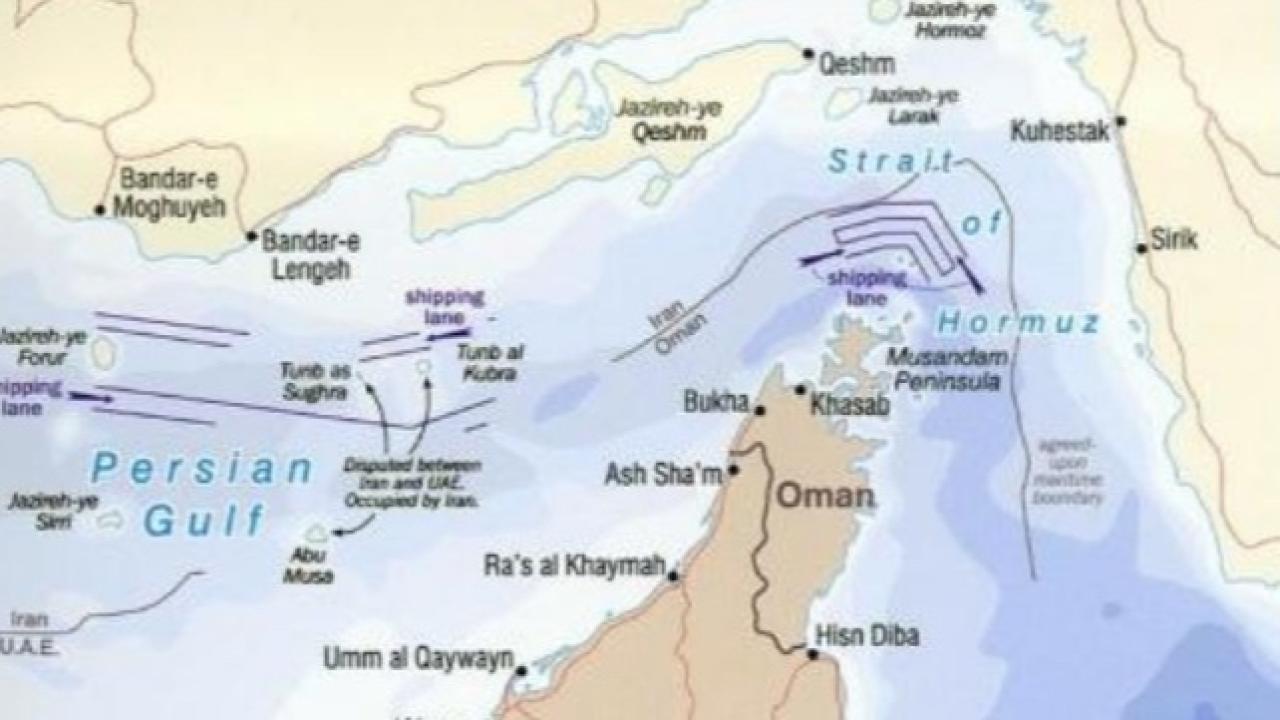
Iran's maritime authority has revised the traffic scheme in the Strait of Hormuz to mitigate collision risks with naval mines amid ongoing tensions.
The Iranian maritime authority has published a revised traffic separation scheme for the Strait of Hormuz with the aim of 'preventing possible collisions with naval mines.' Intelligence sources have claimed that Iran laid up to a dozen mines in the strait last month; however, this claim has not been verified and remains contentious.
In a statement made through the Islamic Republic of Iran Broadcasting, the Iranian Ports and Maritime Organization stated, 'Due to the state of war in the Persian Gulf and the potential presence of anti-ship mines in the main traffic area of the Strait of Hormuz, vessels must operate in coordination with the Islamic Revolutionary Guard Corps Navy and utilize designated routes.'
Traffic flow redirected
Under the new plan, traffic coming through the route monitored by the Islamic Revolutionary Guard Corps, referred to as the 'Tehran transit point,' is being redirected between Qeshm and Larak Islands.
The newly designated lane for vessels exiting the strait passes just south of Larak Island, within Iranian territorial waters, and allows for the escort, control, and vessel identification activities of the Islamic Revolutionary Guard Corps elements to be conducted easily.
'Transit prohibited' danger zone
On the published map, an area that was previously used for open sea navigation has been marked as a 'danger zone where transit is prohibited.'
It is noted that the coordinates of this area encompass the existing traffic separation scheme established by the International Maritime Organization and include the waters just off the northern tip of the Musandam Peninsula.
Contradiction with Oman route
The warning area appears to also encompass the newly opened maritime route at the southern end of the strait, which is managed by Oman. This situation is considered to be in clear contradiction with the long-discussed Oman-Iran agreement regarding transit through Omani territorial waters.
Limited traffic despite ceasefire
Although the U.S. and Iran have announced a ceasefire and the easing of navigation restrictions, the Islamic Revolutionary Guard Corps continues to maintain effective control over the strait.
It has been reported that the number of vessels using the strait within the first 24 hours following the cessation of hostilities remained quite limited.
The continued management of the Strait of Hormuz by Iran, which was previously used as an open and unobstructed international transit corridor for all countries, is among the conditions presented by Tehran regarding its long-term peace plan.
Source: SeaNews Türkiye


