The Port of Santos faces a pivotal battle for the Tecon 10 terminal, impacting global trade and local businesses amid legal and regulatory challenges.
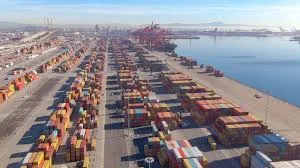
The Port of Santos, Latin America's busiest container gateway, has long anchored Brazil's connection to global trade. That standing remains at the center of a high-stakes contest over who will operate its next major terminal, Tecon 10 (STS10). Following legal challenges by AP Moller-Maersk that were dismissed by Brazilian federal courts, major ocean carriers are pivoting toward antitrust workarounds to secure a role in the auction. The outcome carries direct consequences for cargo owners, forwarders, and importers who depend on Santos for reliable, cost-controlled access to the region.
At issue is a regulatory framework established by Brazil's national port authority, Antaq, and backed by the Federal Court of Accounts (TCU). To prevent market concentration, the rules bar existing port operators and major ocean carriers from participating in the first round of bidding for the Tecon 10 project. Maersk's port arm, APM Terminals (APMT), holds a 50% stake in Santos' Brasil Terminal Portuario (BTP) facility alongside Terminal Investment Limited (TiL), the terminal division of Mediterranean Shipping Company (MSC). Under Antaq's framework, that joint stake excludes both APMT and TiL from entering first-round bids.
Maersk previously filed lawsuits in Sao Paulo seeking to overturn the restriction, but federal judges rejected the injunctions, affirming Antaq's authority to enforce the two-stage structure. The rule also restricts CMA CGM, which acquired a controlling stake in local operator Santos Brasil for approximately $1.1 billion, and DP World, effectively locking out the port's dominant incumbents from the initial tender.
Rather than relying solely on the courts, carriers have shifted strategy. To navigate the divestment rules—which allow incumbents to bid in a second round or participate if they commit to selling conflicting holdings—APMT and TiL submitted a joint restructuring proposal to Brazil's competition regulator, Cade. Under the plan, if either carrier wins the Tecon 10 concession, it will sell its 50% BTP stake to the other partner. Cade issued a favorable opinion on the restructuring, clearing a critical antitrust hurdle as the federal government weighs whether to allow conditional first-round participation ahead of an auction expected to take place between late 2026 and 2027.
The STS10 project would construct four new berths in the Saboo area of Santos, expanding the port's annual handling capacity by 3 million TEU and requiring a rail yard capable of handling 900 TEU per day. Against current throughput approaching full utilization, that additional capacity matters directly to businesses managing seasonal demand spikes, tight delivery windows, and inventory turnover. More berth capacity translates into greater route flexibility, reduced congestion risk, and stronger safeguards against disruptions that inflate total landed costs.
The financial threshold for the project has also risen significantly. Directives from Brazil's presidential staff doubled the concession floor to R$1.044 billion, signaling both the project's multi-billion-reais scale and the strategic weight the government places on the terminal. A higher floor narrows the field to operators with the capital and operational depth to deliver reliable long-term service.
For shippers, forwarders, and importers, the final structure of the Tecon 10 concession is more than a procedural debate. The identity of the eventual operator will shape berth availability, service reliability, and competitive pricing dynamics through Santos. A concentrated operator base can affect leverage on freight rates; expanded, well-run capacity can ease persistent bottlenecks and support faster, more predictable market entry.
Businesses managing long-term trade loops along the East Coast of South America have a clear stake in how regulators finalize the tender notice. Reliable transit schedules, real-time visibility, and route flexibility all depend on the infrastructure decisions currently being finalized in Brasilia and Sao Paulo.