
The IMO has paused evacuations in the Gulf following an attack on a container ship near the Strait of Hormuz, amid IRGC warnings.
The International Maritime Organization (IMO) has halted evacuations in the Persian Gulf following an attack on a container ship.
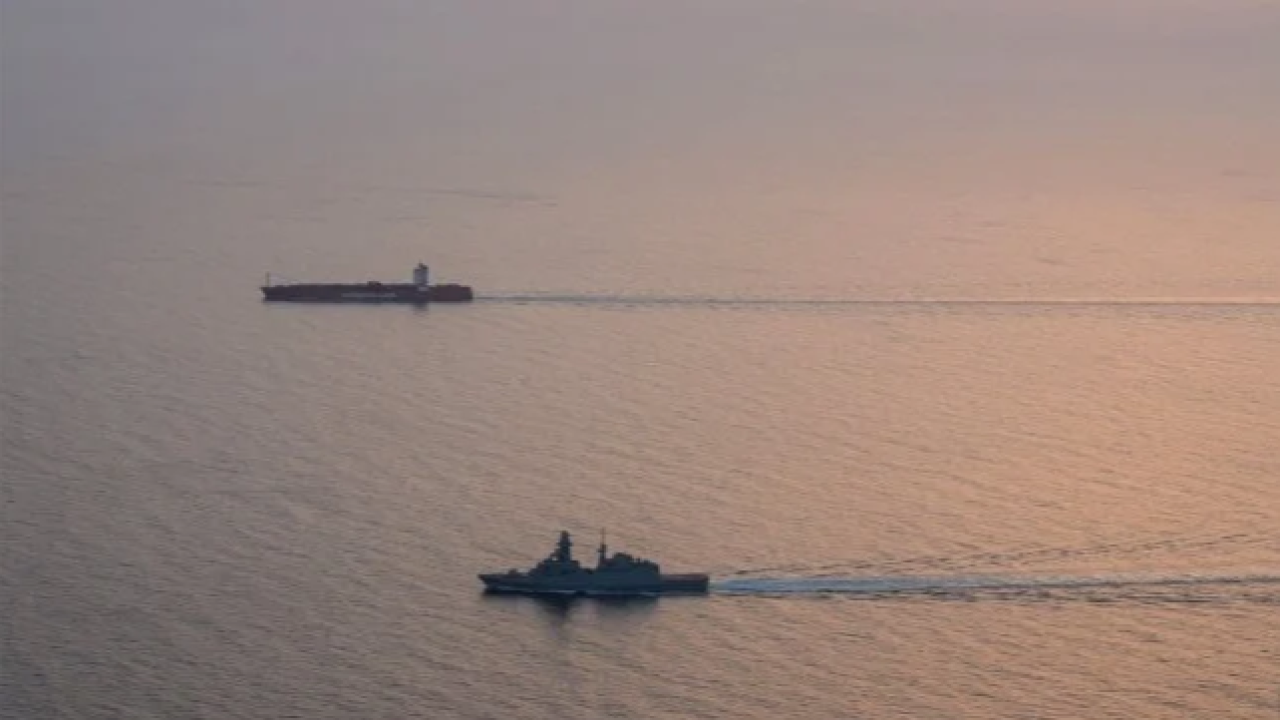
It was reported that an object struck a container ship sailing in a region near the eastern exit of the Strait of Hormuz, south of Oman. While the details of the incident are still unclear, it is noteworthy that the attack occurred after warnings from the Iranian Revolutionary Guards (IRGC) for ships to use only the northern channel under their control.
The United Kingdom Maritime Trade Operations (UKMTO) stated in a report received from the ship's captain that the vessel was hit on the port side and that there was damage to the bridge. Initial assessments indicate that there were no casualties in the incident, which reportedly took place approximately 7.5 nautical miles southeast of the city of Dahit in Oman.
Claims of an attack on the Evergreen container ship at the exit of the Strait of Hormuz have emerged.
Maritime security companies Ambrey and Vanguard Tech announced that the attacked vessel was the Singapore-flagged Ever Lovely. Built in 2015 and part of the Evergreen Marine fleet, the ship has a carrying capacity of 104,357 dwt, a length of 335 meters, and a container capacity of 9,532 TEU. According to security sources, Ever Lovely was one of three Evergreen vessels attempting to leave the Persian Gulf.
The ship's AIS data indicates that it continued its voyage and was heading towards the waters off Fujairah in the United Arab Emirates. Evergreen Marine has not yet responded to media inquiries regarding the incident.
The International Maritime Organization (IMO) announced that the attacked vessel was not operating under the evacuation program conducted by the IMO. The organization reported that it has decided to temporarily suspend evacuation operations until the security situation in the region becomes clearer.
IMO Secretary-General Arsenio Dominguez stated, 'We have temporarily paused operations to reaffirm the necessary security assurances for all vessels in the region, including those on our evacuation list.' Dominguez mentioned that they aim to restore safe navigation conditions by working in coordination with Oman and relevant parties.
The Iranian Revolutionary Guards had previously rejected the IMO's initiative to create an alternative transit corridor, claiming that only their controlled northern channel was safe. In a video circulating on social media, which has not been independently verified, a message purportedly belonging to the IRGC warned that they would hold responsible any vessels using alternative routes. According to unverified information, some ships changed their routes following this warning. The IMO also canceled a scheduled briefing for Thursday due to security concerns.
The attack occurred after Maersk and Hapag-Lloyd announced that they had safely removed their vessels from the Persian Gulf.
Maersk announced that its vessel Maersk Baltimore, with a capacity of 53,700 dwt, safely passed through the Strait of Hormuz. The company also stated that another vessel under a time charter agreement with Maersk had left the region. The transitions were said to have been carried out in accordance with comprehensive security assessments and recommendations from security partners.
The company reported that it still has three vessels in the Persian Gulf, and one more passage through the Strait of Hormuz is planned for one of them. Maersk also noted that out of 47,000 containers planned to be sent to the Gulf region, 44,000 had been delivered, and approximately 3,000 containers were awaiting their final shipment.
Hapag-Lloyd also announced that all company vessels affected by the temporary closure of the Strait of Hormuz and waiting to leave the Persian Gulf had safely exited the region. For security reasons, details regarding the names, routes, and passage times of the vessels were not shared.
In an announcement made in April, the company stated that it had four vessels in the region. In the latest update, it was noted that two vessels had left the region, one vessel had been transferred to another operator through sub-chartering, and another continued to operate within the Persian Gulf.
According to the IMO's latest update, as part of the evacuation operation initiated with Oman on June 23, a total of 57 vessels and approximately 1,100 seafarers have safely passed through the region so far.
Source: SeaNews Türkiye


