
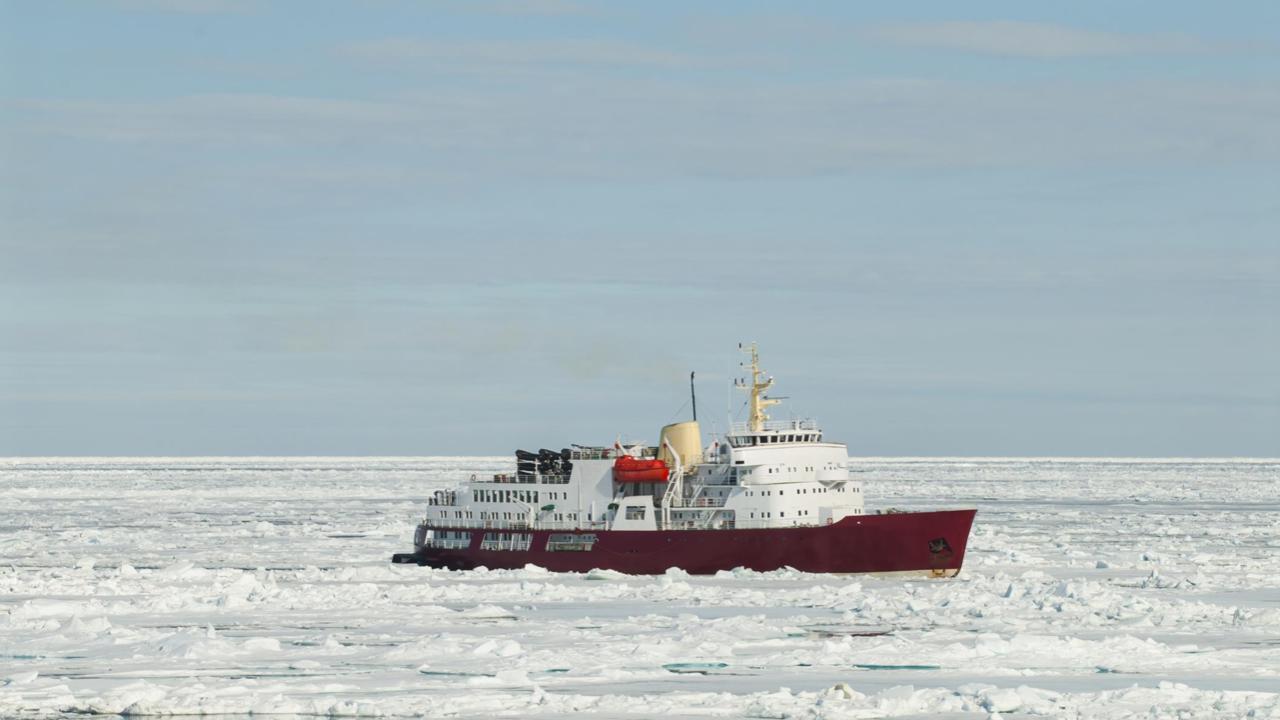
The Baltic Sea faces its harshest winter since 2010, stranding ships and increasing icebreaker demand amid severe ice conditions.
The Baltic Sea is experiencing the harshest winter conditions since the 2010-2011 season. Due to increasing ice formation across the region, many vessels have been unable to continue their voyages and have become trapped in the ice, leading to a peak in the demand for icebreaker ships.
Finnish authorities have denied media reports claiming that Russian icebreaker vessels have been called for assistance. However, they confirmed that Russian icebreakers are actively operating in the Gulf of Finland and that the icebreaker fleets of all countries are working at full capacity this winter.
LNG Shipments Delayed
Reports of strong ice formation first emerged from the coasts of Germany. Delays have particularly been experienced in LNG deliveries; without the icebreakers opening channels, it has been impossible for cargo ships to reach the ports. Similar situations have been reported at various points in the Baltic Sea and in the Gulf of Finland, including ports in Russia, Estonia, and Finland.
On February 26, the Finnish Transport Infrastructure Agency acknowledged that many cargo ships are trapped in the ice both in international waters and in Finnish territorial waters. The agency reported that a wide ice cover has formed in the Gulf of Finland due to extreme cold weather and weak winds, and that an increase in wind could further complicate ship traffic with ice masses.
Ice Cover Above 30-Year Average
According to reports from the region, the ice cover has reached 181,000 square kilometers, exceeding the 30-year average and reaching the widest level in the last 15 years. In a normal winter season, this area hovers around 141,000 square kilometers.
Authorities indicate that the most severe conditions are typically observed in early March and that the current situation could worsen in the short term. For comparison, in 2011, the ice cover reached 309,000 square kilometers, nearly covering the entire Gulf of Finland, with ice thickness reaching up to 70 centimeters in some areas.
As of today, the Gulf of Finland is completely frozen. Similar scenes are being witnessed in many small bays along the Finnish coastline. Authorities state that ice currents and winds are forcing vessels to navigate closer to the Finnish shores.
Russia's Nuclear Icebreaker Initiative
Rosatom announced that more than 80% of the Gulf of Finland is frozen and that the overall ice thickness is around 30-40 centimeters. The agency has deployed seven icebreaker vessels, including the nuclear-powered Sibir.
The primary mission of the Russian icebreakers is to escort oil tankers entering and exiting the Primorsk port. In mid-February, individual escort permits were being granted to vessels without ice protection to the ports of St. Petersburg. However, as of February 19, this practice was halted when the ice thickness reached 30 centimeters.
For first and second-class vessels navigating in ice thickness of 0.4 to 0.55 meters, icebreaker escort has become mandatory. Russian sources reported that some vessels have been delayed due to insufficient icebreaker capacity, and restrictions have also been imposed at the Ust-Luga port.
Rosatom General Director Alexey Likhachev stated that they are making intensive efforts to prevent a critical situation and that the nuclear icebreaker Sibir has been escorting oil tankers of 100,000 tons and above. Russian officials emphasized that Sibir, with its 60-megawatt dual reactor, can open a channel 33 meters wide, which is wider than traditional diesel-electric icebreakers.
Finland: All Fleet Active
On the Finnish side, it was announced that all ten icebreaker vessels in the country are actively on duty. Officials noted that Russian icebreakers primarily assist Russian vessels but indicated that support from Russians could be requested in Finnish territorial waters if needed.
Experts believe that ice formation will gradually decrease after peaking in early March. By the end of March, a return to a more normal navigation pattern in the Baltic Sea is expected. However, for now, the region is witnessing a challenging struggle between massive steel-hulled vessels and thick layers of ice.
Source: SeaNews Türkiye


