
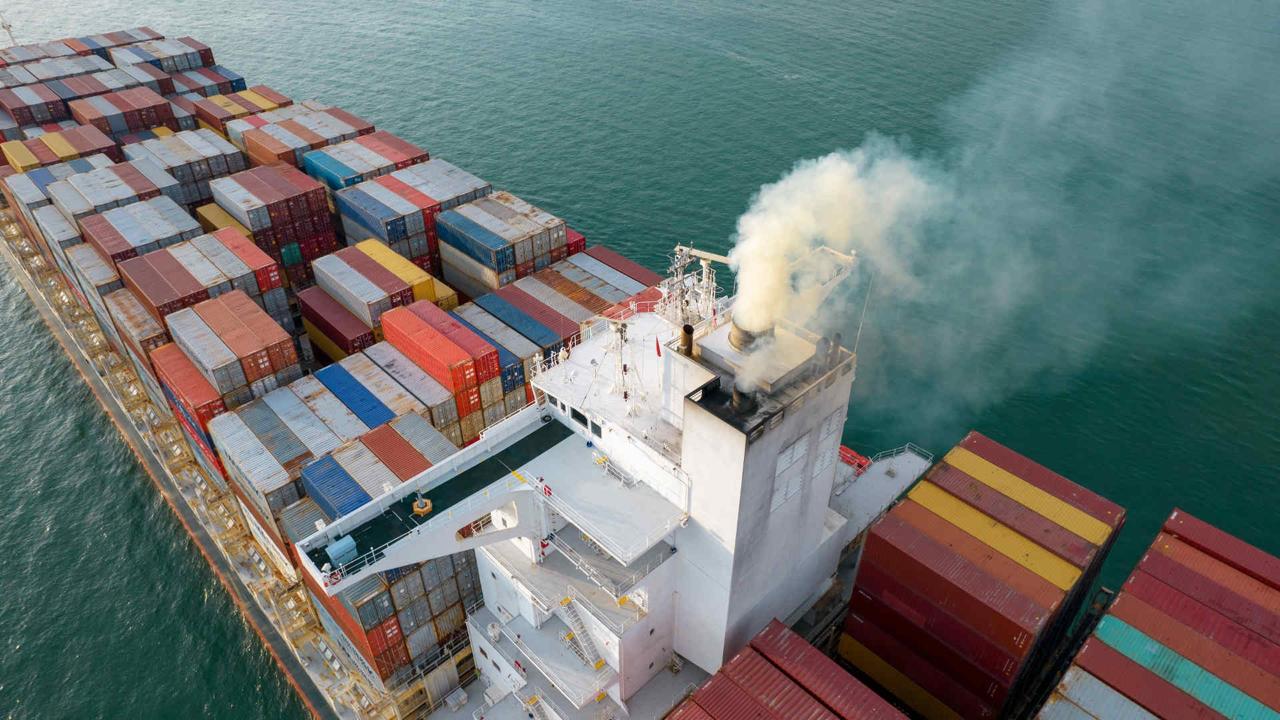
Greece and Saudi Arabia collaborate to oppose carbon tax at IMO, aiming to mitigate costs for the maritime sector as it targets net-zero emissions.
According to a report from Lloyd’s List, one of the respected publications in the global maritime press, Greece and Saudi Arabia, two key players in global maritime trade, have decided to act jointly in the carbon pricing negotiations being conducted at the International Maritime Organization (IMO).
This noteworthy rapprochement aims to create a balancing element against the billions of dollars in additional costs that the maritime sector will face while progressing towards the 2050 net-zero emissions targets.
Discussions on the IMO's Net-Zero Framework
According to the news, both countries share similar concerns regarding the global carbon tax plan that has been brought up under the IMO's Net-Zero Framework. The view that a uniform and high-rate carbon tax would lead to significant cost increases in global maritime trade is particularly prominent.
Greece, which has the largest commercial fleet in the world, is concerned that strict carbon taxes will increase pressure on shipowners, despite being a member of the European Union. The Athens administration argues that such taxes could reduce the attractiveness of European ports, leading to a shift in cargo and vessel traffic to regions outside the European Union.
Saudi Arabia, which plays a key role in global energy production, suggests that the carbon tax would negatively affect not only the maritime sector but also global food and commodity prices. According to the Riyadh administration, rising logistics costs pose a risk of increasing inflationary pressures, especially in developing countries.
Incentive-Focused Model Instead of Tax
The fundamental approach agreed upon by Greece and Saudi Arabia is to establish a system focused on incentives rather than a direct 'punitive tax' mechanism. In this context, a hybrid model that includes financial incentives for vessels investing in green fuels and low-carbon technologies is being supported.
Postponement of Carbon Pricing Vote
Under the leadership of Saudi Arabia and with Greece's abstention, the critical carbon pricing vote planned within the International Maritime Organization has been postponed from October 2025 to October 2026. During this period, both countries are expected to engage in intense diplomatic and sectoral lobbying efforts to reduce potential tax rates and narrow the scope of implementation.
Legal Authority Discussions on the Agenda
Saudi Arabia argues that it is legally debatable whether the International Maritime Organization has the authority to collect taxes globally under the MARPOL Convention. Greece supports this approach through the operational realities and implementation challenges on the ground.
New Fault Lines in Maritime Sector Deepening
Experts suggest that this cooperation further highlights the differences between countries in the maritime sector. The distinction between 'more ambitious' actors like European Union countries and Pacific island states regarding climate goals, and 'economically pragmatic' countries like Greece, Saudi Arabia, China, and the United States is expected to deepen in the coming period.
This scenario once again reveals that carbon regulations in global shipping have become not only an environmental issue but also a geopolitical and economic battleground.
Source: SeaNews Türkiye


