
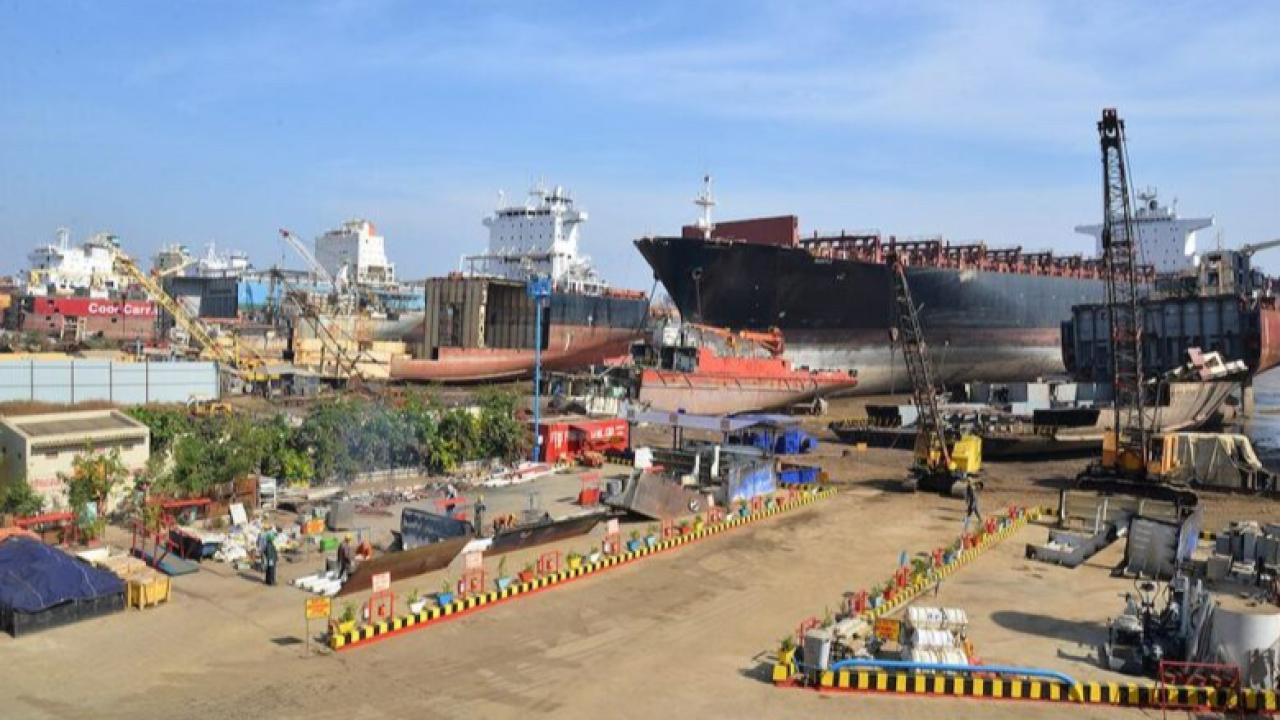
GMS urges the EU to recognize qualified Indian shipyards in the Ship Recycling Regulation, highlighting their compliance and environmental benefits.
One of the world's largest cash-for-vessels purchasing companies, GMS, has called on the European Commission to include qualified Indian ship recycling yards in the European List under the EU Ship Recycling Regulation (SRR).
The company emphasized that more than 110 shipyards in India possess the Hong Kong Convention (HKC) Compliance Declaration issued by members of the International Association of Classification Societies (IACS). However, it was stated that despite 35 official applications made over more than a decade and at least 10 inspections conducted by the European Commission, not a single Indian shipyard has been included in the European List to date.
GMS President Anil Sharma stated in a related announcement: 'This is not a failure of standards. It is not a failure of verification. It is a failure of political will.'
Alang's capacity exceeds that of Europe.
India has recycled over 8,500 ships in the last 40 years, recovering more than 67 million tons of steel. Alang, the country's largest recycling center, has an annual ship recycling capacity of 4.5 million tons. It is noted that this figure even exceeds the total capacity of all shipyards approved by the EU.
According to GMS's life cycle analysis, recycling steel in Alang generates 58% less CO₂ emissions compared to new steel production, and more than 98% of ship materials can be recovered.
The company also pointed out that many facilities in Europe melt down a significant portion of scrap steel and export it to Asia for reprocessing, which leads to additional emissions.
Transport emissions are also a topic of discussion.
According to GMS, directing ships to Europe also causes a significant amount of carbon emissions. Accordingly:
Transporting a Panamax bulk carrier to Europe generates approximately 3,800 tons of CO₂ emissions.
Redirecting a large crude oil tanker an additional 3,000 nautical miles can result in an extra 600 tons of CO₂ emissions.
Modern facilities and environmental infrastructure.
The company states that modern Indian recycling facilities operate on concrete floors and with closed-loop drainage systems. Hazardous materials are managed under the Inventory of Hazardous Materials (IHM) and state-controlled disposal systems.
GMS emphasized that compliance should depend on infrastructure and inspections, not geography.
The Basel Convention is cited as an obstacle.
The main reason cited for the European Union's failure to list Indian shipyards is the Ban Amendment of the Basel Convention, which restricts the export of hazardous waste from OECD countries to non-OECD countries.
GMS argues that this regulation came into effect before India modernized its ship recycling sector. It is also noted that India ratified the Hong Kong Convention in 2019, ahead of many EU countries.
'15,000 ships are expected to be recycled by 2032.'
GMS called on the European Commission to:
Include qualified Indian shipyards in the European List,
Recognize the Hong Kong Convention as a global standard,
Resolve the contradictions between Basel and HKC through facility-based assessments instead of geographical bans.
On the other hand, according to BIMCO's projections, approximately 15,000 ships are expected to be recycled by 2032. It is anticipated that the recycling capacity in Europe will be insufficient to meet this demand.
It is stated that the ship recycling sector in India provides approximately 15,000 direct and more than 500,000 indirect jobs.
GMS Trade Officer Kiran Thorat criticized the European Commission, stating:
'The facilities in Alang have made significant investments, retrained thousands of workers, rebuilt infrastructure, and achieved one of the lowest life cycle carbon footprints on a global scale. They have passed repeated inspections and received certification from leading classification societies. However, the European Commission continues to refuse approval without providing a transparent justification. This undermines the credibility of the EU's own sustainability goals.'
Source: SeaNews Türkiye


