
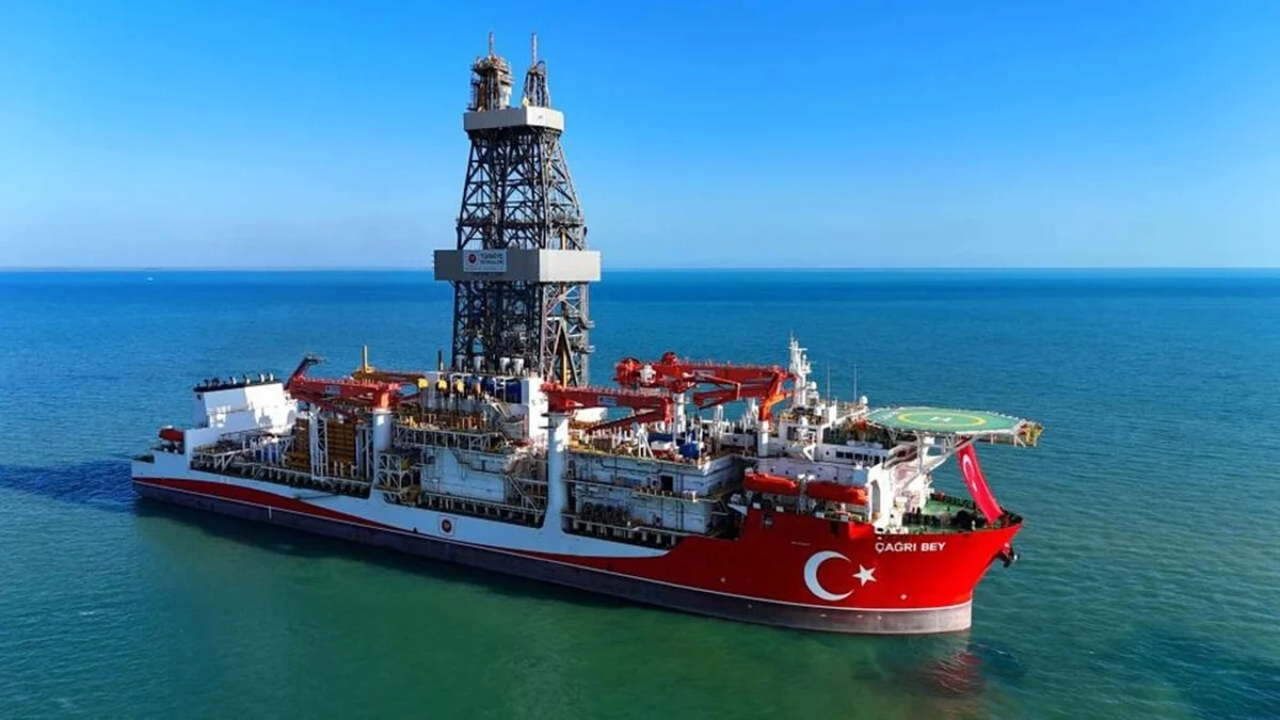
The Suez Canal saw the USS Gerald R. Ford transit smoothly, while Turkey's Çağrı Bey faces a 45-day detour due to height restrictions.
One of the most critical chokepoints in global maritime transportation, the Suez Canal has recently witnessed the contrasting fates of two massive vessels. The USS Gerald R. Ford, one of the largest and most modern aircraft carriers of the United States Navy, successfully navigated the Suez Canal despite its colossal size, heading towards the Red Sea and then the Persian Gulf. In contrast, Turkey's newest ultra-deepwater drilling vessel, Çağrı Bey, was halted by the canal's 'height' obstacle. The drilling vessel, which was sent off with great hopes from Mersin Taşucu to Somalia on February 15, 2026, had to change its route due to the fact that its 114-meter-tall drilling tower was not dismantled before departure. This technical necessity changed the vessel's route entirely, extending what would normally be a 12-day journey to a full 45 days.
Height Obstacle in the Suez Canal and Ford's Passage
The Suez Canal, which passes through Egyptian territory and connects the Mediterranean Sea with the Red Sea, is known as one of the lifelines of global trade. However, the bridges above the canal and the physical restrictions along the transit route impose extremely strict rules regarding the sizes and heights of vessels. The USS Gerald R. Ford, the largest aircraft carrier in the U.S. Navy, measures 337 meters in length, 78 meters in width, and 76 meters in height. Despite these enormous dimensions, the aircraft carrier managed to pass through the canal smoothly by staying within the navigation limits permitted by the Suez Canal Bridge or through special passage protocols. Aiming for the Persian Gulf, the U.S. vessel was able to continue its strategic course uninterrupted, bolstered by the increasing geopolitical tensions in the Middle East.
On the other hand, Turkey's pride, the ultra-deepwater drilling vessel Çağrı Bey, despite having dimensions of 228 meters in length and 42 meters in width that meet the standards to pass through the canal, fell victim to its operational equipment. The height of the drilling tower, which forms the heart of the vessel and allows it to penetrate the ocean floor kilometers below, reaches a staggering 114 meters. Considering the height limits for bridge crossings over the Suez Canal (the maximum passage height under the Suez Canal Bridge is approximately 68 meters), it becomes physically impossible for a vessel with a 114-meter structure to use this route.
How a 12-Day Distance Turned into 45 Days
Had the tower been dismantled, Çağrı Bey's normal route would have been quite clear and swift. The most direct path for a vessel departing from Mersin to reach the waters off Somalia is to enter the Suez Canal from the Eastern Mediterranean, cross the Red Sea, and pass through the Bab el-Mandeb Strait to the Gulf of Aden, ultimately arriving in Somalia. This route is approximately 2,500 nautical miles long. A modern vessel with an average speed of 16 knots (nautical miles) can comfortably complete this distance in about 12 days, taking into account the 8 knots speed limit in the canal.
However, due to the height of the tower, the Suez gates closed to Çağrı Bey, forcing the vessel to divert its route to one of the world's most challenging and longest sea paths. Under the new route, Çağrı Bey will traverse the Mediterranean from east to west to reach the Strait of Gibraltar. From there, the drilling vessel will head into the vast Atlantic Ocean, continuing its journey south along the western coasts of the African continent. After rounding the Cape of Good Hope, known for its fierce waves and storms in maritime history, Çağrı Bey will then ascend back north over the Indian Ocean to reach its mission site off the coast of Somalia. This massive intercontinental journey will quadruple the travel time to approximately 45 days.
A Historical Example: How Was Abdulhamid Han's Tower Overcome?
The navigation restrictions faced by drilling vessels due to their enormous towers are not a new situation for Turkey. Previously, Turkey's drilling fleet had undergone similar engineering and logistical challenges. The seventh-generation drilling vessel Abdulhamid Han, which is technologically advanced and measures 238 meters in length and 42 meters in width, encountered a similar problem while transitioning from the Mediterranean to the Black Sea. The Abdulhamid Han, which was set to operate in the massive Sakarya Gas Field in the Black Sea, needed to safely navigate under the suspension bridges of the Dardanelles and Istanbul straits after crossing the Sea of Marmara. However, since the height of the bridges over the Istanbul Strait is 64 meters above sea level, it was impossible for the vessel to pass with its 112-meter tall tower.
To overcome this obstacle, meticulous logistical planning was carried out, and the upper part of Abdulhamid Han's tower, measuring 56 meters, was carefully dismantled over several months at equipped facilities in İzmir Aliağa. After safely passing through the straits with its shortened tower, the vessel reached the Black Sea and docked at Filyos Port, where the reassembly of the dismantled massive parts was completed with special crane infrastructures set up there, preparing the vessel for its operations in the Black Sea.
In the case of Çağrı Bey, although the 114-meter height of the tower is removable, experts noted that this method was not preferred. Maritime and energy specialists believe that the lack of a massive port and crane infrastructure capable of precisely reassembling the tower in an African country like Somalia, where infrastructure options are much more limited compared to Turkey's coasts, influenced this decision. Considering the enormous operational risks and costs associated with reassembling a 114-meter technological drilling tower off the coast of Somalia, it is thought that the 45-day ocean journey emerged as a much more reliable and practical option.
Çağrı Bey's Historic Oil Mission in Somalia
The inability to cross the Suez Canal does not overshadow the significance of the historic mission undertaken by Çağrı Bey. As the newest representative of Turkey's vision for complete independence in energy, the vessel was sent off in a grand ceremony attended by President Recep Tayyip Erdoğan via telephone connection on February 15, 2026. During this voyage, which is considered a turning point as Turkey will conduct deep-sea drilling for the first time in international waters and in the waters of an allied country, President Erdoğan wished success to the crew, stating, 'We expect beautiful tidings and good news from Somalia.'
The operation, the details of which were shared with the public by Minister of Energy and Natural Resources Alparslan Bayraktar, possesses immense potential to fundamentally alter the energy balances in the region. According to Minister Bayraktar's statements, seismic studies conducted for over a year using artificial intelligence-supported analyses in the field and computer environments have pinpointed the locations with the highest indications of oil off the coast of Somalia.
The scale of the operation includes jaw-dropping engineering details. When the Çağrı Bey drilling vessel reaches the target area after its 45-day journey, it will first need to penetrate 3,480 meters of seawater (approximately 3.5 kilometers of water thickness) to reach the ocean floor with its drill. Then, the real challenge will begin; it will drill another 3.5 kilometers beneath the seabed to reach hydrocarbon reserves located a total of 7 kilometers below the surface. Extracting the oil believed to be present in the region and bringing it to international markets and the Turkish economy is regarded as a 'game-changing' step for both Somalia's economic development and Turkey's standing in the global energy league.
A Technological Giant by World Standards
The ultra-deepwater drilling vessel Çağrı Bey, which has to navigate the long and challenging African route, is among the few engineering marvels in the world due to its technological equipment. With a length of 228 meters and a width of 42 meters, the vessel is a massive floating factory equipped with advanced dynamic positioning systems that allow it to maintain millimetric precision even in the fiercest storms and currents of the ocean. The vessel's drilling technology, capable of reaching depths of up to 12,000 meters at full capacity, is a rare capability found on very few vessels worldwide. Additionally, according to striking data reported in the news, Çağrı Bey can reach speeds of approximately 56 kilometers per hour, possessing a surprisingly agile and powerful maneuverability at sea despite its massive size. This speed performance is one of the major factors preventing the 45-day route around the Cape of Good Hope from extending even further.
In conclusion, while the USS Gerald R. Ford aircraft carrier glides smoothly through the Suez Canal towards the warming waters of the Middle East, Turkey's civilian energy fleet is forging ahead through the turbulent waves of the Atlantic Ocean to build its future. Çağrı Bey, which will completely circumnavigate the African continent to reach Somalia, is making an unforgettable passage in Turkish maritime and energy history by choosing to cross the oceans instead of dismantling its tower. It is hoped that the good news from the giant vessel, which will reach its destination after approximately 45 days, will be worth every mile of this arduous journey.
Source: SeaNews Türkiye


