
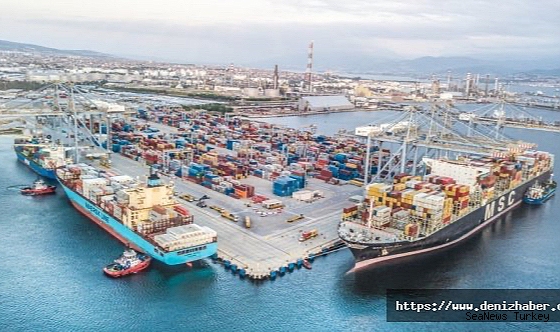
CARGO between Asia and the eastern Mediterranean grow, compensating feeble volumes in the western Mediterranean as this year's peak season brought only 422,000 TEU compared to the 415,000 TEU shipped in both May and June.
East Mediterranean Asian cargo surges as west Med region languishes
CARGO between Asia and the eastern Mediterranean grow, compensating feeble volumes in the western Mediterranean as this year's peak season brought only 422,000 TEU compared to the 415,000 TEU shipped in both May and June.
Much of the peak season cargo was destined to eastern Mediterranean, whose volume grew three per cent to 219,000 TEU, beating the much larger West Med, where France, Spain and Italy suffer hard times.
This took the eastern region's traffic during the first seven months of the year up to 1.4 million TEU, representing a year-on-year increase of 10 per cent, compared to the western Med's lacklustre two per cent uptime to 1.3 million TEU, according to Drewry Maritime Research.
The response of ocean carriers was to increase westbound vessel capacity by one per cent between June and July to 449,522 TEU, and then by another one per cent between July and August, largely through a reduction in the number of sailings cancelled.
Thus all vessels sailing from Asia to the Mediterranean remained at a healthy 93 per cent utilisation, helping carriers increase freight rates again on July 1.
Industry sources say that average vessel utilisation is now back below 90 per cent, which partly explains the downturn in rates at the beginning of September.
Containerised cargo shipped from the Mediterranean to Asia increased four per cent from June to July, up 186,000 TEU, spread evenly between the Eastern and Western regions.
This took the increase for the year up to a healthy 10.5 per cent, largely due to Eastern Mediterranean cargo increasing by 14 per cent, up to 600,000 TEU, putting it just ahead of the Western Mediterranean's 599,000 TEU (up seven per cent) for the first time.
The consequence of the westbound schedule changes is that the capacity of all vessels sailing from the Mediterranean to Asia also increased by one per cent between June and July, up to 335,400 TEU, and then by another one per cent between July and August to 338,000 TEU.
This meant that average eastbound vessel utilisation rose from a poor 51 per cent in June to a less poor 55 per cent in July, however this was not enough to stop ocean carriers fighting over market share through freight rate reductions, said Alphaliner. The rest of this year's peak season is likely to remain a non-event, forcing ocean carriers to continue cancelling sailings to maintain freight rate levels, it said.

