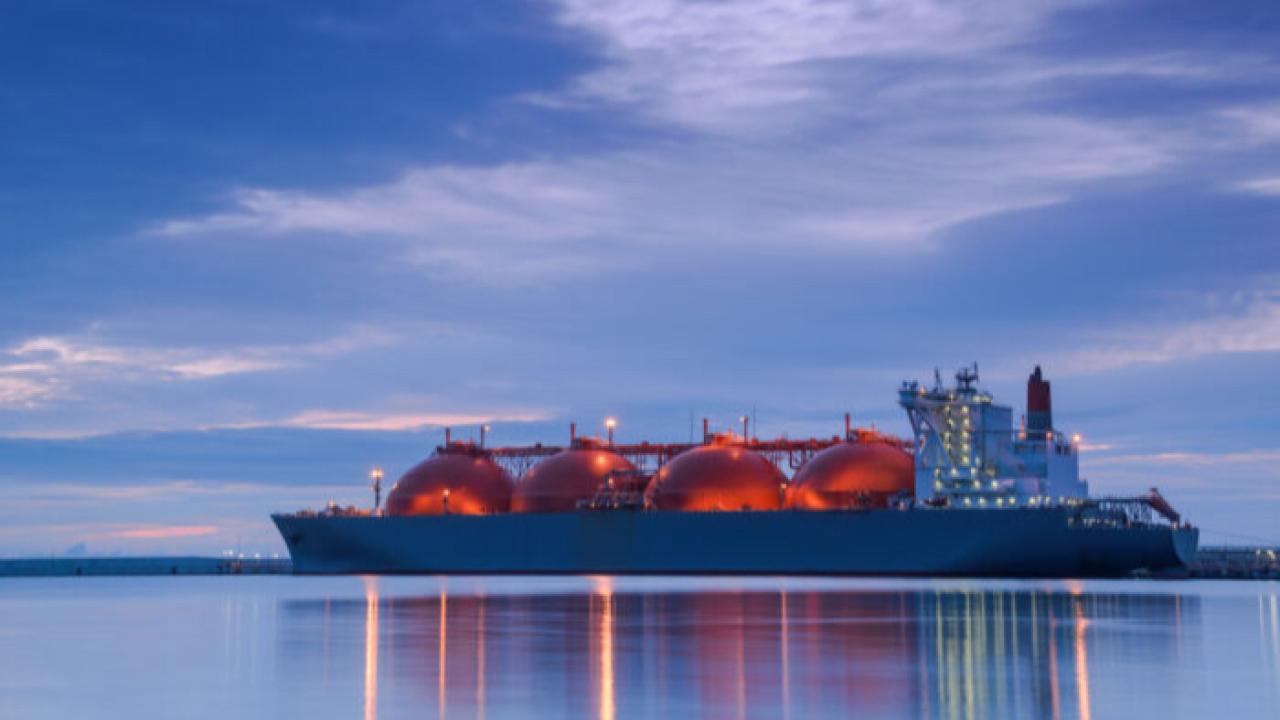
Container ship order volumes have reached their highest level since 2009, with Maersk and CMA CGM both committing to large-vessel acquisitions that reflect the industry's sustained appetite for fleet expansion.
Container ship order volumes have reached their highest level since 2009, with Maersk and CMA CGM both committing to large-vessel acquisitions that reflect the industry's sustained appetite for fleet expansion.
In mid-September, Maersk confirmed an order for 26 container ships of 18,600 TEU capacity, representing a combined capacity of approximately 483,600 TEU, with delivery scheduled between 2029 and 2030. The vessels form part of Maersk's ongoing fleet renewal programme and are all equipped with dual-fuel engines capable of operating on liquefied gas. According to The Loadstar, 20 of the ships will be constructed by China's Hengli Heavy Industry, with the remaining six built by New Times Shipbuilding.
This is not Maersk's first large-vessel order of the year. In February, the company signed a contract with New Times Shipbuilding for eight 18,600 TEU container ships, also scheduled for delivery in 2029 and 2030 - an order Maersk described at the time as part of its fleet renewal strategy.
According to The Loadstar, citing Linerlytica data, CMA CGM is planning to order 12 ultra-large container ships of 24,000 TEU capacity, fitted with dual-fuel propulsion systems and earmarked for delivery in 2029 and 2030. The prospective order would push CMA CGM's orderbook-to-fleet ratio to approximately 45%. Unlike Maersk's confirmed 26-vessel order, however, the CMA CGM order has yet to receive an official announcement and currently rests on industry media reporting alone.
The new orders placed by both carriers have further inflated an already sizeable global orderbook. Linerlytica data indicates that 1,925 container ships are currently on order worldwide, representing a combined capacity of approximately 15.6 million TEU. The orderbook-to-fleet ratio has now exceeded 45% - a level not seen since 2009 - and total ordered capacity has surpassed more than double the post-pandemic peak of 7.6 million TEU recorded in August 2023.
Expanded orderbooks are not confined to the industry's two largest operators. Sea-Intelligence data shows Maersk's orderbook equivalent to approximately 35% of its existing fleet capacity, Mediterranean Shipping Company and CMA CGM at around 39%, and COSCO Shipping reaching 52%. Certain mid-sized and smaller shipowners have committed to orders that already exceed the size of their current fleets. Lars Jensen, drawing on Alphaliner data, notes that five shipowners currently hold orderbooks larger than their existing fleets, with Vietnam's Hai An Transport carrying an orderbook equivalent to 368% of its present capacity.
Beyond new deliveries, a further variable is emerging. Splash247, citing industry analysis, notes that a portion of global container shipping capacity remains absorbed by extended voyages rerouted around the Cape of Good Hope. Should Asia-to-Europe services progressively resume transit through the Suez Canal, the shorter routing would release vessels previously committed to the longer diversion - adding a layer of existing capacity back into the market on top of new deliveries.
As a substantial wave of new tonnage converges on the 2029-2030 delivery window, carriers face evolving decisions around capacity deployment, route realignment, and competitive positioning for market share. Orderbook size, however, represents only one variable in a more complex equation. The factors that will ultimately determine freight rates and space availability include the pace of vessel deliveries, route deployment strategies, scrapping activity, the trajectory of Suez Canal resumption, and shifts in global cargo volumes. What is clear is that global container ship orders have reached their highest point since 2009, and the volume of new capacity set to enter the market over the coming years will stand as one of the defining commercial questions of the decade ahead.