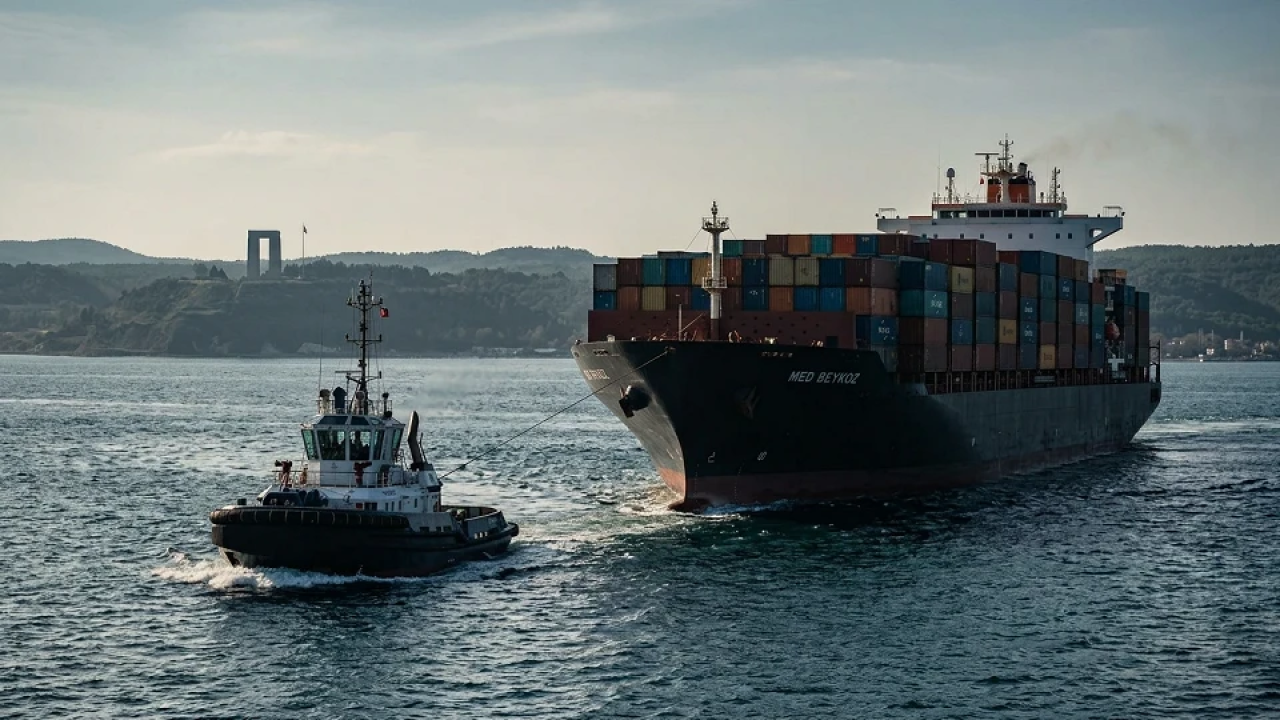

CMA CGM is projected to overtake Maersk as the second-largest container line by 2027, reshaping the global shipping landscape.
CMA CGM is on course to overtake Danish rival Maersk as the world's second-largest container line in 2027, according to container shipping analyst Linerlytica. The firm estimates that just 150,000 TEU now separates the two carriers' fleets.
The shift would move the Marseille-based carrier into second place in the global rankings, behind Geneva-based Mediterranean Shipping Co (MSC). It would also end Maersk's long run as one of the industry's top two operators. For cargo owners and logistics providers, the change reflects a broader rebalancing of capacity among the largest carriers, with possible effects on contract negotiations, service networks, and freight rates.
Alphaliner fleet data published this week puts Maersk's operated capacity at 4,710,206 TEU across 745 vessels. CMA CGM operates 4,478,516 TEU across 726 vessels. That leaves a gap of 231,690 TEU, which is notably wider than Linerlytica's 150,000 TEU estimate. The reason for the difference has not been explained, although fleet counts from different analysts often vary in timing and method.
On these figures, Maersk holds 13.5% of global container capacity, and CMA CGM holds 12.9%. MSC remains far ahead with 7,483,832 TEU, or 21.5% of the world fleet, while China's COSCO Group ranks fourth with 3,702,476 TEU.
The two carriers' fleets are built differently. CMA CGM owns 3,015,731 TEU of its capacity and charters 32.7% of its fleet. Maersk owns 2,943,996 TEU and charters 37.5%. As a result, CMA CGM already owns more container capacity than Maersk, even though its total operated fleet remains smaller.
The forecast matches the goal set by CMA CGM chairman and chief executive Rodolphe Saade. In July, he outlined plans to overtake Maersk by the end of 2027. Earlier projections suggested the ranking change could come as soon as July 2027.
CMA CGM is a privately owned shipping and logistics group founded by Jacques Saade in 1978. Alongside container shipping, it operates container terminals, logistics services, and air cargo.
The French carrier added 235,500 TEU of capacity in the first half of 2026. That 5.7% increase was the strongest growth recorded among the world's 10 largest container lines.
New deliveries during the period included the French-flagged, 24,212 TEU CMA CGM NOTRE DAME. The vessel is the first in a series of 10 containerships powered by liquefied natural gas (LNG).
CMA CGM has more capacity on the way. Alphaliner data shows an orderbook of 1,682,676 TEU across 164 ships, equal to 37.6% of its existing fleet.
Maersk is also investing in its fleet. The company has ordered 26 dual-fuel containerships of 18,600 TEU each, adding up to about 483,600 TEU of new capacity. However, those ships are scheduled for delivery in 2029 and 2030, after the expected change in the rankings. Maersk's total orderbook stands at 1,802,522 TEU across 137 vessels, or 38.3% of its current fleet.
The Danish group, founded in 1904 and publicly listed, runs businesses in ocean transport, logistics, and terminal services. Its third-quarter results showed mixed performance. Container volumes in its Ocean division fell 0.8% year on year, while the division's operating margin improved to 20.6%. Group EBITDA (earnings before interest, taxes, depreciation, and amortization) rose to $4.7 billion, up from $2.7 billion a year earlier.
Maersk also raised its full-year profit guidance. Even so, the results announced on November 5 fell short of market expectations, and Maersk shares dropped more than 10% afterward.
The race for second place is unfolding as the global containership orderbook reaches 48% of the existing fleet. The world fleet currently totals more than 35 million TEU across 7,681 active ships. The size of the orderbook has raised concerns about future overcapacity, which typically puts downward pressure on freight rates once new ships enter service.
For now, congestion at European and Middle Eastern ports—combined with ongoing vessel diversions around the Cape of Good Hope—is helping to absorb surplus tonnage. Ships held up at crowded terminals or sailing longer routes effectively remove capacity from the market, supporting freight rates. However, any broader return of vessels to Suez Canal transits would shorten Asia-Europe voyages and release tied-up capacity back into the market.