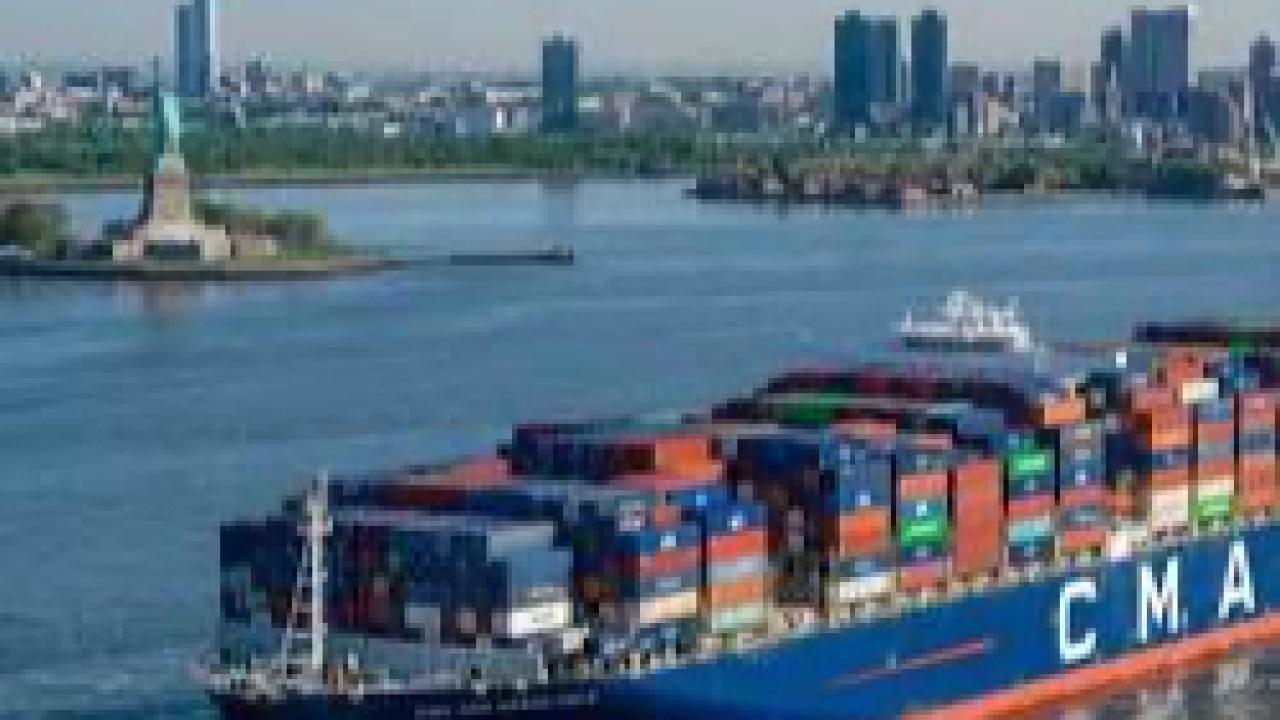

CMA CGM restructures its Far East-to-Manaus transport, consolidating cargo onto SEAS 2 and BRACO services via Rio de Janeiro.
CMA CGM has announced a restructuring of its Far East-to-Manaus transport arrangement. Cargo bound for Manaus will be consolidated onto the SEAS 2 service, replacing the existing PEX2 routing. Under the revised scheme, Rio de Janeiro serves as the transshipment hub, connecting to the BRACO service for onward carriage to Manaus. CMA CGM confirms that the arrangement is managed and operated directly by the group, with the routing designed to operate independently of the Panama Canal.
The revised routing is built around two services operating in tandem. SEAS 2 provides weekly mainline coverage connecting major export ports across northern, central, and southern China, with a port call at Rio de Janeiro to serve Manaus-bound cargo. BRACO operates as a weekly regional South American service, with dedicated capacity allocated to the Manaus corridor; the sea transit from Rio de Janeiro to Manaus is approximately 11 days. Upon arrival at Rio de Janeiro, Far East export cargo transfers to the BRACO feeder for final delivery to Manaus. For freight forwarders, the revised routing shifts the transshipment point to Rio de Janeiro, requiring a full recalculation of end-to-end transit connectivity and estimated arrival times under the new service combination.
CMA CGM has also confirmed the cutover sailings between the outgoing and incoming arrangements. The final vessel to carry Manaus cargo on the PEX2 service is the CSCL LONG BEACH, voyage PEX0B0E19, commencing its voyage from Vung Tau, Vietnam, on 18 November 2026. The final sailing on the existing Manaus shuttle feeder is the CMA CGM ALEXANDRIA, voyage MAS0Y0S19, with an expected arrival in Manaus on 20 January 2027.
The first vessel on the new SEAS 2 service to assume Manaus cargo responsibility is the COSCO SHIPPING BRAZIL, voyage SE2080W19, scheduled to depart Qingdao, China, on 4 December 2026. The sailing schedule indicates that the new arrangement will not wait for the existing feeder to conclude its final calls before activating; SEAS 2 will begin carrying Manaus cargo ahead of the outgoing feeder's completion, establishing a concurrent transition period during which both routing paths will operate in parallel.
Following this adjustment, all Far East-to-Manaus cargo will be consolidated within the SEAS 2 and BRACO service combination. Particular attention is required during the transition period with respect to the applicable voyage for each booking, the Rio de Janeiro transshipment connection, and final port arrival timing. For shipments already in transit or with confirmed space allocations, direct verification with the local CMA CGM agent is advised to avoid any continuation of planning based on the original PEX2 routing. Given the parallel operation of both paths during the transition window, freight forwarders should confirm the actual carrying voyage on a booking-by-booking basis when quoting and committing delivery timelines to customers, so as to prevent discrepancies in delivery expectations arising from the concurrent schedules.