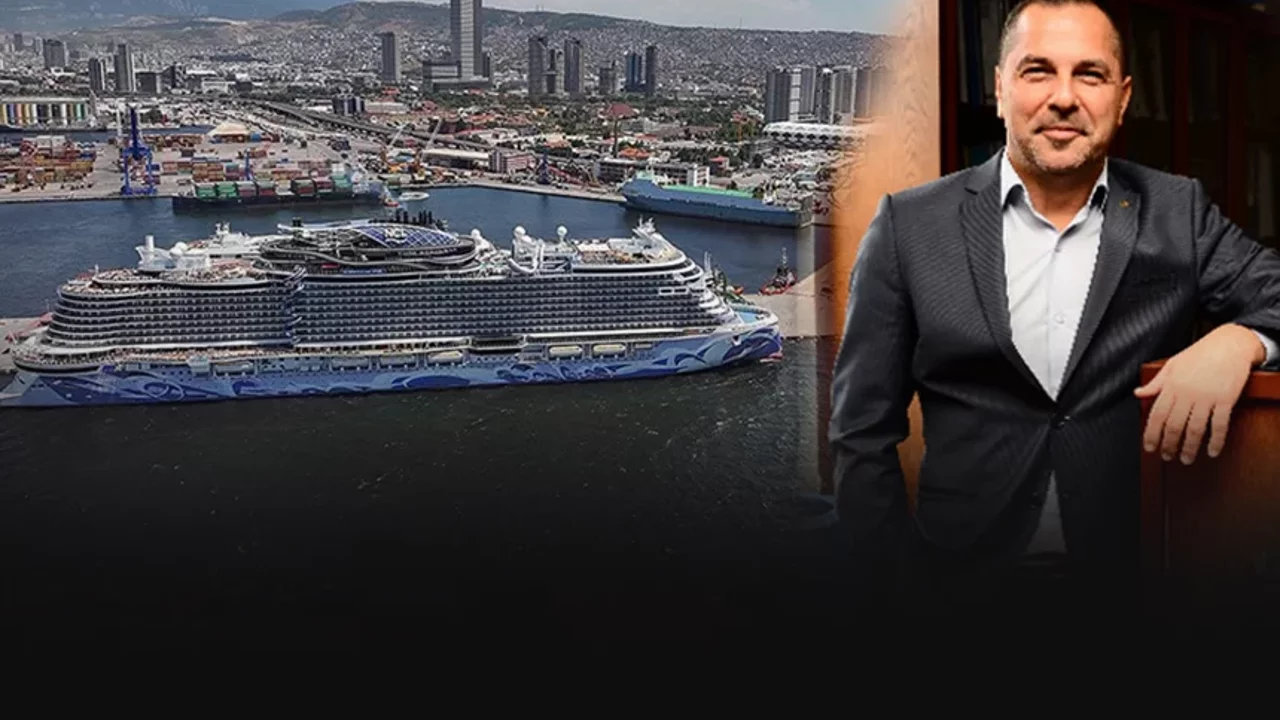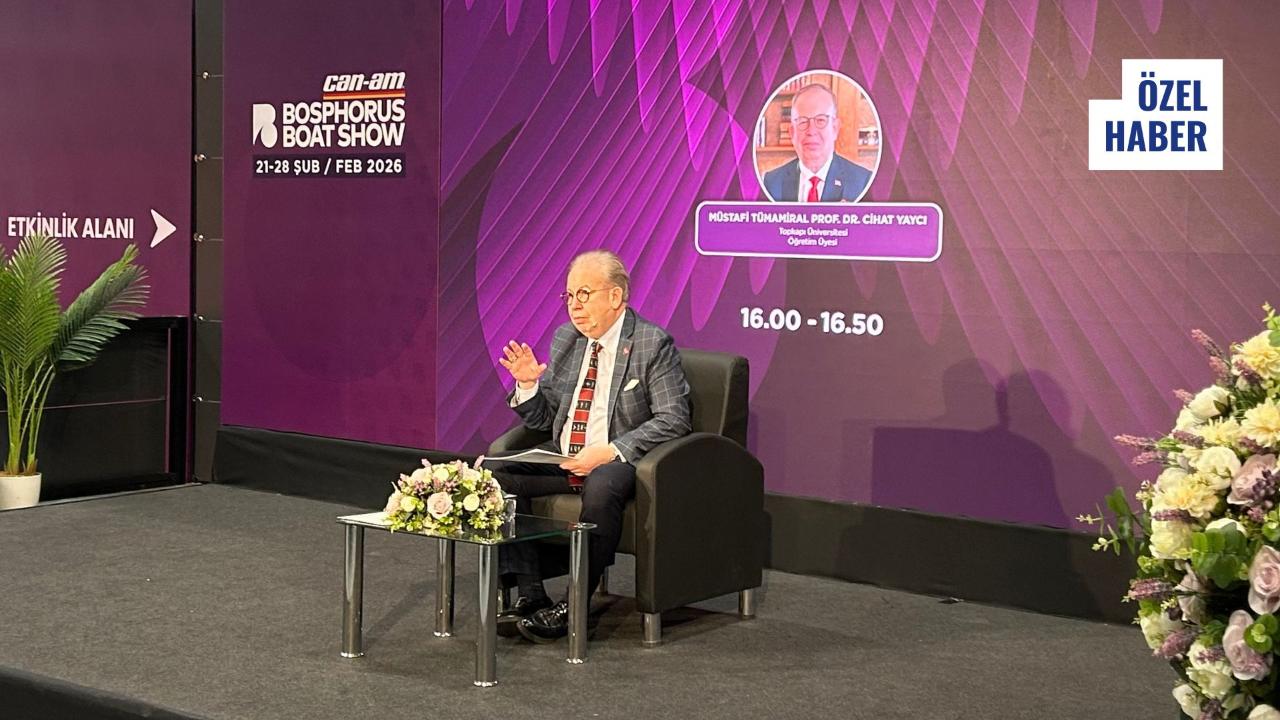
Prof. Dr. Cihat Yaycı urges marina discounts for Turkish-flagged vessels at the Bosphorus Boat Show, highlighting civil maritime's significance.
At the Bosphorus Boat Show, the architect of the concept of Blue Homeland, Prof. Dr. Cihat Yaycı, emphasized the critical role of civil maritime in national sovereignty. Highlighting that civil maritime traffic is the deed to the Blue Homeland, Yaycı called for urgent incentives and marina discounts for Turkish-flagged vessels, stating, 'You cannot become maritime without yachts.'
The fourth day of the Bosphorus Boat Show, which opened its doors in Istanbul, was marked by the striking conference 'Blue Homeland and Yachting' by Retired Admiral Prof. Dr. Cihat Yaycı. He pointed out that our maritime sovereignty can be protected not only by military power but also through civil maritime activities, expressing that the yacht sector is not merely a luxury or tourism item, but a direct 'issue of civil sovereignty.'
'Without Yachts, One Cannot Become Maritime; Civil Maritime is the Deed of the Blue Homeland'
In his speech, Yaycı delved into the geopolitical importance of civil yachting, stating, 'The navy holds the sea, but yachting sustains it.' He identified three fundamental ways to demonstrate presence at sea (military presence, economic activity, and civil maritime traffic) and issued a clear warning:
'The sea you do not go to is not yours. Without yachts, our civil vessels cannot navigate those waters. If we have a civil presence at sea, the legal claims of the opposing side weaken. If we have no presence, both our legal claim weakens and the opposing side's claim strengthens. As the number of Turkish-flagged yachts increases and Turkish ports are utilized, that sea becomes a living sea.'
Paradox: We Are a Global Giant in Production, Yet We Are Absent in Usage
The bitter reality of Turkey's yachting industry was also presented with figures during the conference. Yaycı reminded that shipyards in centers such as Tuzla, Yalova, Antalya, and Bodrum export approximately $2.5 billion annually and that Turkey ranks among the top three in the world for superyacht production, while pointing out deficiencies in usage and infrastructure:
Number of Boats: In Greece, with a population of 10 million, there are 250,000 registered boats, whereas in Turkey, this number is only 90,000.
Marina Infrastructure: Greece has over 150 marinas (four times our number), while Turkey has only 28 marinas.
Flag Ratio: Even in Marmaris, one of Turkey's most important yacht centers, the ratio of Turkish-flagged yachts is around 25%.
Yaycı stated, 'We are a strong producer on a global scale, but the vast majority of the yachts produced are registered under foreign flags. If a yacht produced with Turkish ingenuity does not carry the Turkish flag, it serves the sovereignty of others, not the Blue Homeland.'
Greece's 'DEKPA' Weapon: Aiming to Expel Turkish Yachts from the Aegean Sea
One of the most striking parts of the speech was the systematic exclusion policy that Greece applies to Turkish vessels. Yaycı recalled that while Greece grants free movement rights to vessels flagged by the EU, the US, and the UK, it only demands a mandatory sailing registration document called 'DEKPA' from Turkish vessels, noting that the rules are deliberately changed every season to impose fines.
Yaycı warned, 'This is not discrimination; it is a conscious exclusion policy. The goal is to erase the Turkish flag from the Aegean Sea. Due to these pressures, Turkish yacht owners are getting squeezed on our coasts and are trying to sell their boats due to inadequate infrastructure. This situation may not produce a military crisis, but it weakens our diplomacy in the long run.'
'Not Bosphorus, but Bosphorus!'
Yaycı also addressed the role of words and names in the struggle for sovereignty, recalling that Greece has vetoed the name 'Istanbul Strait' in NATO documents for years and could only write 'Strait' in the documents. Criticizing the name of the fair, Yaycı stated, 'Proper names do not have English versions. The English name for Bosphorus is not Bosphorus.'
Insisting on using the term 'Aegean Sea' instead of 'Islands Sea,' Yaycı pointed out that this name appears in the original texts of the Lausanne and Montreux Conventions, saying, 'Do not say Samos, say Sisam; do not say Kos, say İstanköy. Place names have a memory.' He further emphasized, 'To tell Turks to become maritime is an insult. We are a maritime nation with a 15,000-year history; the names Black Sea, Mediterranean, and Red Sea were given by Turks according to directions.'
Solution Prescription: Urgent Support Package for Local Yachters
Prof. Dr. Cihat Yaycı presented a concrete action plan to the relevant state institutions, which included the following proposals:
Marina and Mooring Discounts: State-supported marina and mooring discounts specific to Turkish-flagged yachts should be implemented urgently.
Complete Digitalization: The registration processes for Turkish-flagged yachts should be fully digitalized, and bureaucracy should be reduced to zero.
Reciprocity: Equivalent diplomatic responses should be given against restrictions like Greece's DEKPA.
Tax Incentives: Financing incentives should be provided for local buyers, and zero tax should be applied to producers for domestic sales.
Maritime Culture Mobilization: Incentive routes should be created along the Bodrum–Göcek–Marmaris–Çeşme line, and yachting should be socialized with amateur boat packages aimed at young people.
Source: SeaNews Türkiye