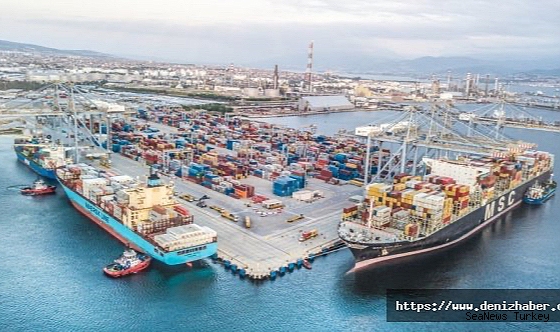
China's foreign trade value reached RMB 30.13 trillion in 2026, with exports up 14% and imports up 22%, highlighting strong domestic demand.
China's General Administration of Customs has released trade data for the first seven months of 2026, confirming that the country's total goods trade value reached RMB 30.13 trillion - a year-on-year increase of 17.3%.
Exports climbed to RMB 17.44 trillion, up 14%, while imports rose to RMB 12.69 trillion, up 22%. In July alone, total trade reached RMB 4.66 trillion, with exports at RMB 2.71 trillion and imports at RMB 1.95 trillion.
By trade structure, bonded logistics recorded the most rapid expansion at 40.8% growth, outpacing general trade (up 10.2%) and processing trade (up 26.3%). ASEAN retained its position as China's largest trading partner, with bilateral trade totaling RMB 5.14 trillion - a 20% increase - while trade with Belt and Road countries reached RMB 15.36 trillion, up 15.5%. China-US trade, by contrast, declined 1.6% to RMB 2.38 trillion. Private enterprises continued to anchor China's foreign trade activity, accounting for 57% of total trade value at RMB 17.16 trillion. Mechanical and electrical product exports led the commodity rankings, rising 21.2% to RMB 11.12 trillion, driven in particular by electric vehicles, lithium batteries, and integrated circuits.
Strategic Implications for Freight Forwarders and Cargo Owners
The sustained divergence between import growth (22%) and export growth (14%) signals strengthening domestic demand for high-end manufacturing equipment and premium consumer goods, positioning import logistics - particularly customs clearance, warehousing, and distribution for mechanical, electrical, and agricultural products - as a priority growth area. The 40.8% surge in bonded logistics, well ahead of general trade, reflects the accelerating scale of cross-border e-commerce and bonded stocking models, underscoring the strategic importance of bonded warehousing, overseas fulfillment, and parcel logistics capabilities. The continued outperformance of ASEAN and Belt and Road markets, set against the contraction in China-US trade, reinforces the case for route diversification and proactive capacity allocation across Southeast Asia and emerging trade corridors. Meanwhile, the growing share of high-value mechanical and electrical cargo demands elevated standards in temperature-controlled, anti-vibration, and dangerous goods handling. These developments collectively present both freight forwarders and cargo owners with a clear mandate: align operational capacity with where trade momentum is building, and build the specialized service depth required to capture it.