Turkey's seafood and animal products exports reached $4.046B in 2025, reflecting a 5% growth and significant industry expansion.
Turkey's seafood and animal products sector, which meets the protein needs of the world with three meals a day, increased its exports from $3.862 billion to $4.046 billion in 2025, marking a 5% growth.
Sinan Kızıltan, Chairman of the Sector Board of the Turkish Seafood and Animal Products Exporters' Associations, stated that they achieved an export of $1.184 billion in 2015. Over the last 10 years, they have increased the sector's exports by 123% to reach $4.046 billion, successfully becoming one of the star sectors of exports.
The seafood sector accounted for a 55% share of the total exports.
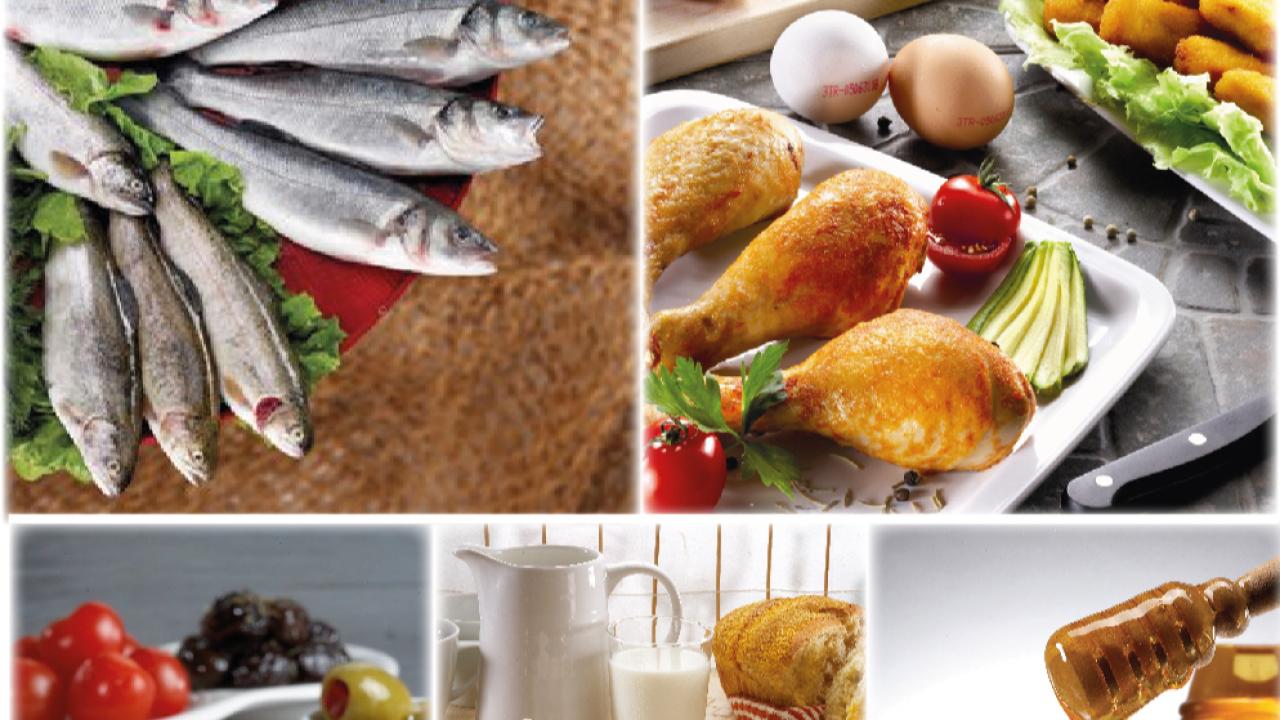
Kızıltan provided information that seafood took the largest share of exports in the Turkish seafood and animal products sector with $2.243 billion, stating, 'The share of seafood in the sector's total exports was recorded as 55%. Despite quotas and export restrictions, the poultry and egg sector managed to maintain its export amount at $1.120 billion with its performance. Poultry meat exports increased by 8%, rising from $671 million to $723 million, while egg exports experienced a 14% loss due to the fund introduced for exports in 2025, declining from $463 million to $397 million. The dairy and dairy products sector increased its exports by 13%, moving from $363 million to $409 million. The export of milk powder, which increased by 60% from $47.4 million to $78 million, became the locomotive of dairy products exports. Turkey, which ranks second in the world in honey production, signed a honey export worth $33.5 million in 2025,' he said.
The export target for 2026 is set at $4.3 billion.
Sinan Kızıltan announced that the export target for the sector in 2026 has been set at $4.3 billion. Kızıltan emphasized that the priority areas for increasing the sector's competitiveness in 2026 are the development of value-added exports, sustainability and traceability compliance, effective cost management, market diversification, and risk management.
Kızıltan stated that UR-GE Projects, the Turkish Seafood Turquality Project, planned participation in overseas fairs, and active roles in international organizations will contribute to the sustainable growth of exports, saying, 'With the positive contribution of these efforts, we aim to reach a target of $2.5 billion in seafood exports by the end of 2027. Especially increasing the share of processed, packaged, and branded products in exports will permanently strengthen export revenues.'
As the compliance requirements in markets, especially in the EU, increase, Kızıltan noted that sustainable production models have now become a necessity rather than a choice. He recorded that the importance of practices that provide efficiency in feed, energy, and logistics costs, as well as economies of scale, will further increase.
Kızıltan pointed out that establishing permanent trade networks in alternative markets to reduce excessive dependence on nearby markets will be the key to stability in exports. He stated, 'Animal diseases such as avian influenza, climate-related effects, and biosecurity practices will continue to be fundamental issues on the sector's risk management agenda. Investment and transformation steps that increase competitiveness in all sub-sectors, especially in the seafood sector, which has maintained its upward momentum in exports in 2025, will determine our performance in 2026. I am fully confident that our sector will continue to grow in 2026 with its production capacity, market experience, and entrepreneurial strength.'
Sea bass maintained its top position in exports.
Summarizing the performance of the seafood sector, the export leader Kızıltan stated, 'At the top of exports is the sea bass, referred to as the 'King of the Seas.' The sea bass export, which was $570 million in 2024, reached $666 million in 2025 with a 17% increase. The White Meat Prince, the sea bream, continued to follow the sea bass with a foreign exchange revenue of $585 million. The export increase of the sea bream, from which we obtained $507 million in foreign exchange revenue in 2024, was recorded as 15% in 2025. The Turkish salmon, a gift from the Turkish seafood sector to the world tables over the last 10 years, continued its export increase in 2025 as well. The export of Turkish salmon, which was $458 million in 2024, progressed to $521 million with a 14% increase in 2025. Our other seafood exports amounted to $193 million, tuna exports to $123 million, trout exports to $122 million, and rock bass exports to $32.7 million,' he concluded.
45% of seafood and animal products exports came from the Aegean Region.
The Aegean Seafood and Animal Products Exporters' Union increased its exports by 7% from $1.724 billion to $1.840 billion in 2025, realizing 45% of the sector's total exports alone and solidifying its top position.
Russia leads in seafood exports, while Iraq leads in poultry, eggs, and dairy products.
In Turkey's seafood exports, the Russian Federation ranked first with $466 million, while Italy continued to follow closely with a demand of $280 million. Exports to Italy increased by 17%. Exports to the Netherlands, a strong market for the Turkish seafood sector, were recorded at $229 million with a 35% increase. Following these countries were Greece, the United Kingdom, Japan, the United States, Germany, South Korea, and France.
Turkey's poultry meat exports reached $722 million, with Iraq maintaining its clear lead at $306 million. Syria saw a record increase of 557% in poultry meat exports, rising from $14 million to $92 million and moving up to the second place on the list. The United Arab Emirates secured the third place with a demand of $26.3 million for poultry meat.
Source: www.denizhaber.com