
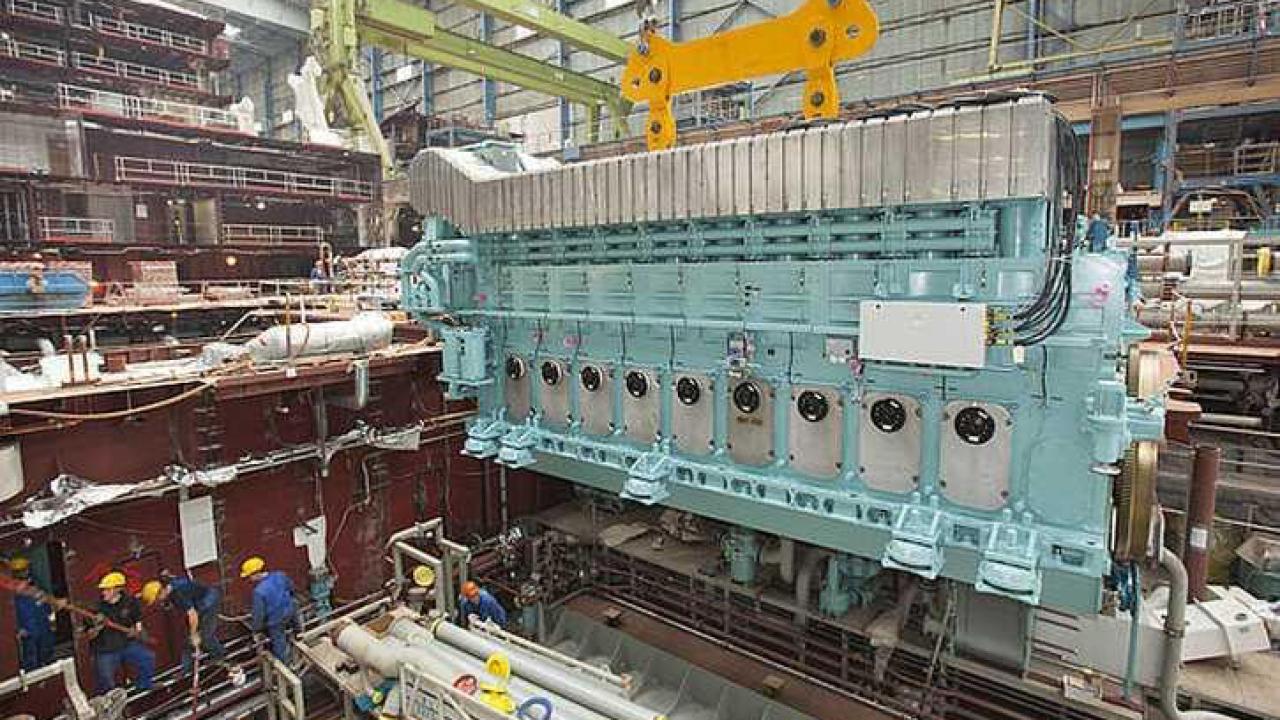
Shipyards face critical supply issues as AI demand strains marine engine production capacity amid the green transition.
Shipyards Compete with Artificial Intelligence: Major Bottleneck in Main Engines
The global shipbuilding industry is facing a critical supply issue as the pace of the green transition accelerates. According to an analysis by maritime news platform Splash24/7, demand for next-generation low-emission ship engines is exceeding production capacity, and manufacturers are now experiencing intense demand not only from shipyards but also from the artificial intelligence sector.
Artificial Intelligence Data Centers Become New Competitors
In recent years, the rapid growth of artificial intelligence applications has led to numerous large data center investments worldwide. The large power units and energy systems used to meet the continuous energy needs of these facilities rely on similar production capacities and supply chains as ship engines. Therefore, manufacturers are forced to share capacity between the maritime sector and artificial intelligence infrastructure projects.
Experts indicate that this situation is particularly extending delivery times for machine systems that require significant power and increasing wait times for new orders.
Delivery Times Are Lengthening
Production capacity limits have been reached, especially in eco-friendly ship engines that can operate with LNG, methanol, and other alternative fuels. As a result, machine delivery times are lengthening for new ship projects, and some shipyards are having to reorganize their production schedules and postpone delivery dates.
Industry experts note that the bottleneck in machine supply has become one of the most critical constraints in shipbuilding processes.
Green Transition Increases Pressure
In line with the international maritime sector's goals to reduce carbon emissions, shipowners are turning towards next-generation vessels that operate on alternative fuels. This transition has driven demand for eco-friendly ship engines to record levels, while manufacturers' existing capacity is insufficient to meet this demand.
Industry representatives predict that the supply bottleneck in ship engines will continue until new production investments come online, and that this will continue to impact global shipbuilding programs.
Source: SeaNews Türkiye


