
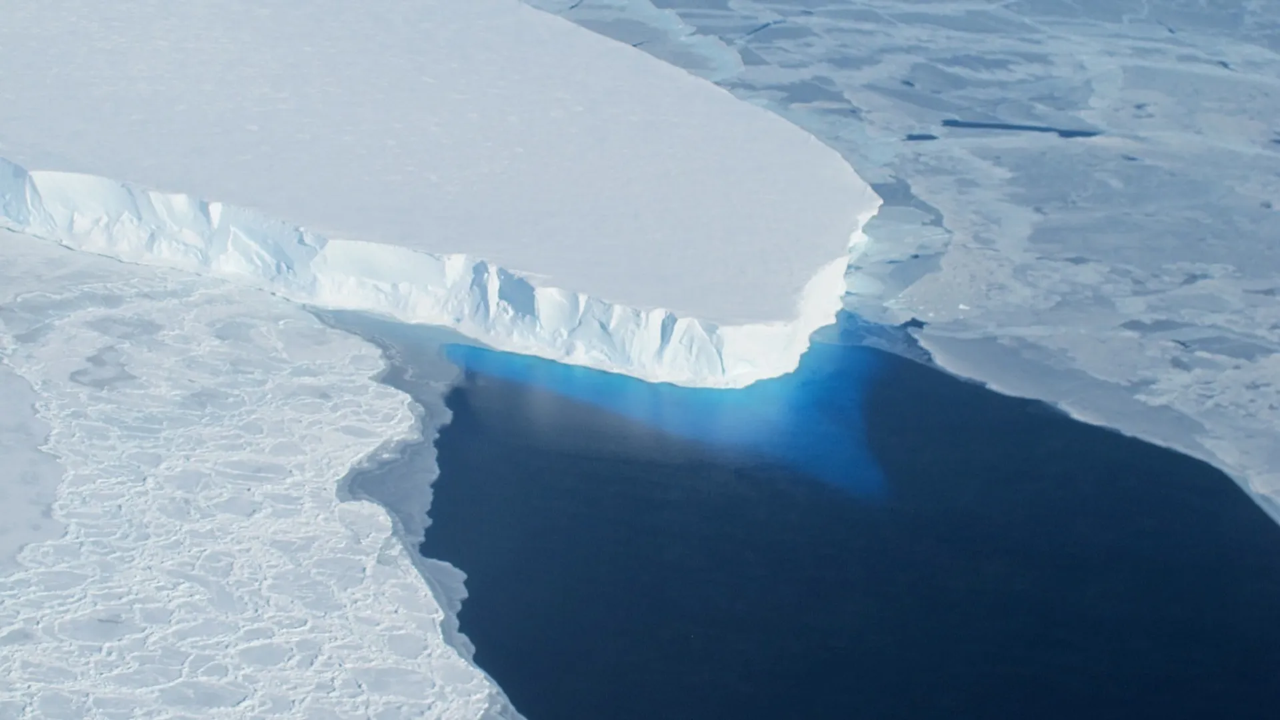
A team of 40 scientists embarks on an expedition to study the rapidly melting Thwaites Glacier, a critical symbol of climate change.
The massive ice mass known as the 'Doomsday Glacier' contains enough water to raise global sea levels by more than 60 centimeters if it completely melts.
A group of 40 scientists has embarked on a challenging expedition to closely examine the Thwaites Glacier in Antarctica, which has become one of the most dangerous symbols of climate change.
It has long been known that the Thwaites Glacier, roughly the size of the state of Florida, is rapidly melting. However, it remains uncertain how much this melting will accelerate and what it will mean for the planet. To find answers to these critical questions, approximately 40 researchers set sail for Antarctica from a port in New Zealand over the weekend.
Many experiments are planned for the expedition, but team members are aware that not everything will go as planned. Chris Pierce, a glaciologist from Montana State University, stated in an interview with the New York Times that the team aims to "X-ray" the Thwaites Glacier using airborne radar systems, saying, “We are prepared from Plan A to F.”
The only point on which scientists agree is that Thwaites is melting rapidly. The main uncertainty lies in how much this process will accelerate and how destructive its consequences could be.
Experts are concerned that the melting of Thwaites could trigger a broader catastrophe. The collapse of this glacier could destabilize the West Antarctic Ice Sheet as well. If this massive ice sheet, which is more than 1.5 kilometers thick in some areas, collapses, sea levels could rise by approximately 4.5 meters within a few centuries, potentially submerging a large portion of the planet.
Although this is seen as the "worst-case scenario," scientists emphasize that it cannot be ignored due to the seriousness of the possibility. Some findings suggest that a similar collapse may have occurred around 120,000 years ago.
Recent research has revealed that Thwaites is much more fragile than previously thought. One of the most concerning discoveries is that the lower part of the glacier, which was believed to be protected from warm water because it rests on the seabed, is actually exposed to warm seawater. Rising tides are causing the glacier to lift slightly from the seabed, allowing warm water to seep in and trigger "intense melting."
One of the most interesting experiments of the expedition relies on an unusual data collection method. Researchers will enlist the help of seals instead of robots. Sensors placed on these marine mammals will collect ocean temperature and salinity data and transmit it to satellites.
Source: www.denizhaber.com


