

Don't ask me when it was. When you find yourself alone in the middle of the sea, surrounded only by a vast body of water and the sky, time loses its meaning. Three thousand years ago or now... It doesn't make much difference; the sea is the same sea, the sky is always covered with the same stars: sometimes gray, sometimes black, and at times a deep blue velvet.
We had set sail from Haifa Port in Israel, and as soon as land became visible in the late afternoon, the barometer began to drop, signaling the approach of a violent storm. By midnight, the ship started to sway increasingly and began to pound against the waves. No one was left with the ability to sleep; except for a few crew members who managed to sleep in the harsh weather, almost everyone else was anxiously awaiting the storm, straining to hear its howls as if waiting for news from hell.
The storm did not relent until the early hours of the morning; however, with the first light of day, it began to lose its intensity, and after the sun fully revealed itself, we continued our course towards İskenderun Port, merely drifting in the "dead seas" that followed the storm.
I still remember it as if it were yesterday: After having lunch, I was climbing the stairs to my cabin for a little siesta when I heard cries and shouts coming from the deck. Rushing out onto the deck, the sailors, in a panic, pointed to a human silhouette on the water. We immediately notified the engine room and went into maneuvering mode, changing course towards the silhouette in the water. Meanwhile, the 2nd Officer had prepared the ship's motorized lifeboat as per my instructions and, accompanied by the deck chief, had already started the engine and set off towards the victim.
Thank goodness it was a warm summer day, and the likelihood of the person we rescued suffering from hypothermia—meaning losing body heat and going into shock—was quite low. Nevertheless, we wrapped him in blankets and offered him plenty of water and sweet, hot tea for hydration. What struck me first was that the survivor, far from showing any signs of panic, was instead in a state of complete resignation, as if he had surrendered to fate. In such a situation, one inevitably expects a thank you. After regaining some composure, his first words were, "I’m sorry for the trouble I caused you." These words struck me as somewhat strange; they reflected the state of a person who was upset for causing inconvenience to others rather than one who was relieved to have been rescued.
After a dinner that I can't say he enjoyed much, we assigned him a special cabin for rest. Our guest must have needed a good sleep after all he had been through. I instructed the steward to personally serve his meals and breakfast in his cabin on time.
The next day, after breakfast, I visited him in the cabin where he was resting, accompanied by the 2nd Officer. Despite our offering him clean clothes to wear, he must have put back on the white robe that had been soaked when we pulled him from the sea, which reached below his knees. When I asked how he was feeling, he seemed rather indifferent. Looking vaguely at my face, with a somewhat embarrassed expression, he said, "My father should not have forgiven them..."
Honestly, I was quite surprised and had no idea what he meant. Perhaps due to this surprise, I asked, "Who is your father? Is he still alive?" He looked at me with a somewhat mocking expression but said nothing. We were actually expecting him to tell us his story spontaneously; after all, how he found himself in the middle of the sea and the story of his rescue would certainly be questioned by the police and authorities at the arrival port.
According to a series of administrative rules and company regulations, we also needed to prepare an official report about him before reaching the port. He could be a survivor from a sinking ship or someone who fell overboard, or he might have a completely different story.
"Can you tell us what happened to you?" I asked.
With a very tired and almost defeated expression, he replied, "Please allow me to rest a little longer."
Apologizing for tiring him unnecessarily, we took our leave from his cabin.
In the evening, the steward came to me in the dining room, saying he had taken food to our mysterious guest but, after knocking on the door and receiving no response, thought he was resting and did not want to disturb him further, so he had set aside the food in the kitchen.
"Why didn’t you inform me immediately?" I scolded the steward; our guest's health status was still uncertain, and he might have worsened or lost consciousness. I hurriedly made my way to his cabin and opened the unlocked door. Not only was there no one inside, but the bed had also been meticulously made, the bedspread stretched tight as if freshly ironed.
I sounded the general alarm and briefly explained the situation to all personnel over the announcement system, initiating search procedures. We were searching for our guest—like a ship's winch, we were changing our course frequently within a five nautical mile radius of our location, using radar echoes and binoculars to look out for him, in case he had fallen into the sea. For two days, we scoured both the ship and the specified area, but we reached no conclusion. Our mysterious guest had seemingly vanished without a trace.
We reported the situation to the company and authorities, and then continued our journey, arriving at İskenderun Port. After explaining what we had experienced to the officials visiting the ship, the matter was now closed for us—at least in terms of legal formalities.
However, even if we couldn't confess to each other, I was sure that the 2nd Officer had been affected by this mysterious incident as much as I had. After loading cargo in İskenderun, we set sail for Richmond Port on the east coast of America. The journey would take approximately twenty-two days, provided there were no mishaps and the weather conditions were favorable. Days passed one after another, and we had already reached the Strait of Gibraltar. The Italians somewhat boastfully refer to the Mediterranean as "Mare Nostrum"—Our Sea. For some reason, Turkish sailors call the Mediterranean "garden." Perhaps it is a saying left over from sailors who once turned the Mediterranean into a near Turkish lake.
After passing through the Strait of Gibraltar and leaving the Mediterranean behind, we slowly began to return to our old routines and started to shake off the effects of that strange incident—until the 2nd Officer came to the bridge a few days later with a book in hand.
Extending the book towards me, the Captain said, "Captain, I finished an interesting book. If you’d like, you can keep it; but before reading it all, could you please take a look at pages 34-36 when you have a moment?"
"Sure, Chief; I'll take a look after dinner," I replied, having no idea what he was referring to.
After dinner, I went up to my cabin, put on some relaxing music on the CD player, poured myself a double whiskey on the rocks, and began to leisurely flip through the pages of the book while stretching my legs on the couch. This is one of the favorite routines of sailors: enjoying a good book. For in the middle of the sea, there are no televisions, social media, or unnecessary social formalities. Books and your imagination are your best friends.
The book the 2nd Officer had given me to read was Erich Fromm's "The Art of Loving." From what I gathered, it was a book that frequently referenced parables from sacred texts. As I wandered through the pages randomly, for some reason, I moved to the pages that the 2nd Officer had suggested I pay special attention to, with a somewhat anxious tone.
Psychiatrist, writer, and thinker Erich Fromm
I share this section with you below:
"God commands Jonah to go to Nineveh and tell those who dwell there that they will be punished unless they turn from their wicked ways. Jonah flees from his duty because he fears the repentance of the Ninevites and that God will forgive them..."
(Here, the Book of Jonah from the Torah reads as follows:)
"One day the LORD called to Jonah son of Amittai, 'Go to the great city of Nineveh and preach against it, because its wickedness has come up before me.'
But Jonah ran away from the LORD and headed for Tarshish..."
(The long quotation continues here...)
"He is a loveless man with a strong sense of order and law. However, while fleeing, he finds himself in the belly of a whale. Here, his lovelessness and lack of solidarity symbolize the state of isolation and imprisonment to which he is dragged. God saves him, and Jonah goes to Nineveh..."
Reading the section that particularly described what happened to Jonah on the ship made me realize what the 2nd Officer meant. For some reason, our mysterious survivor must have reminded him of the Prophet Jonah. Although it seemed absurd, this thought somehow took hold of me, and that night, as I tried to sleep, I had bizarre nightmares.
The next day, after breakfast, the 2nd Officer came to the bridge with two coffee cups he had prepared for himself and me, saying, "Captain, good morning. Did you find the opportunity to read the section I mentioned in the book?"
"Yes, I read it, Chief," I replied. "I understood what you were implying, but isn’t it a rather silly thought considering that whatever mysterious event we experienced, the man lived almost two thousand eight hundred years ago? What relevance could he possibly have to us in this day and age?"
In truth, while saying this to him, the devils in my head were whispering, "Whether it was two thousand eight hundred years ago or today; out at sea, isn’t every day the same? Surrounded by the same vast body of water... The sea is the same sea, the sky above is the same sky, and the same God. What could you possibly see around the ship that is different from what the sailors of that era saw?" But still, I tried to maintain my composure.
"Perhaps we all had a dream, Chief," I said.
"Or maybe we accidentally entered his dream," the 2nd Officer replied.
Honestly, quite a bit of time has passed; I can't tell which interpretation was more accurate. Perhaps all the people who have come and gone from this world, all of us, are just small fragments of a much larger dream that we occasionally intersect with each other in, or never do at all. Who knows?

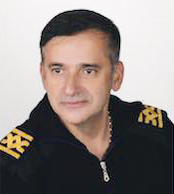
Photo: DenizHaber

Source: www.denizhaber.com