
Photo: DenizHaber
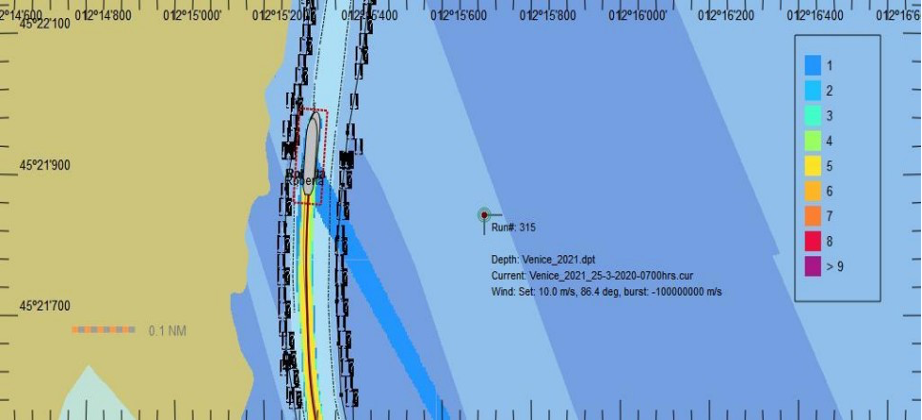
Photo: DenizHaber
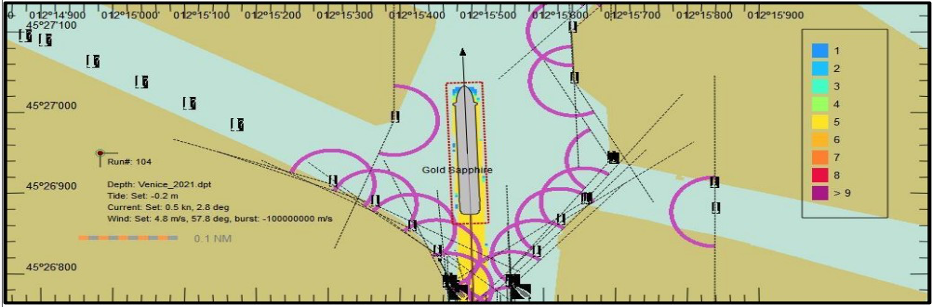
Photo: DenizHaber
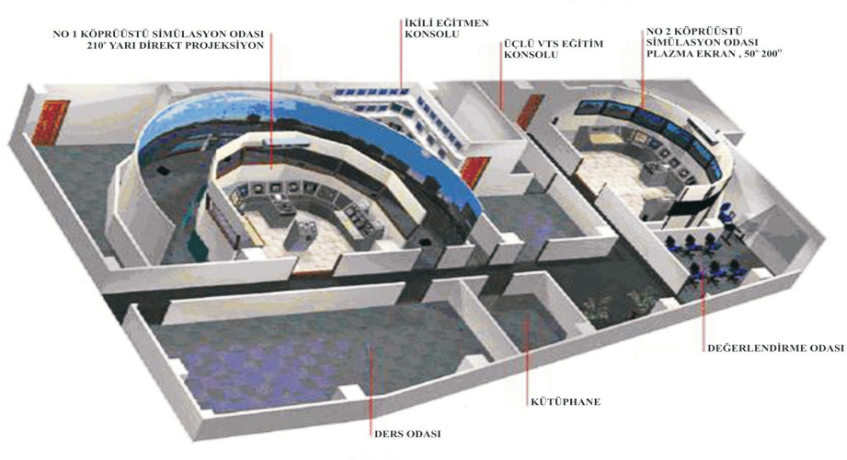
Photo: DenizHaber
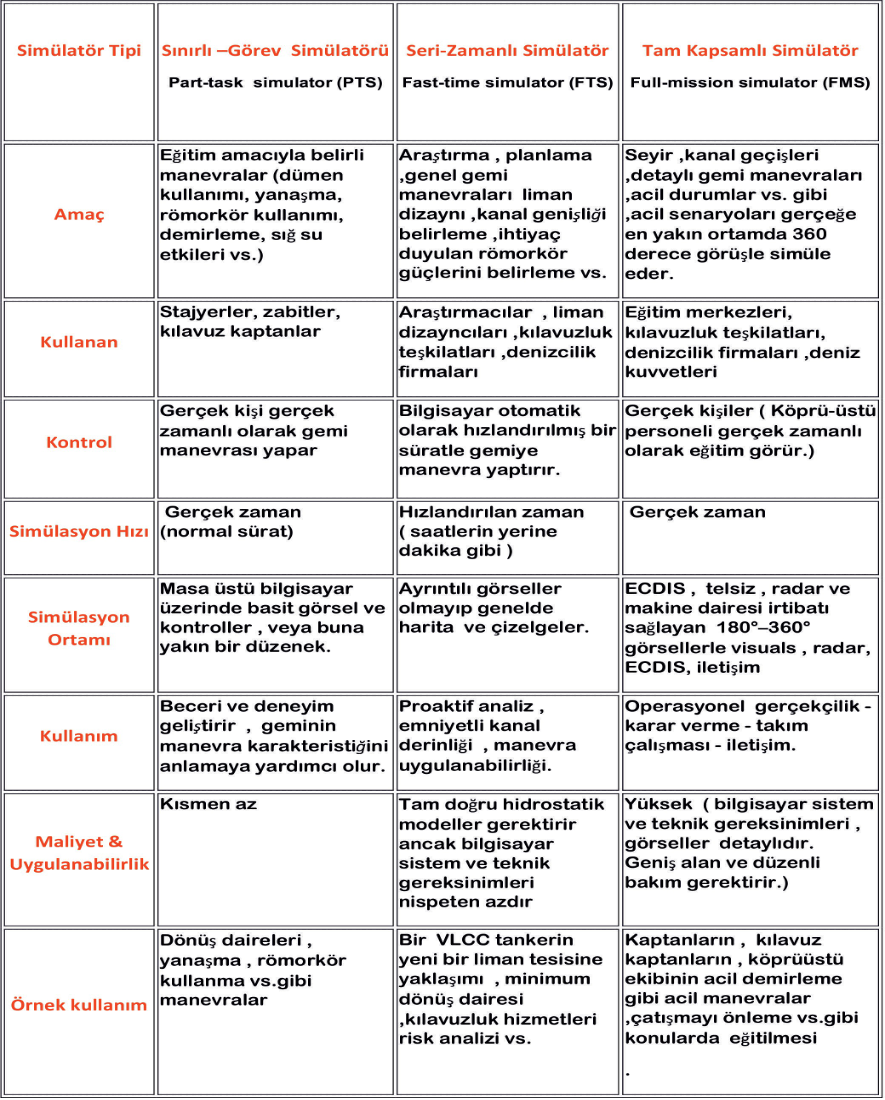
Photo: DenizHaber
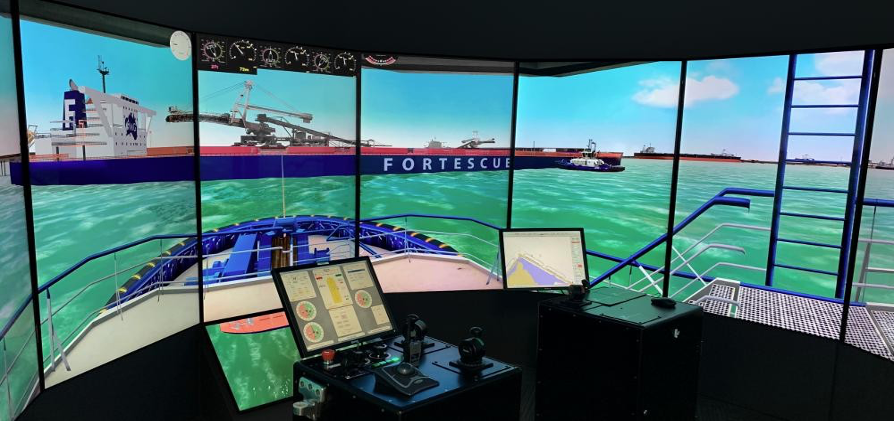
Photo: DenizHaber
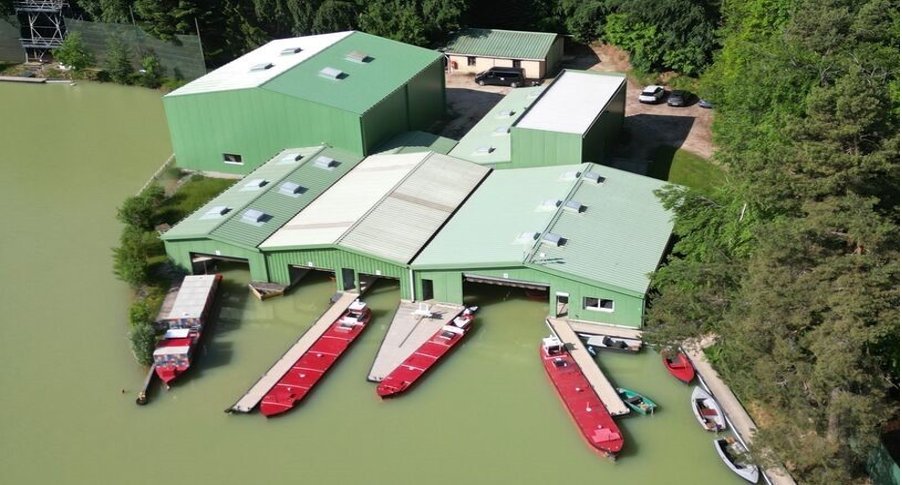
Photo: DenizHaber
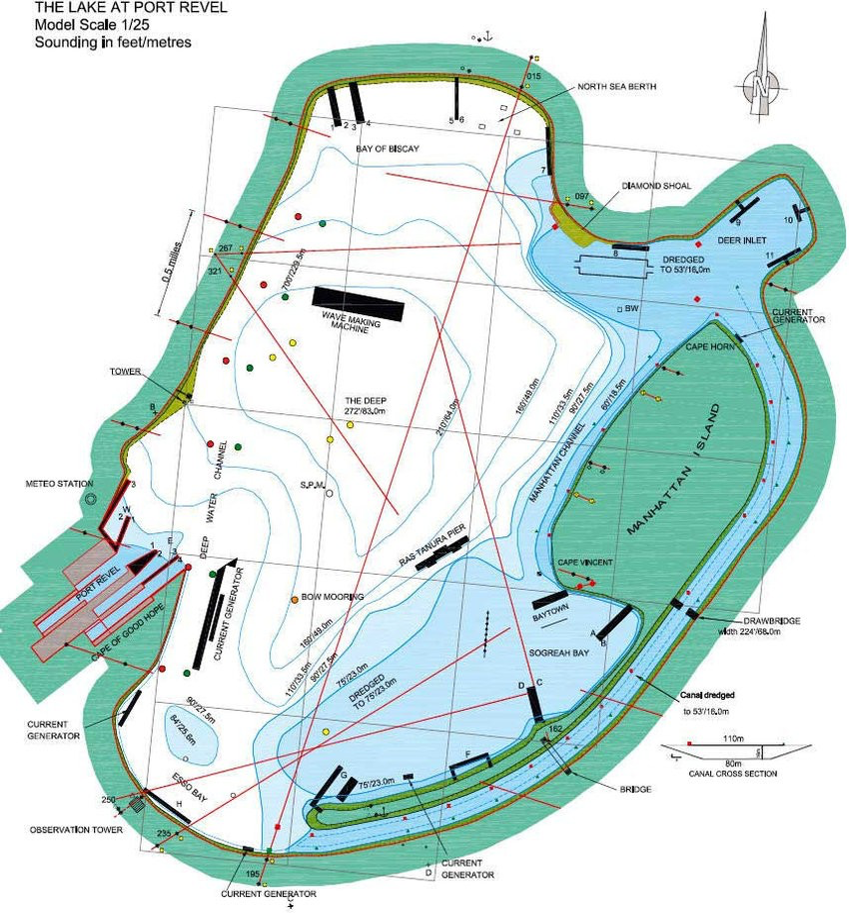
Photo: DenizHaber
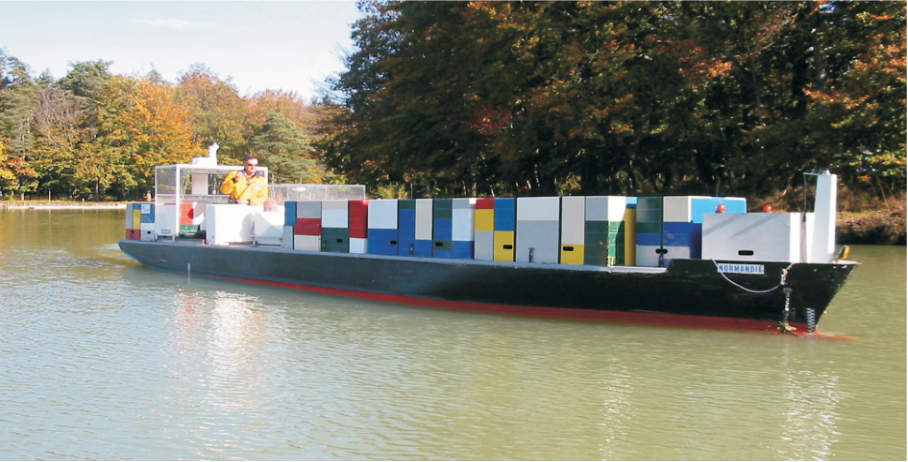
Photo: DenizHaber
As is known, the IMO has emphasized the importance of simulation in the training and certification of pilot captains in its recommendation document A 960, which outlines the working procedures for pilotage services. Even before this decision was made, it was known that simulation was used not only as an educational tool but also as a means to assess the professional skills of pilot candidates and those actively serving as pilot captains, despite discussions in some countries about whether it was a correct practice.
A simulation training consists of three elements:
It is crucial that the instructors are experienced mariners in ship maneuvering. In many training centers, retired pilot captains have taken on the role of instructors.
The training application is generally carried out in three stages according to widely accepted principles:
Before practical application on the simulator, instructors explain the theoretical aspects of the topic to be practiced that day in detail to the trainees. After reviewing the technical details of the subject, practical application is conducted on the simulator. Following the application, the instructor evaluates the maneuver performed by the trainee, explaining its pros and cons.
This final stage is one of the most important elements of simulation training.
The lack of opportunities for ship operators to focus on small details, which often does not lead to severe consequences during their careers, may cause them to overlook certain bad habits related to maneuvering practice and timing.
In this context, the performance evaluations conducted by instructors in the simulation environment play an extremely important role in helping ship operators recognize and correct these potential bad habits. Therefore, instructors do not point out the trainees' mistakes during the maneuvering in the simulation environment and allow them to make errors. However, in the evaluation conducted after the simulation, these issues are explained to them by analyzing video, audio, and DGPS records, allowing them the opportunity to correct their mistakes in the next application.
Today, there are several different types of simulation training applied to ship maneuvering, as listed below:
The least costly type of simulator training uses simple visuals and controls or similar setups on a desktop computer, based on real-time and normal one-to-one ship speed.
It is primarily used in the training of trainees, officers, captains, and pilot captains, helping them acquire the ship's characteristics and basic maneuvering skills.
It covers fundamental maneuvers such as steering, berthing, tug usage, anchoring, and shallow water effects.
A closed series of commands is executed using an automatic pilot instead of a real ship operator. Such simulations are particularly used as a supportive element in the design of port projects and the expansion of waterways.
An example of applications made with this method is the Coatzacoalcos-Mexico project. Exxon supported this project as a sponsor to determine the maximum loading capacity of tankers that could be loaded at Coatzacoalcos Port.
The exit from the loading port occurs through a narrow channel 330 feet wide, which is located within the scanned channel of the Coatzacoalcos River. Especially during the rainy season, very strong currents occur in the river. The company conducting the simulation study proved, through mathematical modeling, that even in the worst-case scenario, the currently permitted maximum tanker tonnage could be increased by ten percent (70,000 DWT).
As a result, the permitted tonnage was increased, and Exxon was able to recover its expenses for the project within two months from the increased carrying capacity.
When it comes to computer-assisted simulation, studies conducted worldwide for the same geographical area have shown that simulation applications closely resemble real-life practice, especially in deep water. However, as the tonnage of ships increases, particularly in cases where the clearance between the ship's hull and the seabed is less than ten percent of the ship's draft, the results of simulations can differ significantly from what is encountered in actual applications. The hydrodynamic and physical interactions that these types of ships have with other vessels, docks, banks, and toes in the port maneuvering area are still subjects of research that simulation technology has not fully resolved.
Another challenge faced by simulation technology is that not all newly built ships undergo trial tests (trial tests-turning diagram-crash stop-inclination test, etc.), leading to uncertainties arising from applying results obtained from similarly sized ships built with similar technology to these new vessels.
A more recent example is the dozens of simulation studies funded by the European Union that have classified risk-laden ships based on their size, tonnage, and draft to determine safe navigation conditions in the Venice Canal.
These explanations and examples illustrate that real-time simulation is primarily used by companies, researchers, pilot organizations, maritime firms, and maritime institutions for purposes such as research, planning, general ship maneuvers, port design, determining channel widths, and identifying required tug powers.
Real-time simulation requires reliable, accurate hydrostatic models. However, the computer system and technical requirements are relatively more manageable.
With accelerated time and ship speed, the computer allows the ship to perform the desired number of maneuvers through various scenarios. It uses more maps and charts than detailed visuals.
Full-scale simulators, also referred to as automatic pilots, require large and expensive systems not used in real-time simulation.
Surrounding the bridge model that closely resembles reality are display screens that generally provide horizontal views of 180°-240°-360°, which are mathematically calculated by the computer system based on the data input according to commands given by real individuals.
The position of the trainee during this type of simulation and its stability throughout the training period is crucial for the simulation's effectiveness.
The vertical field of view varies between 20° and 24° depending on the application. Port-side berthing simulators generally require a wider vertical area.
In the table below, the differences and comparisons of these three commonly used simulation methods in terms of users, purposes, usage, simulation environment, and costs are presented.
As can be seen from the table, full-scale simulation is frequently preferred and widely used in the training of ship captains, ship officers, pilot captains, and other bridge personnel.
Full-scale simulators are also frequently used in the periodic in-service training of tug captains.
Another important point to be aware of is that especially in manned simulation applications, the results can sometimes be overly optimistic or the opposite, depending on the user's personal skills and experience. Therefore, it is essential to determine an average performance.
Regarding the use of simulation as a general competency and skill assessment tool, the institutional evaluation of the International Marine Pilots' Association (IMPA) is as follows:
"Simulation is a relatively expensive method that should be considered in traditional pilot captain training. It is a useful tool for learning basic and emergency navigation techniques.
A pilot captain undergoing simulation training must be aware of the differences between real-life applications and those in the simulation environment to gain the necessary learning experience.
Considering all this, the simulation environment cannot reflect a pilot captain's real-life skills, confidence, effort, and decision-making ability, and thus IMPA does not view the simulation tool as a means to measure a pilot's true skills."
Unlike the three separate simulation methods described on previous pages, "Model Ship Simulation," where actual ship models are used by trainees in water channels, is evaluated as a sub-type of human-controlled models but is treated in a separate category due to its groundbreaking nature in pilot training, as most of the negative aspects mentioned above are not observed in this application.
This method was first used in 1966 at Port Revel in France.
At that time, the design and commissioning of high-tonnage raw material ships, such as bulk carriers, particularly those turning at Cape Size, led to the proposal that ship captains who would serve on these vessels be trained on model models that closely resemble the original in terms of hydrostatic values and design dimensions to avoid bad experiences. In the following years, training institutions established in the UK at Warsash Centre, in Virginia-Little Creek, USA, in Australia at Port Ash, and finally in Poland have become the most renowned centers in this field. Model ships accurately reflect the effects of current, wind, anchor, and bank effects, as well as the hydrodynamic interactions between ships and docks during close passes.
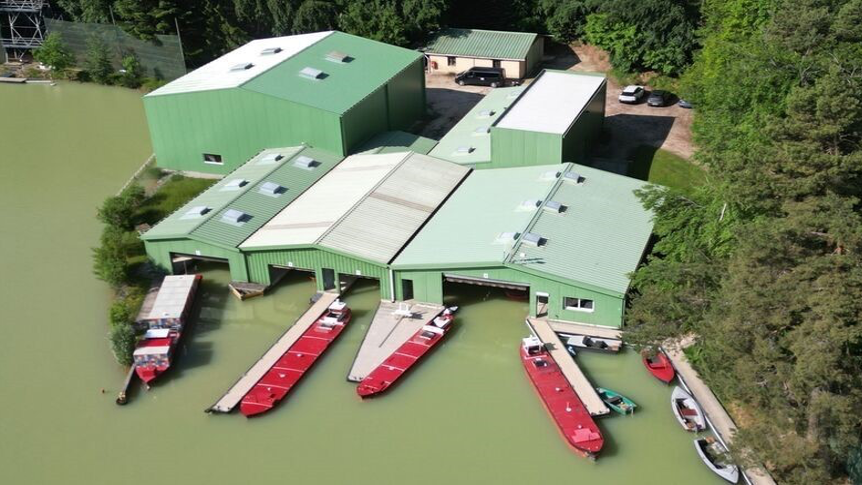
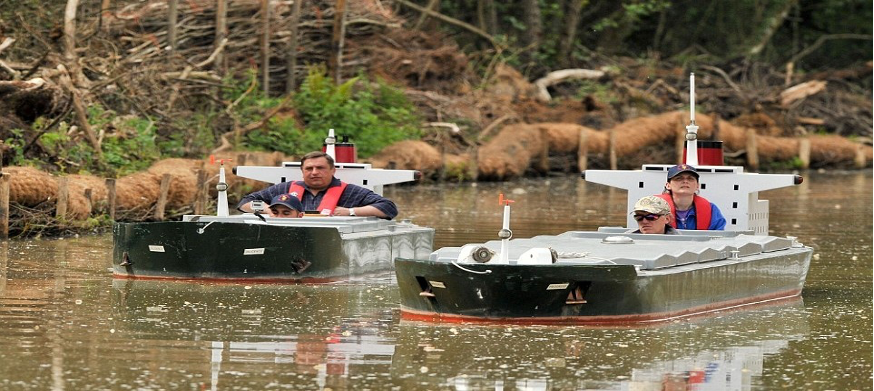
As an example, one of the leading training institutions in this field, the Port Revel Shiphandling Centre in Grenoble, France, uses model ships made at a scale of 1/25 that have real-life counterparts in training activities.
According to the simulation formulas known as "Froude Laws," a ship made at a 1/25 scale scales its speed and the effects of current and wind at a ratio of 1/5. Similarly, the concept of time is perceived at a ratio of 1/5. A two-hour maneuver conducted on model ships is equivalent to a ten-hour maneuver conducted on the actual ship.
To achieve the same effect created by a ten-mile speed on the actual ship, the model ship must be operated at a speed of two miles. Likewise, a wind of five miles in the lake where maneuvers are conducted will have the same effect as a wind of twenty-five miles on the actual ship.
Since the concept of time is also subject to the same 1/5 scale, all decisions made on the model ship must be taken five times faster than in real life.
The lake where maneuvers are conducted contains various docks, a shallow water channel, a deep water channel, and devices for creating waves, currents, and wind, as shown on the map.
Depending on the scenario to be applied, these devices are operated at varying positions, directions, and strengths. Almost all ships have a remote control system for both anchors, allowing for the raising and lowering of both anchors from the bridge.
Two people board the ships; one guides the ship while the other operates the engine telegraph and steering according to commands given by the other. The controls for commands and head-stern movements are also located on the console in front of the person controlling the ship and are generally used directly by that person.
The program for a five-day basic ship maneuvering training at Port Revel is as follows:
Monday: Introduction to ships, initial navigation, entry into the deep-water channel, buoy navigation.
Tuesday: Navigation in shallow water channels, turning circles at different speeds in deep and shallow water, entering the basin, anchoring and turning on anchor, effective use of pivot points and head-stern movements, berthing in a narrow area using Becker and Schilling rudders.
Wednesday: Maneuvers for berthing and departure while dragging anchor, turning using anchor in a narrow area within the channel, turning techniques in sharp turns and parallel sliding, berthing against the current, berthing while dragging anchor in a beam current.
Thursday: Turning using bank effects in a narrow area of the shallow water channel, drifting in rough seas, berthing stern-to-shore in shallow water, berthing using head movement against the current.
Friday: Navigation in the shallow water channel with stern current, passing in a narrow channel face-to-face, ship crossings in a narrow channel, berthing between two piers against strong beam current.
The greatest advantage of model ship applications is that they accurately reflect the shallow water effects, bank effects, and interactions between ships and dock infrastructures, as well as maneuvers conducted on anchor, that ships encounter in real life. Captains, pilot captains, and ship operators generally believe that model ship training is much more realistic and beneficial compared to computer-assisted simulators.
A ship operator may encounter some extreme experiences only a few times in twenty years, which are frequently simulated using current, wind, and wave generators, creating a foundation for them to reflexively make correct decisions in some adverse situations they may face throughout their careers.
A disadvantage of maneuver training on model ships compared to computer simulators is that it requires suitable weather conditions.
As mentioned on previous pages, a wind of five miles in the lake will have the same effect as a wind of twenty-five miles on the actual ship.
Therefore, if the wind in the lake rises to twenty miles, it would exceed the effect of a hundred-mile wind, moving beyond a realistic and reasonable scenario. For this reason, training at Port Revel, located at the foot of the Alps, can only be conducted between April and November.
We can classify the common benefits of all these simulation applications as follows:
The simulator environment allows training to be conducted under conditions very close to a real maneuvering environment without posing a risk to human life, ships, port facilities, and nature.
Computer simulation training invalidates the negative effects of bad weather conditions and ship traffic on the training process.
The simulation environment allows for the repetition of risky situations multiple times. Instructors enable candidates to learn from the mistakes they make by making errors. In real life, however, the instructor must intervene at the slightest risk.
Factors that negatively affect maneuvers, such as bad weather conditions, can be repeatedly practiced in the simulation environment, continuously developing candidates' ability to perform the most accurate maneuvers in such situations. In contrast, ship operators who cannot benefit from these opportunities may learn these skills through some negative experiences.
The recording feature enabled by the simulation environment allows for a complete evaluation by enabling the entire maneuver process to be reviewed from the recordings.
The application of a maneuver concept under artificially created challenging conditions in the simulation environment can be applied individually to all trainees, and the ability to view these recordings allows for the analysis of different approaches to the same type of maneuver, enabling ship operators to see various alternatives and positively improve their habits.
Especially ship captains, future ship officers, and pilot captains have significant responsibilities towards the institutions and companies they work for to ensure that they can benefit from this training.
Although these trainings have a considerable cost, investing in people is the most accurate and rewarding investment with high returns.
Source: www.denizhaber.com