


The "Arctic Ocean," or "North Polar Sea," has transformed into one of the most serious arenas of hegemonic conflict in the 21st century. Its rich seabed and living resources, combined with the melting ice, place the region at the center of great power struggles, with the potential to connect approximately 75% of the world's population. China's declaration last year of itself as a near-Arctic country and its joint high-value energy investments with Russia further complicate the geopolitical arm wrestling in the area. The events that have transpired in just the last two weeks serve as concrete evidence of this assertion.
While the hot fronts of the new Cold War between the U.S. and Russia appear to be in the Baltic Republics and the Black Sea, particularly through Ukraine and Georgia, we can now say that the Arctic region has effectively been added to these areas via Norway. Norway is the focal point of this new front. It goes without saying that NATO, the loyal servant of the U.S., which has entered a phase of recovery with a sort of war cabinet and increased its aggression, sees Norway as its vanguard fortress in the Arctic.
As the only NATO country with a permanent military headquarters north of the Arctic Circle (66°33’N latitude), Norway prioritizes the protection of its interests in this region due to the newly emerging Arctic geopolitics. NATO also uses Norway's situation as a spearhead against Russia, promoting it for U.S. interests in the area. Once among the world's most peaceful, wealthy, and prosperous nations, Norway has now joined the ranks of risky countries that must maintain a state of military alertness and preparedness at all times. Last week, American B1B strategic bombers were permanently stationed at Orland Air Base with 300 American military personnel. In response to these developments, Russian Tupolev 160 bombers conducted exercises near Norwegian airspace, while Russia carried out live-fire drills in the Barents Sea between 22 and 25 degrees east longitude, an area that had remained calm even during the Cold War in Norwegian-Russian relations.
Additionally, on February 22, 2021, Norway began NATO's Dynamic Guard Exercise with U.S., German, and Canadian warships in the region, which also included B1B bombers. In short, a permanent crisis has begun on the Arctic front, but the advantage in this crisis lies with Russia.
88% of this small ocean belongs to the coastal states' continental shelf and Exclusive Economic Zone (EEZ), while 12% is classified as high seas. Since 65% of its coast (24,000 km) belongs to the Russian Federation, the vast majority of the energy reserves on the seabed also belong to Russia. The fact that 67% of the Russian Navy is part of the Northern Fleet, which has its main base in this region, offers Russia a significant strategic advantage. Russia is the only country in the world with nuclear icebreakers. With ownership of 11 large-tonnage icebreakers/tugs, eight of which are nuclear, Russia holds an advantage over the U.S., which has only two icebreakers. Furthermore, under the new military doctrine announced by Putin in December 2014, many new measures were taken in the region. This doctrine defined the Arctic Region as part of the Russian sphere of influence for the first time. Over the past seven years, the Arctic Command was established in what would be considered Russia's front yard, creating a series of modern bases stretching from the north of the Kola Peninsula to Franz Josef Land and eastward to Wrangel Island. Russia has constructed a large airport, approximately 4 km long, which it declares is for search and rescue purposes in the Arctic region. While air bases are being developed and early warning radars and listening systems are being modernized, the number of operational aircraft has increased. Additionally, a rapid response force of 6,000 personnel has been established in the Murmansk and Yamal regions. In September 2018, Russia began Arctic sea patrols originating from the Severomorsk base, now maintaining a constant naval presence in these waters. These developments are mobilizing the U.S. In line with these developments, U.S. Secretary of the Navy Spencer indicated in a Senate Armed Services Committee briefing on April 19, 2018, that the next conflict zone would be the Arctic.
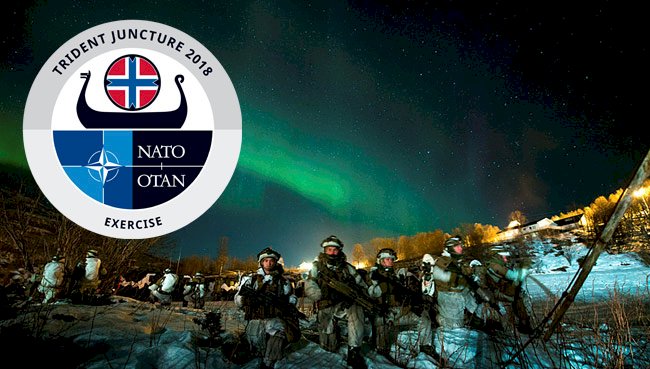
Such developments have alarmed the U.S. during this period of great power struggle. However, it is possible to say that the U.S. is quite late in this regard. Aside from the Russian Federation, the U.S., Canada, Norway, and Denmark have coastlines in this area. However, in the Arctic Council, besides these five coastal states, Sweden, Finland, and Iceland are also represented. Four of the eight countries are NATO members. Sweden, beyond being a NATO member, also maintains a hostile stance against Russia. On the other hand, the region provides Russia with very flexible and effective intervention capabilities against any provocation that might be applied to it in the Baltic, Eastern Europe, and the Black Sea. Its geography and force and command structure are significantly ahead of the Atlantic front. The U.S. and its allies continue to pay the price for rapidly shrinking at sea in the post-Cold War era. They lag behind in both the number of icebreakers and the number of combat-ready units in winter conditions. Additionally, Russia is far ahead in the fields of submarine warfare and hypersonic missiles. Therefore, the U.S. is making hasty decisions and acting like a bull in a china shop without considering the consequences for its allies. For instance, the Biden administration believes that Russia will back down with the deployment of B1B bombers in Norway. This situation will undoubtedly force Russia to take even harsher measures. The country that will be most affected by this process will undoubtedly be Norway. In the U.S. national security directive of 2008, a directive was first included to "protect the freedom of navigation of U.S. military and commercial vessels in the Arctic Ocean." In 2016, Arctic energy basins were made a national security priority. After 2015, NATO expanded the scope and scale of the series of Trident Juncture exercises it had conducted in Norway since 1980 during the Cold War. The U.S. later conducted a large-scale exercise named ICEX 2018 in the region for five weeks on March 20, 2018. After the exercise, on July 21, 2018, it reactivated the Second Fleet (Atlantic Fleet), which it had disbanded after the Cold War. The Arctic Region was added to this fleet's area of responsibility. In October 2018, the British Government announced that 800 British commandos would be permanently stationed in Norway alongside American and Dutch soldiers against Russia. The U.S. also decided to permanently station 400 Marines in Norway.
On January 5, 2021, the U.S. Department of the Navy published a strategy document for the region under the name Blue Arctic during the Trump administration. The document urges the Navy, Marine Corps, and Coast Guard Command to develop an integrated range of capabilities to protect American interests in the region. It also recommends strengthening cooperative partnerships to ensure coordination with key allies and partners in the area. Named Blue Arctic due to the emergence of blue seas from melting white ice, the document emphasizes the role of American naval power in controlling significant nodes with northwest and northeast passages that will connect resources and markets by highlighting the developing maritime trade routes. In summary, despite its limited power, the U.S. challenges Russia's geographical superiority in these critical waterways. In this context, some American strategists claim that the Bering Strait has emerged as a new competitor to the critical node known as the GIUK Gap, located between the UK, Greenland, and Iceland. There are calls for the revival of a chain of American bases over Alaska and the Aleutian Islands in this region. In May 2019, an American aircraft carrier group participated in the Northern Edge exercise in the Gulf of Alaska for the first time in a decade; the base on Adak Island in the Aleutian Islands was activated after 24 years. Plans to expand the port of Nome on the Bering Strait were recently approved by the U.S. Senate.
In this region, which is estimated to contain 30% of global natural gas reserves, 13% of crude oil reserves, and rare metals valued at 1 trillion dollars, Russia began gas supply operations in the Shkotman basin, which has the world's largest gas reserve at 3.8 trillion m³, after 2008. Norway followed Russia in the Barents Sea a year later. As an expression of its geopolitical orientation and ownership of the region, in 2007, Russia placed a Russian-flagged plaque on the seabed thousands of meters deep in the area of the North Polar Sea that falls within the Russian continental shelf, famously associated with the Russian scientist "Lomonosov." This geopolitical reflex created a serious shock on the opposing side. The Arctic region also hosts many fish species that have fled to colder waters due to global warming. This area, where fish stocks have increased compared to previous years, is also causing tensions in the fishing sector.
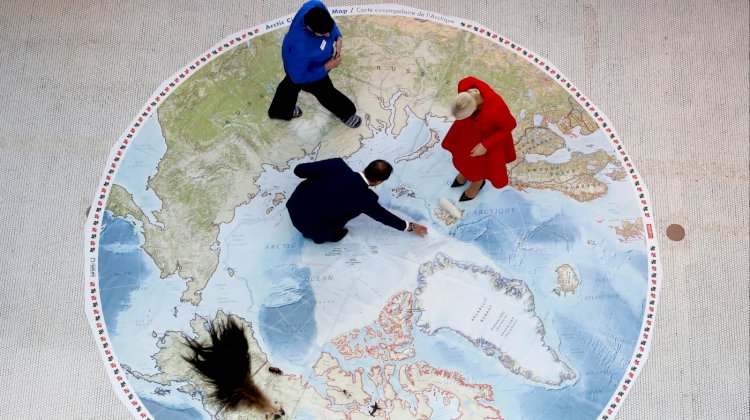
Another characteristic of this critical competition area is that it has new maritime transport routes that will revolutionize maritime trade due to melting glaciers. It is predicted that the region will be fully opened to maritime transport after 2040. Thus, international maritime trade routes will shorten significantly enough to create serious consequences. The melting of glaciers also increases the importance of the Bering Strait. There are three main routes in this region. The first is the Northeast Passage or Northern Sea Route (NSR), which follows the Russian coasts and connects the Atlantic and Pacific Oceans.
The second route is known as the Northwest Passage, which is the Canadian Archipelago Passage. It connects the Atlantic with Northern Alaska. It was opened to navigation for the first time in 2007, albeit briefly. The third route is called the Arctic Bridge, which connects Murmansk/Russia with the Atlantic coasts of Canada and the U.S. Generally, by 2008, there were 262 icebreaker merchant vessels capable of navigating these waters; today, that number has exceeded 800. Melting ice could transform these routes into the busiest in the world within 20 years, as they provide nearly 40% savings. On August 16, 2016, the famous cruise ship Crystal Serenity, owned by the U.S. cruise company Crystal Cruise, departed from Seward, Alaska, to New York with 1,070 passengers. The cheapest ticket for this month-long journey was 22,000 dollars.
The ship made the transition between the two oceans via the Northwest Passage. It spent eight days navigating the most dangerous part of the journey, the Northwest Passage. On September 28, 2018, the world container giant Maersk's 45,000-ton container ship Venta Maersk delivered containers loaded a month earlier in Vladivostok to Saint Petersburg via the Arctic Ocean in one month. If the northern route had not been used, this journey would have taken two weeks longer via the Suez Canal or Cape of Good Hope. However, the most revolutionary and significant development in the region occurred last week. On January 27, 2021, the Russian Arc7-class LNG tanker Christophe de Margerie, which departed from Jiangsu, China, completed its 2,400-mile journey using the Northern Sea Route (NSR) in 11 days, arriving at Russia's Sabetta Port on February 8. The same ship had also used the Northern Sea Route eastward under icebreaker escort last May. This time, under winter conditions in February, with much of the journey conducted in continuous darkness, the passage took 36 days less than it would have via the Suez Canal. This situation will create an unprecedented revolution in global maritime transport. Russia has now proven that transit can occur in this region for almost 10 months of the year. The greatest panic for the U.S. begins here, as control of this route lies with Russia. Russia's ownership of the world's largest and most powerful nuclear icebreakers, capable of breaking through 4-meter-thick ice, allows it to establish a monopoly within its jurisdiction in the region. These types of vessels can break ice wide enough for the passage of supertankers weighing 200,000 tons.
CHINA AS A GEOPOLITICAL ACTOR IN THE ARCTIC
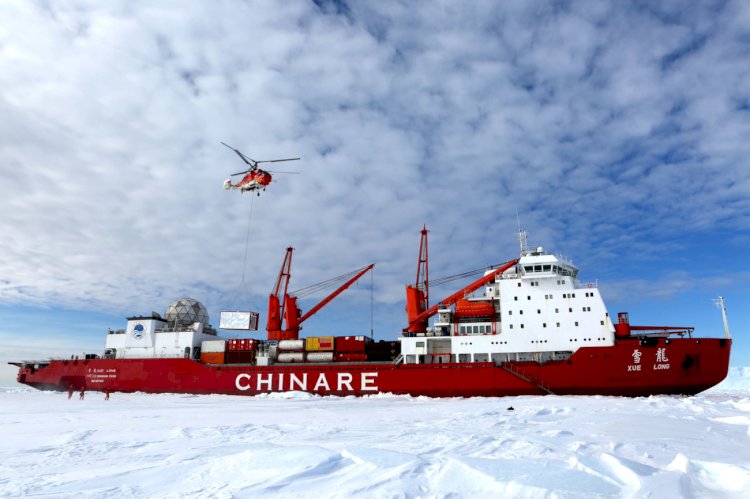
In 2015, China designated the Bering Strait, the gateway to the Arctic Ocean from the Pacific and Atlantic, as a security concern and declared that it could use force if necessary to protect its interests in this strait. In mid-September 2015, for the first time in history, five Chinese warships exercised their right to innocent passage in the Bering Sea. By using the Bering Strait and other Arctic routes, China can significantly reduce its dependence on the Malacca Strait and save between 60 to 100 billion dollars annually in transportation costs. China is also developing energy cooperation with Russia in the Arctic Ocean under the SCO framework.
Russian Gazprom and China's CNPC companies are continuing drilling operations in the Arctic Ocean. Unlike Russia, China does not wish to enter into competition with the U.S. in the Arctic Ocean. Therefore, it signed a 43 billion dollar cooperation agreement with Alaska. The main reason for this investment is the construction of a liquefied natural gas (LNG) pipeline in Alaska. Additionally, it imports 800 million dollars worth of fish annually just from Alaska. On January 26, 2018, China also published a policy paper for the Arctic Ocean for the first time. China's main goal is to include the region in the Belt and Road Initiative (BRI) under the name Polar Silk Road. China is also a major partner in mining and infrastructure investments in Greenland, which is under Danish control.
INCREASING TENSION AND PROVOCATION POLICIES IN THE ARCTIC
We can say that after the South and East China Seas, the Arctic Ocean is the most important focal point in the global geopolitical arena. The successful completion of the LNG tanker Christophe de Margerie's liquid natural gas transport between China and Russia on February 8, 2021, poses a strategic pressure on the U.S. The psychological impact it creates is significant. The hasty deployment of B1B bombers in Norway has a large psychological role due to this success. This new line forming in northern Eurasia will provide great flexibility and assurance for Russia and China in shaping policies against U.S. hegemony. The U.S. knows that it cannot allocate warships or troops to this region without using its NATO allies like Canada, Denmark, Iceland, and loyal friends like Sweden.
Therefore, in recent years, the Arctic has become one of NATO's most important agenda items. Russia is also aware of NATO and the U.S.'s vulnerabilities in this region. It would not be a prophecy to say that if it is pressured in other areas, it will stir up this region like a kind of insurance wire. We can say that the increasing tension in the Arctic region will indirectly reduce the pressure on Turkey. Countries like Norway, which are in the wake of the U.S., are falling into every trap set by the U.S. and NATO to escalate tensions with Russia. Let us remember that during NATO's brutal intervention in Libya in 2011, the Norwegian Air Force participated in the bombing of Libya. Now they are busy provoking Russia. Norway is joining the U.S. in its sanctions against Russia. Norway, which practiced a careful, balanced, and cool-headed policy to avoid provoking the Soviets during the most intense days of the Cold War, should not fall into these traps. Turkey should also learn lessons from the disheartening situation that Norway has fallen into.
For this reason, Turkey should not become an instrument of NATO and the U.S.'s adventures and provocations in the Black Sea. It would be very difficult for a provoked Russia to return to its vision of peaceful coexistence.
Source: www.denizhaber.com