


mu
CHAPTER I
In this article, I will share with you a list of maritime memoirs and biographical books in which their Turkish authors, either as seafarers or as passengers aboard ships, convey their experiences and observations at sea. Within these books that recount memories shaped by life at sea, you can encounter striking examples of shipboard life seen through different perspectives and, by comparing them with contemporary practices, experience how the profession has evolved, so to speak, particularly in terms of the human factor in seafaring.
The books I will be sharing represent only a portion of the works I have personally read, and they are listed in alphabetical order by title. Readers who love books and the sea may understandably feel inclined to say, “That book was included,” or “How could you leave this one out?” I kindly ask you to share such publications in the comments section. In doing so, we will collectively compile a broader list of works for fellow book and sea enthusiasts to discover, and I will also be happy to include the books you mention in future installments of this series.
“AŞMAM GEREKEN OKYANUSLAR VAR”
(Gülin BOZKURT. Destek Yayınları, 2019)
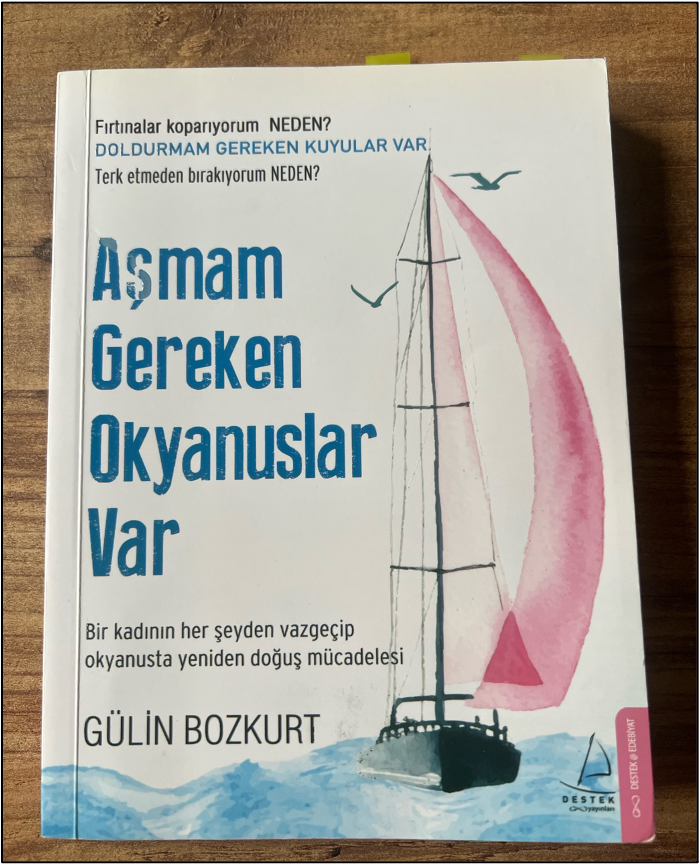
When the author Gülin Bozkurt reaches her forties age, she begins to question her existing life and makes a radical decision: leaving her life on land behind, she embarks on a 13-month sea voyage aboard the sailing yacht “TZİGANE” together with her companion Mr. Ekber. Throughout the journey, she shares her memories and experiences while also openly reflecting on her inner reckoning and her questioning of life through solitude and communion with nature. In this respect, the book can also be regarded as a work of personal development.
“BENİ DENİZ ORTASINDA YAPAYALNIZ KOYDULAR”
(Baş Müh. Süleyman SAVAŞ. Karina Yayınevi, 2015)
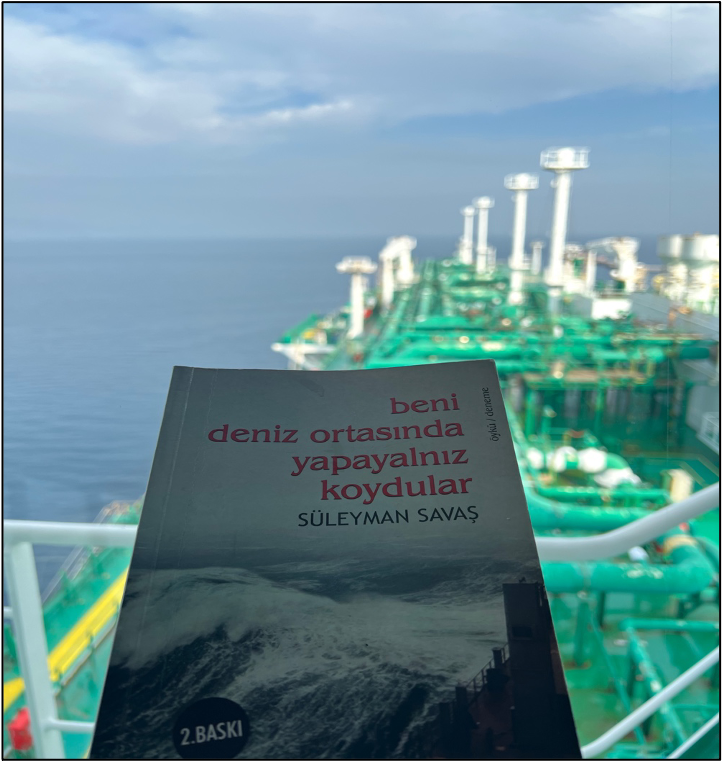
This is the first book composed of the memories of Chief Engineer Süleyman Savaş, a 1975 graduate of the “Yüksek Denizcilik Okulu”, Department of Marine Engineering. At first glance, both the title and the cover photograph immediately draw the reader in. Classified as a collection of stories and essays, the book offers a pleasant journey through true events, some of which bring a smile to the reader’s face. The book consists of three parts and includes a total of twenty different stories.
In the first part, the author recounts his experiences at sea. The second part presents striking stories from the period when he worked on the shore side of the maritime industry, particularly in the Tuzla shipyards, offering an objective perspective on the lives of shipyard workers. In the third and final part, the author speaks about his family, offers self-criticism, and concludes the book with a reference to one of my favorite works by the poet Nazım Hikmet, “Yaşamak Güzel Şey Be Kardeşim” (Living Is a Beautiful Thing, My Brother.).
Among the stories, the one that made me smile the most was titled “The Pilot,” which tells a humorous dry-bean story involving Officer Yılmaz from Çorum and an American Maritime Pilot.
The author’s language is smooth and never disturbing, making this a book I can recommend to all sea lovers. The author also has other story/essay collections published in 2017 (“Yaşamımı Suya Attım”), 2019 (“Neden Ağlıyorsun?”), and 2023 (“Umudu Paylaşanlar, Toprağım Deniz”).
“GÜVERTE GÜNCESİ-ŞİLEPTE BİR YOLCU”
(Prof. Dr. Ömer BOZKURT. Kırmızı Kedi Yayınevi, 2017)
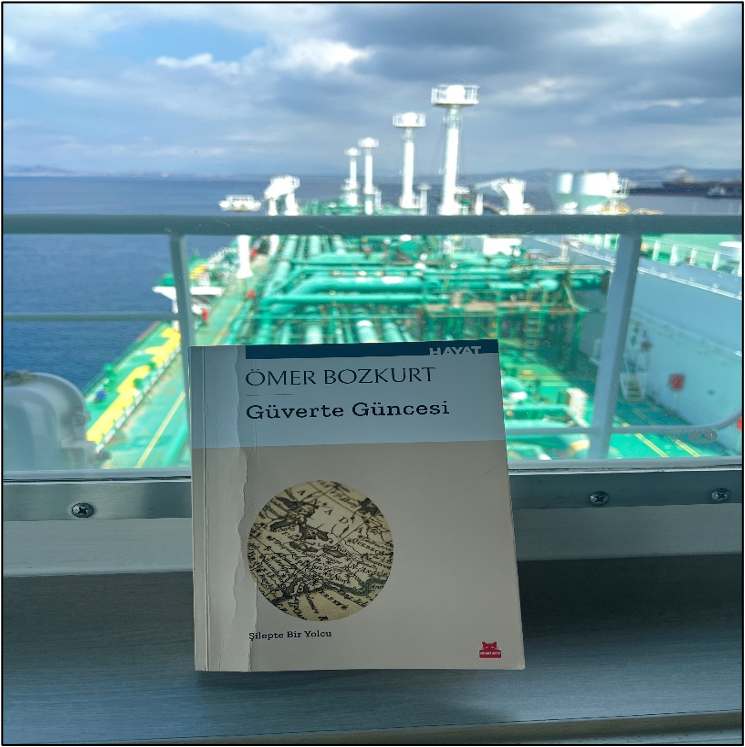
The title "Güverte Güncesi" beautifully describes the book's content. The author, Prof. Dr. Ömer Bozkurt, shares his experiences as if writing his own diary, recounting a 26-day voyage on the merchant ship IRMA in 2006. The journey began in Ijmuiden, Netherlands, and included a crossing of the Atlantic Ocean, a passage through the Canadian Great Lakes, and a final stop in Duluth, USA. The author refers to himself as a passenger, and his familiarity with maritime operations and detailed account of the ship's operations from the perspective of someone outside the profession makes the book easily readable even for non-seafarers. While reading, you can easily find yourself feeling like you're a passenger on the IRMA. A detailed review of the book can be found in my article published on October 3, 2024. For those interested, here is the access link: https://www.denizhaber.com/yazarlar/mustafa-sokukcu/guverte-guncesi-silepte-bir-yolcu/123514.
“HAYATA LUMBUZDAN BAKANLAR”
(Nurullah ÇELENK. Kitapyurdu Doğrudan Yayıncılık, 2020)
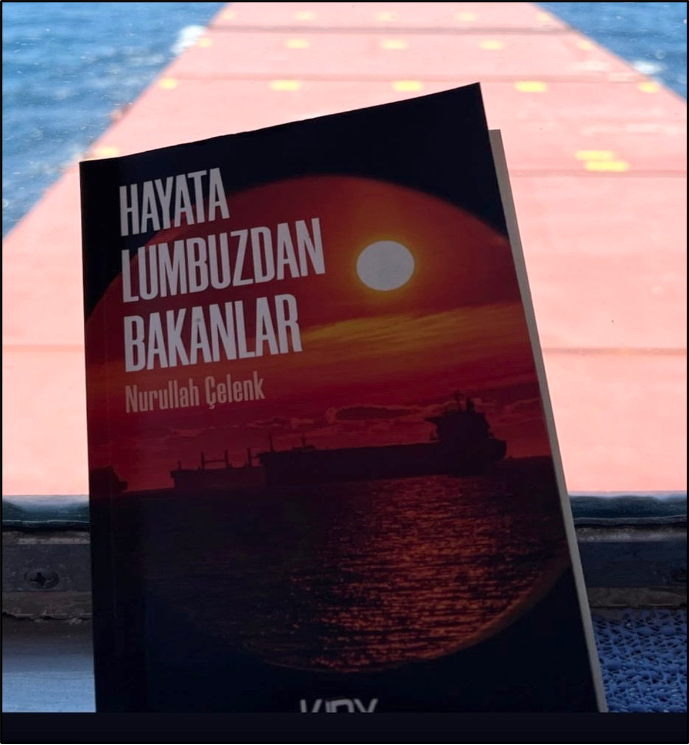
I first saw the book on the bridge of a small Turkish ship where I was providing pilotage services in Nemrut Port, Aliağa. As I picked it up and examined it, the ship's captain told me that the author was steering the ship on the bridge. I took a picture of the book within my limited time, promising to buy and read it at the first opportunity, and congratulated the young author, watch officer Nurullah Çelenk, before leaving the ship. The book is a compilation of the author's own experiences, particularly appealing to students and new officers about to begin their careers. A short 79-page book that can be read over a cup of coffee, it shares the author's experiences of interesting situations that new officers might encounter in the Turkish coaster fleet.
“HÜZÜN KAPISI”
(Kpt. Mehmet Emin ÖNAL. Kitapyurdu Doğrudan Yayıncılık, 2024)
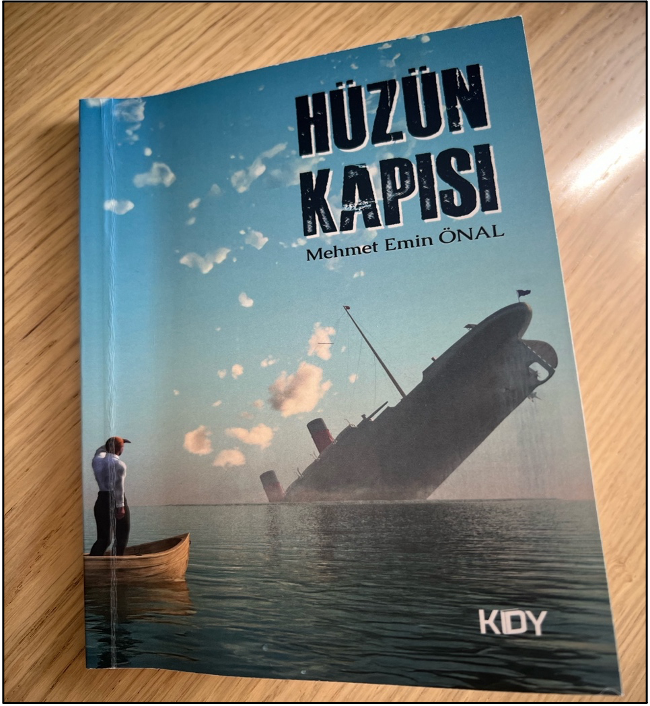
This is Captain Mehmet Emin Önal's first novel, based on a true story. I ordered it after seeing a post by Captain Mekan Erdil on social media, and I finished it in one sitting. It's an easy-to-read book with plenty of adrenaline. The reason I included it in this review is because the story, which fictionalizes the suspicious fate of a bulk carrier that sank off the coast of Oman in 2013, is inspired by a real event.
The section where Captain Cahit, the last to leave his ship as it sank, questions his life and loneliness during the 15 minutes he is alone on board, is particularly striking. Furthermore, the following sentences, which I also underlined, are truly impressive: “...he realized that as the sailors' competence increased, their names were equally lost on the ship. When they were trainees, almost everyone addressed them by their first name. When they became officers, almost everyone except the Captain, First Officer, Chief Engineer, Second Engineer, and the other officers would call them "Sir Captain," meaning there would be eight or nine people who addressed them by their first name. When they became First Officer, the Captain or Chief Engineer would address them by their first name. Everyone addressed the Captain as "Süvari Bey". The Captain never heard his own name from anyone on the ship” (page 58). At the end of his book, the author mentions the late Capt. Güven Tuncer while discussing the process of turning the real-life story into a novel.
“JAMBO-NAZAR BONCUĞUMU NEDEN ÇIKARDIN ANNE?”
(Kpt. Mesut Azmi GÖKSOY. Cinius Yayınları, 2015)
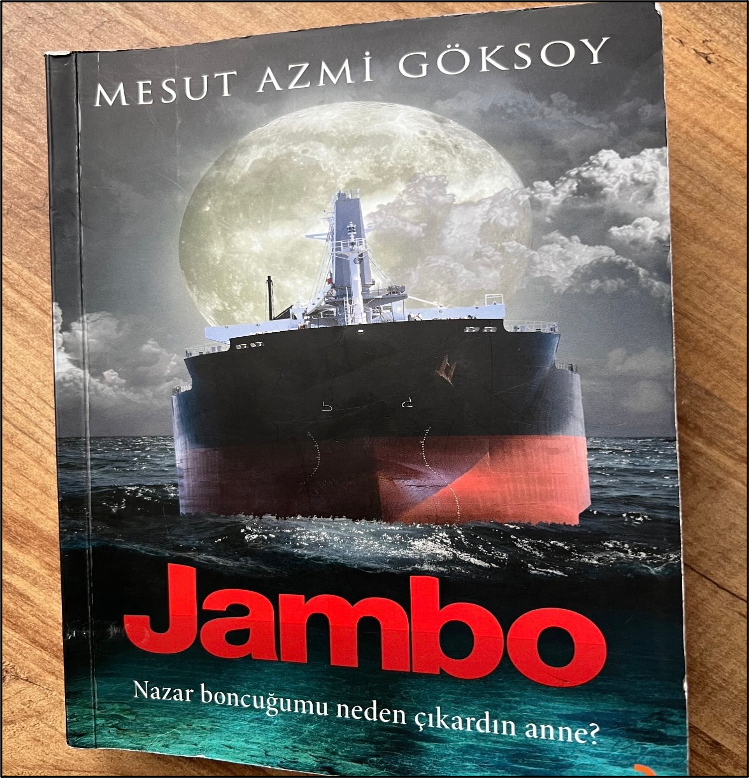
This book contains the memoirs of the late Captain Mesut Azmi Göksoy, a 1979 graduate of the “Yüksek Denizcilik Okulu”, Deck Department, detailing his life at sea. The author recounts the recent history of maritime life with fluent and detailed language, and his experiences are truly unique and rarely seen today. The author stated that he could write at least ten volumes about these interesting events, and that this book is only the first part. He even concluded his story on the last page with the phrase, "End of the first book...". Unfortunately, however, this book is the only one of his memoirs.
In his own words, the author experienced countless setbacks, misfortunes, and even incidents that far exceeded the limits of danger, often bringing him face-to-face with death. The book, titled "JAMBO," consists of four separate stories set on different ships where the author worked. The origin of the title becomes clear in the section where the last story is told. The author, who was the only Turkish crew member as the ship's captain, learned the word "Jambo" while working with a Kenyan crew. This word, "Jambo," is a greeting used in Swahili, a language commonly spoken in East African countries. All the stories in the book depict events that are rarely, if ever, possible in modern times. The story of abandoning the ship in the Bay of Biscay and spending days in a lifeboat, nearing unconsciousness and awaiting a miracle of rescue, was particularly moving. The author's philosophical approach and detailed descriptions throughout the book make you feel like you're experiencing the story firsthand. Published in 2015 and unfortunately out of print, you can find this book on second-hand online book platforms.
“OLHA”
(Kpt. R.Erhan ŞENGÜL. Ritim Plus Yayınları, 2021)
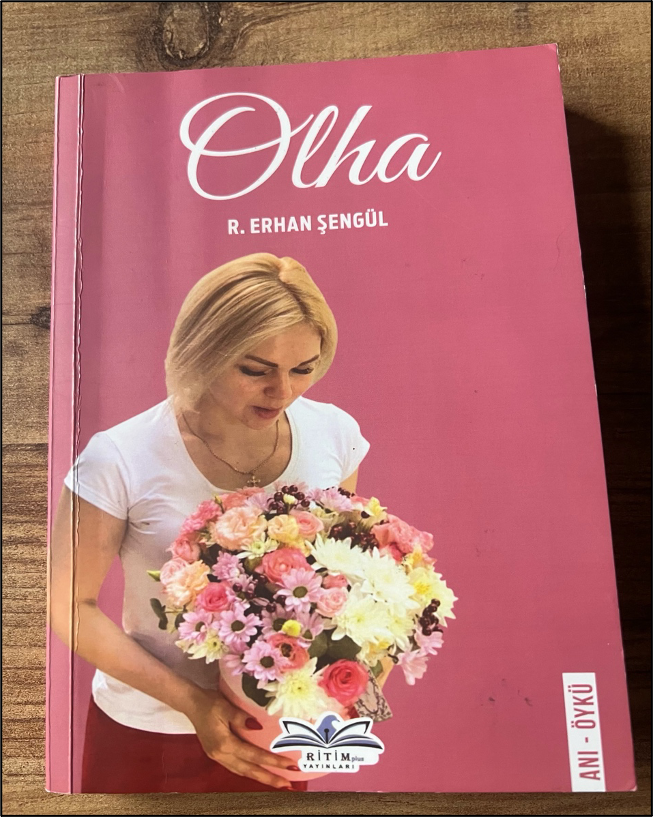
Captain R. Erhan Şengül, also known as the "sea wolf" in his self-titled book "OLHA," recounts his memories from the 1990s at sea, his time working ashore, and his adventures returning to sea in the 2020s. In this book, the author shares his family life, including his childhood, with great sincerity. Composed of various sections filled with small anecdotes, the book also includes a photo album at the end. While reading, you will easily notice the changes the maritime profession and, consequently, the life of a seaman have undergone in the last 30 years.
My favorite part of the book was the section describing the stressful situation faced by Captain Yunus, the deck officer, who faced the possibility of missing his planned wedding. It was thanks to the author's initiative, as the ship's captain, that he was able to attend at the last minute. I also enjoyed reading the story of the Syrian captain who was supposed to join the ship during a time when the author was working as a ship operator, and how he ended up going to Mount Nemrut in Adıyaman instead of Nemrut Port in Aliağa. Some of the lines I underlined in the book are as follows: “Until the early 2000s, all seafarers, without exception, from cabin boys and deckhands to captains, cleaners, and chief engineers, were valued and respected everywhere in the world” (page 147). “…every seafarer’s wife, half-widow, is both mother and father to her children. They are selfless and worthy of respect, like all ladies…” (page 220).
“SEYİR DEFTERİNE YAZILAMAYANLAR”
(Kpt. Çetin AKIN. İletişim Yayınları, 2003)
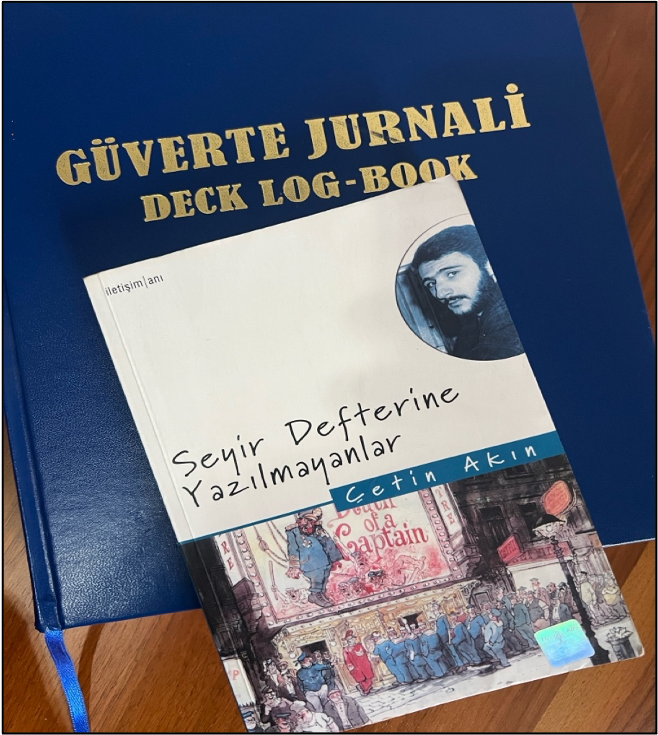
One summer morning in 2003, just as I was about to enroll in the Maritime Faculty of Istanbul Technical University, I saw an interview with Captain Çetin Akın about his book in the weekend supplement of a well-known newspaper. At that time, online shopping or ordering books wasn't very common; in fact, the internet itself was just starting to become widespread. When I arrived in Istanbul, I went to the Denizciler Kitabevi (Seafarers' Bookstore) on İstiklal Street and obtained this book, which had sparked a great curiosity in me about the profession. My first impressions of the human profiles and lives on board a ship began with reading this book, and the stories within it both made me smile and, in some places, made me think. After reading it, I lent it to a classmate who was curious, and it was passed from hand to hand and read by many young aspiring sailors of that era. I don't know who had the book last; it never came back to me .
After the idea of writing this piece started forming in my mind, I found the book online from a secondhand bookstore, ordered it, and reread it, reminiscing about the old days. This time, I was particularly struck by the author's analyses of human nature. While living and working conditions on board have changed significantly over the years, I found it interesting that people with similar personalities to those the author analyzes can still be easily found on any ship or in any maritime company. The book, which features an intriguing cartoon on its cover, contains interesting real-life stories from the time the author worked on ships, involving himself and close friends, throughout his maritime career.
“YÜK GEMİSİNDE BİR YOLCU-50 GÜNDE GÜNEY AMERİKA”
(Nur DOLAY. Cinius Yayınları, 2024)
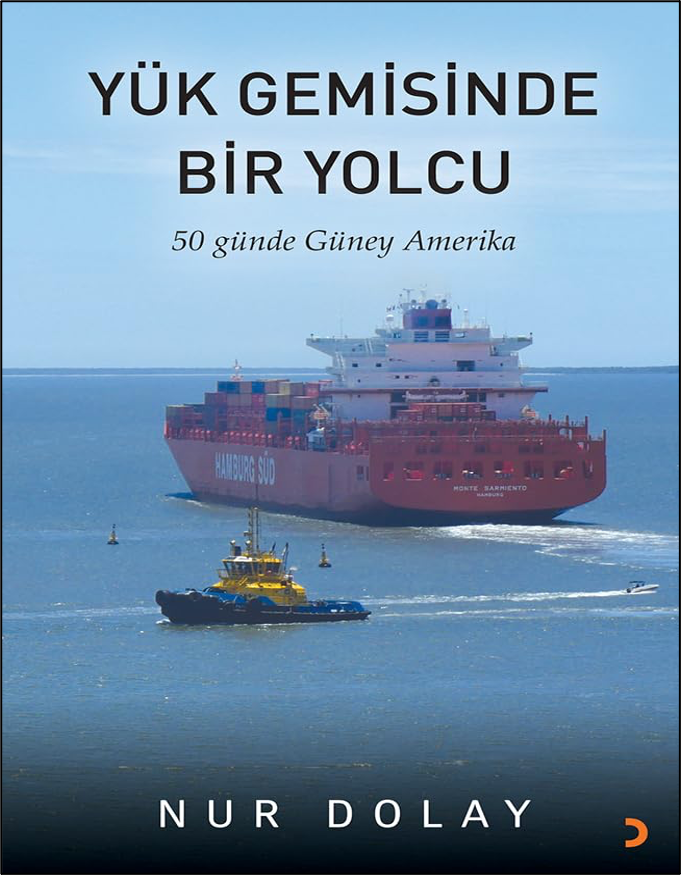
This book is a memoir by journalist, writer, and documentary filmmaker Nur Dolay, chronicling her journey on a container ship from Europe to South America. In 48 separate chapters and sections, she chronologically recounts her experiences during the 50-day voyage on the cargo ship, offering insightful perspectives. She also touches upon themes such as the capitalist system, colonialism, and the climate crisis, delivering valuable messages. The book provides an opportunity to examine the human profiles on a merchant ship from a sociologist's point of view. A detailed review of the book, published on March 26, 2025, can be accessed via this link: https://www.denizhaber.com/yazarlar/mustafa-sokukcu/yuk-gemisinde-bir-yolcu/124232.
Capt. Mustafa Sökükcü (Ph.D)
Maritime Pilot