

Photo: DenizHaber
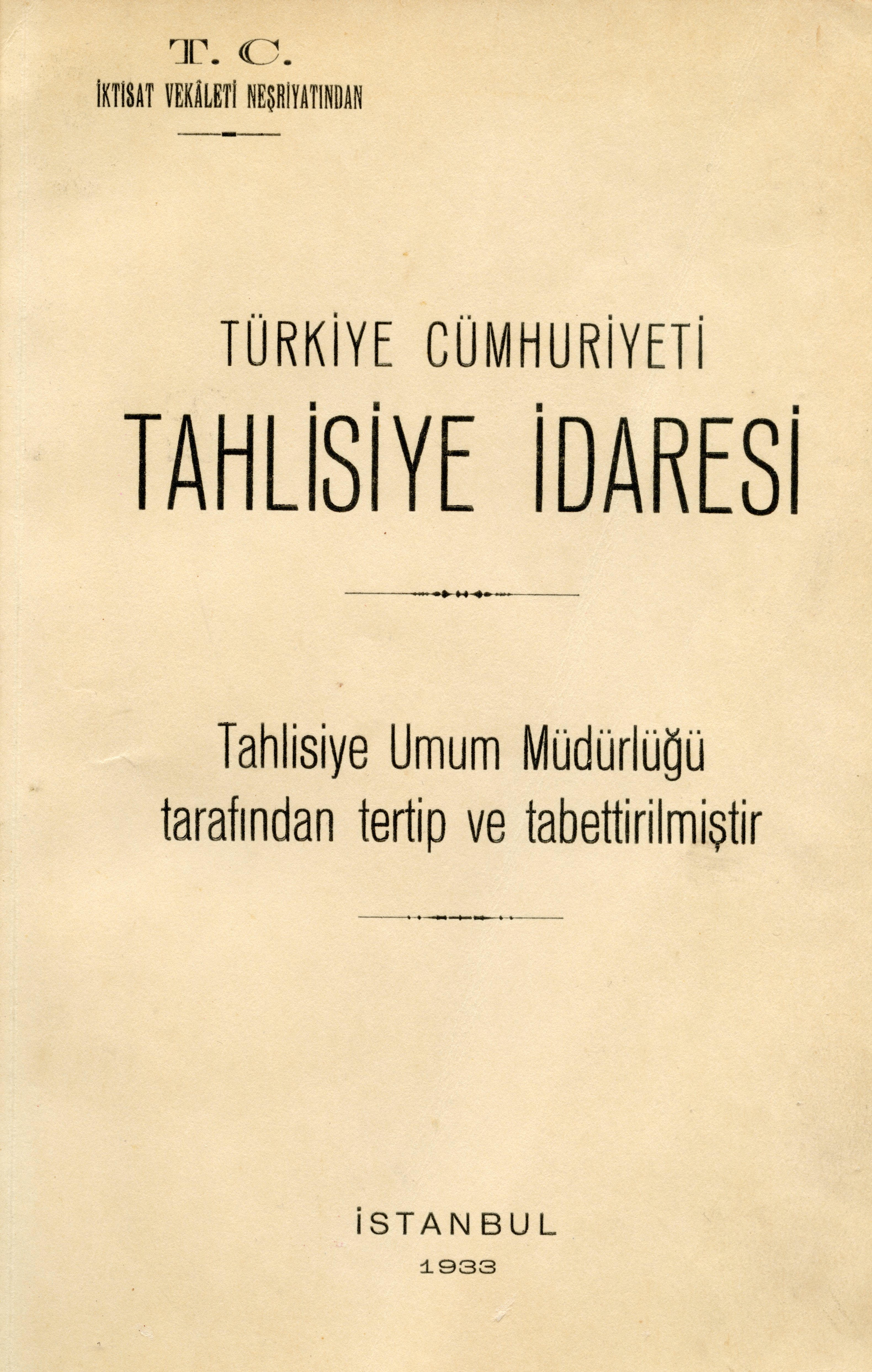
Photo: DenizHaber
In a book published in 1933 by the General Directorate of Salvage of the Ministry of Economics of the Republic of Turkey, the establishment of the Salvage Administration is described as follows: The Bosphorus, due to its geographical position, is the only passage to the Black Sea. The states with coastlines on the Black Sea, particularly countries like Russia and Romania that send millions of tons of goods to the world market, rely heavily on maritime transport through Black Sea ports for a significant portion of their trade. Therefore, the countries whose commercial vessels carry this cargo have had to be concerned with the safety of this passage. The violence exhibited by this single entrance to a sea that is constantly swollen by the waters of the great rivers of northern countries, and by winds that blow from the north without encountering any obstacles in the southern Russian plains, has always been a matter of concern for mariners. Even in the calmest weather, irregular currents present at the strait disrupt the routes of ships, while frequent storms, blizzards, and fogs leave mariners in difficult situations. Ships that stray from their routes often run aground near the shores of the strait. Particularly, thousands of sailing vessels navigating along the coast were severely exposed to this frightening situation.
In the years leading up to the establishment of the Salvage Administration, severe storms in the Black Sea had stranded nearly seventy sailing ships on one occasion and nearly one hundred fifty on another near the entrance of the strait, resulting in not only thousands of lira in damages but also many lives lost.
It is precisely this characteristic of the Bosphorus that prompted the government to create a beneficial and economic infrastructure on the external shores of the strait. Regardless of how small the enterprise to be established was, it required funding. However, the Ottoman state could not demand a fee from those who would benefit from this infrastructure.
This was because the economic servitude known as Capitulations did not allow for fees to be collected from foreigners without the permission of European states. However, since it was natural for foreign vessels to benefit from the infrastructure to be established on the external shores of the strait, it was deemed necessary for them to contribute to this effort with a certain fee. For this reason, in 1866, the ambassadors of foreign countries in Istanbul, led by the ambassadors of Sweden and Norway, began negotiations in Istanbul to establish a salvage administration.
The discussions that began between the Ottoman Empire and the foreign ambassadors in Istanbul lasted for a long three years. The possibility that the Ottoman Empire would demand a fee for the services of this organization, which was intended to ensure the safety of life and property, led foreign states to harbor negative thoughts.
In 1869, the Ottoman Empire proposed a meeting to determine the fee to be collected from foreign states. After the commission convened, it first determined the materials needed for the salvage infrastructure and the locations of the planned salvage stations, then established the amount of the tax to be collected from commercial vessels based on tonnage calculations. It was decided that these matters would be managed by the Ministry of Maritime Affairs.
The purpose of the planned Salvage Administration was to prevent accidents through the stations it would establish and to assist victims in the event of an accident. To prevent accidents, it was decided to place a cannon next to the lighthouses of Rumelia and Anatolia and to establish a fixed buoy about 14 miles offshore from these lighthouses to provide ships with the means to determine their position. Additionally, it was decided to establish around 16 salvage stations on the right and left shores of the entrance to the Bosphorus for the rescue of victims. The commission then disbanded. The decisions taken by the commission were implemented. Measures were taken to prevent accidents, and salvage stations were opened at certain locations along the Rumelia and Anatolia coasts, starting from the north of Lake Terkos and extending to the west of Şile.
The commission determined the salvage tax to be 15 gold coins per tonnage. After this tax began to be collected and the first infrastructure was established, the first meeting was held on November 19, 1870, followed by subsequent meetings on January 16 and February 4, 1871, under the presidency of Etem Pasha, the port chief of Istanbul. This commission would examine the expenses incurred by the Ministry of Maritime Affairs and increase the amount if it was insufficient for operating the infrastructure. The commission examined the expenses and determined them to be 2,909,254 kuruş, while increasing the salvage fee from 15 gold coins to 20 gold coins.
The representatives of Russia and Austria objected to this increase in fees. However, after a salvage operation on a Russian sailing ship that encountered an accident on December 7, 1871, Russia, a few days later, accepted a similar increase after another incident involving Austria. The commission finally concluded its work on February 4, 1871. From this date until 1881, the salvage work was conducted under the administration of the Ministry of Maritime Affairs.
On February 19, 1880, the ambassadors of England, Germany, Austria, America, Spain, Italy, Sweden, Belgium, Russia, Romania, France, the Netherlands, and Greece submitted a joint note to the Ottoman Empire, proposing the convening of a commission. Following the acceptance of this proposal by the state, the commission convened under the presidency of Dilaver Pasha on December 9, 1880. This commission meeting continued until April 24, 1883. As a result of this meeting, the following decisions were made:
1. The financial and administrative oversight of the Salvage Administration would be carried out by the representatives of the aforementioned states; 2. A delegate elected from among these representatives would execute the control; 3. The regulation prepared regarding the administration of salvage affairs would be accepted and implemented; 4. A mixed commission elected from among the gathered representatives would permanently oversee these matters; 5. The port chief of Istanbul, who was included in the administration on behalf of the Ministry of Maritime Affairs, would implement the decisions of the commission and manage salvage operations.
With this decision, salvage operations would directly fall under the administration of the representatives of the states listed above.
In accordance with this decision, a commission composed of representatives from foreign embassies was formed, headed by Mr. Vrenc, the British consul in Istanbul. The entire duty of the port chiefs was to implement the decisions made by this commission.
The regulation accepted by this commission, composed of foreign embassy members, was not desired to be accepted and announced by the Ottoman State. Nevertheless, it was decided to implement the regulation, which remained in effect from 1883 until the end of World War I (the First World War) and until the Treaty of Lausanne.
According to Article 15 of the fourth section of the regulation dated April 24, 1883, the salvage tax would again be collected in the Lighthouse Collection Office, which was under foreign control, and the collected funds would be sent daily to the Bank of Osmaniye (Ottoman Bank) as a separate account. This money would only be spent with the approval of the salvage committee, which consisted solely of foreigners.
According to Article 16 of the fourth section, the accounts of expenses and revenues would be recorded in Turkish and French.
According to Article 19 of the fourth section, although this regulation appeared to assign many of the salvage administration's duties to the port chiefs of Istanbul, in reality, the port chiefs could do nothing other than implement and enforce the decisions of the commission composed of foreigners, which met at the embassies of England or France and executed the postal services with their own private clerks and posts. (During this period, postal privileges were granted to foreign states such as Austria, France, Russia, Germany, and England, and 72 post offices were opened in various cities. Each state conducted postal services through their own postal organizations.)
The salvage accountant and other clerks working under the port chief were exclusively engaged in recording and transmitting notifications from the commission and the government. The revenues from salvage were collected by the lighthouse administration officials and sent directly to the Ottoman Bank. The money in the salvage accountant's cash register could only exceed a small amount sufficient for daily expenses. In fact, even the money needed for daily operations could only be withdrawn from the cash register by order of the commission.
The Ottoman State had neither accepted nor announced this regulation. Nevertheless, it remained in effect for 35 years, from 1883 to 1915 and from 1920 to 1923. After 1883, following the new shape taken by the salvage administration, the Ministry of Maritime Affairs demanded the return of the money it had previously spent as establishment costs along with interest. The Ministry of Maritime Affairs had spent 29,092 lira and 53 kuruş on salvage establishment costs in 1870. It also demanded 46,406 lira and 24 kuruş, which was the interest accrued at a rate of 10 percent over 13 years.
A commission composed of representatives from America, England, Russia, and Romania was established to re-examine this account. This commission not only rejected the interest but also deducted the debt of the Special Administration (now known as Turkey Maritime Enterprises) from the salvage fees, the returned buoy materials, and the remaining portion from sales during the administration of the navy. In this way, the Ministry of Maritime Affairs was reduced to 9,458 lira and 59 kuruş in a report prepared by them.
The Ministry of Maritime Affairs initially did not accept this decision. Negotiations were held in between. Finally, in 1899, they were compelled to accept this decision. On June 13, 1899, a receipt was signed by Hasan Pasha, the Minister of Maritime Affairs, stating that the salvage commission had accepted the collection of 9,500 lira and that there were no longer any debts owed by the Salvage Administration.
The salvage fee, which had been collected at 20 kuruş per tonnage, was reduced to 15 kuruş on March 13, 1899. On August 1, 1904, a new formula was adopted, deciding to collect 15 kuruş for each ton up to 800 tons and 7.5 kuruş for any amount over that. On July 1, 1908, this fee was again reduced, establishing a rate of 12 kuruş for each ton up to 800 tons and 6 kuruş for any amount over that.
When the First World War broke out, the salvage administration, like businesses owned by foreigners, was nationalized by the Ottoman government.
Following the declaration of the First World War, the surplus income of the salvage administration, which consisted of foreign government stocks and bonds worth nearly 90,000 British pounds, was transferred to the London branch of the Ottoman Bank and subsequently seized by the British government. This money could not be recovered.
From November 5, 1915, to November 5, 1920, the institutions, including the Salvage Administration, that were under the control of the Ottoman State returned to foreign hands. Following the defeat in the First World War and the occupation of Istanbul, on November 5, 1920, the salvage administration returned to foreign control and was managed by a commission composed of British, French, and Italian representatives. This situation continued for 4 years, 10 months, and 23 days until the great Turkish victory. Following the victory, on June 9, 1923, the salvage administration was transferred to the administration of the Turkish Grand National Assembly government.
From this date, the salvage administration was again managed for a period by the port chiefs of Istanbul.
In 1924, the budget law linked the Salvage Administration to the Ministry of National Defense and connected it to the General Directorate of Commercial Maritime Affairs established in Istanbul. After a short period of this administration, the General Directorate of Salvage was established with Law No. 617 dated April 14, 1925.
1. The Salvage Administration was established as an independent general directorate; 2. This general directorate was granted legal personality; 3. A budget was allocated to the general directorate; 4. It was linked to the Ministry of Economics. From that day on, the General Directorate of Salvage began to operate independently, starting its work by repairing the destruction caused by the war and the years of occupation.
After the establishment of the Salvage Administration, it operated with an incomplete organization until the general war (later, the World War). It was unable to establish the desired infrastructure at the desired locations on both shores of the Bosphorus due to numerous political concerns of foreign states. During the war and occupation years, many infrastructures were either destroyed by time or intentionally, and it was impossible to implement the tax system based on the old gold standard. In fact, during the occupation years, on November 7, 1920, the foreign commission decided to reduce the tax from the gold standard of 12 gold coins to 2.50 paper kuruş per tonnage.
After the General Directorate of Salvage took its final form, this amount of tax would not be sufficient for the repairs and new constructions to be made. Therefore, with the law mentioned above, a flat rate of five kuruş was accepted for each ton. Until June 1, 1932, it was collected at five kuruş, but with Law No. 1955, it was reduced to four kuruş. The salvage fee, which was collected before the general war, was only slightly above the 12 kuruş that was collected based on the gold standard. Considering the degree of increased living costs after the general war, the current amount of tax, which has increased compared to before the war, will not seem excessive.
Thus, the Salvage Administration, which operates today with humanitarian and economic goals, has been established and evolved into such an institution. The current salvage administration is managed as a General Directorate. Its headquarters is in Istanbul. The central organization of the administration consists of a General Director, two branch managers, one collection officer, one classifier, one cashier, and six clerks.
In addition to these individuals, there are also employed at the headquarters, one mechanical engineer, one architect, one typist, and as many clerks as necessary.
The organizations affiliated with the General Directorate of Salvage are as follows:
1. Anadolu Region Salvage Directorate 2. Rumelia Region Salvage Directorate 3. Ağva Region Salvage Captaincy 4. Kefken Region Salvage Office 5. Ereğli Region Salvage Office.
Capitulations are unilateral rights and privileges granted to foreign nationals residing temporarily or permanently in a country. The capitulation agreements made until the 16th century were generally arranged according to mutual interests, but after the Treaty of Balta Limanı with England in 1838, the capitulations began to operate against the Ottoman Empire. After this date, almost all European states were granted capitulations. As a result of these capitulations, foreigners also seized public enterprises, establishing large companies in areas such as railways, docks, trams, electricity, tunnels, telephone, and gas, as well as in private initiatives, mining, banking, and insurance.
The Ottoman Empire took its first foreign loan in 1854 during the Crimean War to cover war costs, and thereafter, borrowing became almost a habit. The Ottoman Empire began to take foreign loans for every economic difficulty it faced. Due to the inability to use these loans effectively, in a short time, not only the debts but also the interest became unpayable. In 1874, the state was on the verge of financial bankruptcy. The creditor states established the Düyun-u Umumiye Administration in 1881 to collect their dues from the Ottoman Empire, which included taxes on stamps, alcoholic beverages, fishing, salt, tobacco, and silk. These debts were paid off in the first installment a century later, in accordance with the Treaty of Lausanne.
The capitulations granted to foreign countries played a significant role in the underdevelopment of the Ottoman Empire, ultimately becoming an important factor in its collapse in history.
Source: www.denizhaber.com