

Born in a castle in Scotland in 1894, Victoria was the goddaughter of Queen Victoria. Growing up in a privileged environment, named after a member of the royal family, Victoria was expected to make a good marriage, host tea parties, and fade into the background of history.
At the age of 22, she announced that she wanted to become a marine engineer. Her family thought this was a passing whim. Her father arranged for her to work in a garage for a week, assuming the dirt and noise would cure her of such nonsense.
She stayed there for two years. Then she moved to the Dundee shipyards. The only woman among 3000 men. It was 1916. Women who wanted to work with their hands instead of embroidery needles were referred to as unnatural. Victoria Drummond did not care what she was called. She apprenticed alongside master engineers. While studying at a technical college at night, she worked relentlessly during the day.
She learned to read technical drawings, rebuild engines, and ignore the men who told her every day that she didn't belong. She worked harder than anyone else because she had more to prove than anyone else. In 1922, she landed her first job: Tenth Engineer on a ship bound for Australia.

Her first ship was the SS Anchises in 1922.
The Tenth Engineer. The lowest rank. The dirtiest job. The hottest engine room. She accepted it without complaint. In 1926, at the age of 32, Victoria Drummond received her Second Engineer certificate and became Britain's first certified female marine engineer.
Britain celebrated this milestone by refusing to hire her as a Second Engineer.
Instead, she was hired as a Fifth Engineer. Three ranks below what she had earned. A significantly lower salary. But Victoria had bigger plans. She decided to take the Chief Engineer certification exam, the highest qualification that would allow her to take command of any engine room.
1929 She took the exam. Failed.
1930 Took it again. Failed.
1931 Failed.
1932 Failed.
Over the years, Victoria Drummond faced the examiners of the British Trade Board and answered their technical questions about steam engines, diesel mechanics, fuel systems, and marine engineering. As the years went by, they found her unsuccessful. Not because her answers were wrong. They could not claim incompetence. They simply stated—sometimes openly, sometimes in bureaucratic language—that they could not accept a woman at the head of an engine room.
By 1939, Victoria had attempted this exam 37 times. Thirty-seven rejections. For ten years, mostly on land, while England told her she would never be good enough, she lived by doing various jobs to make a living.
Then came September 1939. World War II broke out in Europe. Ships became targets. Engineers became valuable. Victoria tried to work on British merchant ships. Britain still said no. Therefore, she got a job on a merchant ship named SS Bonita, registered in Panama and flying a neutral flag. August 1940. Mid-Atlantic. There was no convoy protection. A German bomber spotted them. The attack came without warning. Bombs were screaming down from the sky. Near misses created shock waves in the hull of the ship. Pipes burst. Water flowed towards the boilers. Men in the engine room panicked. Some rushed to the exits.

SS BONITA
Victoria Drummond stood before the control panel and gave a single order: “Get out! Now!” As the last man climbed the ladder to safety, she remained. Alone in an engine room filling with scalding steam and seawater, amid bombs exploding close enough to rattle her teeth, Victoria did what Britain said a woman could never do. She opened the fuel injectors wider than they had ever been opened. She pushed the steam throttle past safe limits. She drove those engines harder than they had ever been run. The SS Bonita’s maximum speed was 9 knots. It was a slow merchant ship, an easy target. Victoria Drummond managed to wring 12.5 knots out of the ship. This extra speed—an impossible speed, a dangerous speed—allowed the captain to zigzag amid the falling bombs. This extra speed saved the lives of everyone on board. She refused to leave her post until the attack was over and the German bomber finally gave up the chase.
When she finally emerged from the engine room, drenched in sweat and seawater, her hands were burned from the overheated controls.
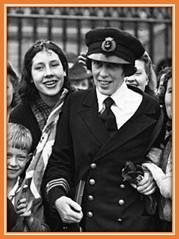
Drummond after receiving her MBE, July 1941
For her bravery under fire, Victoria Drummond was awarded the MBE (Member of the Order of the British Empire) and the Medal of Courage at Sea. She became the first female engineer to receive these honors.

In April 1942, Drummond joined the 7,071 GRT Manchester Port of Manchester Liners as Fifth Engineer in Liverpool. The ship was unkempt and dirty, meals were poorly served, including in the kitchen, and Captain Davis appeared to be constantly drunk. Nevertheless, Manchester Port was assigned as the Commodore Ship for the ON 89 convoy heading to North America. The ship made the crossing and loaded dynamite in Quebec, Trois-Rivières, on May 17. On May 20, the ship arrived in Halifax to join an eastbound convoy. Drummond reported Davis for drunkenness and was removed from the ship under police escort on May 21, with Captain Middleton taking over. Manchester Port joined the HX 191 convoy that left Halifax on May 24 and reached Liverpool on June 6. The ship discharged its explosive cargo in Manchester, and Drummond returned to her sister ships in Lambeth.
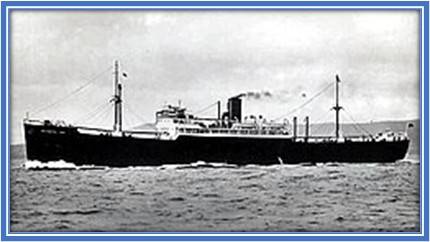
Manchester Liners’ Manchester Port, on which Drummond was Fifth Engineer in 1942
You would think that would be enough. You would think Britain would finally acknowledge what she had proven. You would be mistaken. After the war ended in 1945, Victoria applied once again for the British Chief Engineer certificate. The Board of Trade told her that at 51 years old, after five years of wartime service that included saving a ship under enemy fire, she would have to take the exam for the 38th time. Victoria Drummond looked at them and said no. Instead, she applied for the Panama Chief Engineer exam. The exams were anonymized; the examiners did not know the candidate's name or gender. She succeeded on her first attempt.
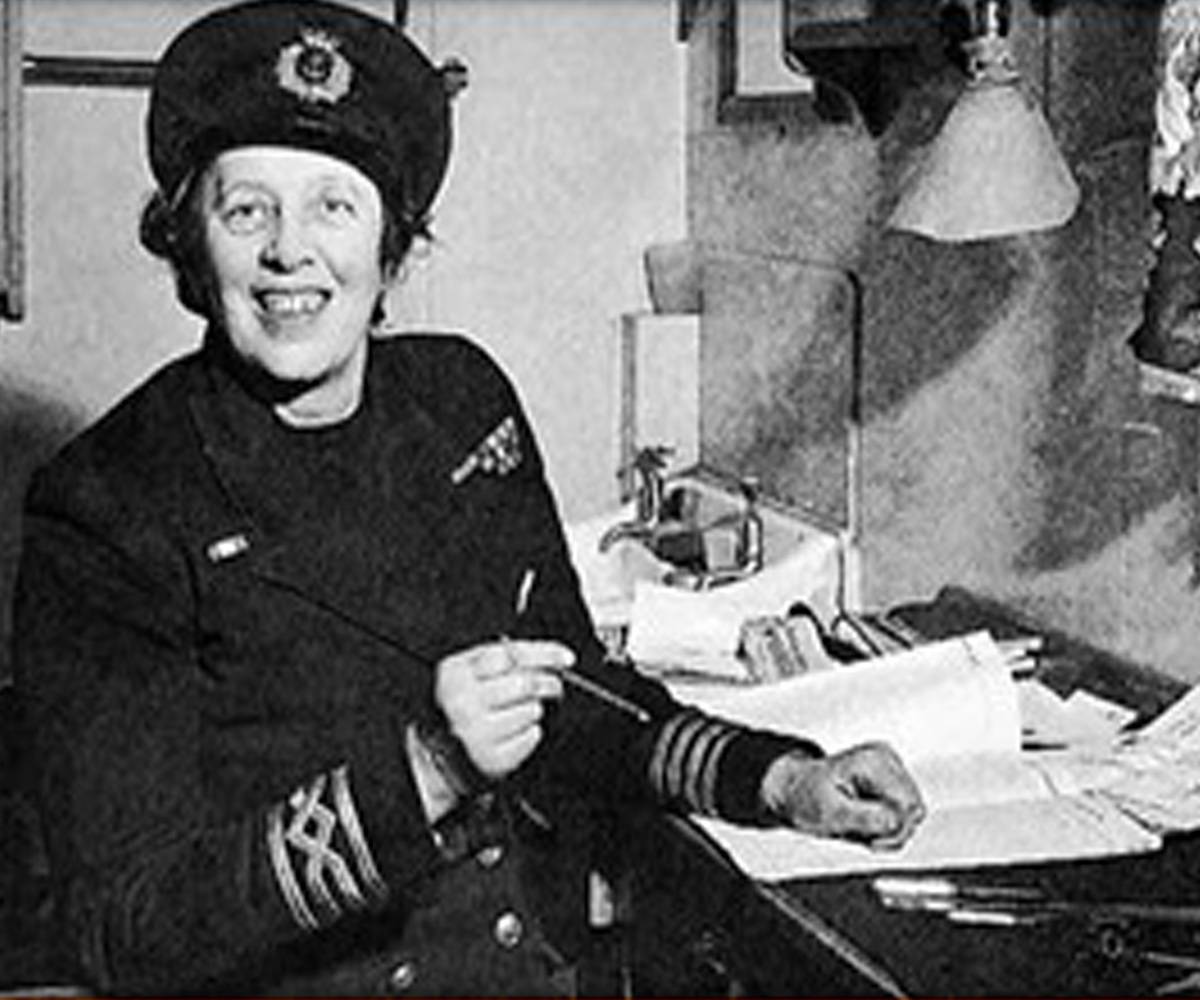
For the next 17 years, Victoria Drummond served as Chief Engineer. However, as British shipping companies still did not fully accept her, she mostly worked on unkempt ships under foreign flags. She made her final voyage at the age of 66 on a ship registered in Hong Kong that was unseaworthy.
Victoria Drummond retired in 1962 after 40 years of maritime service. She quietly passed away at the age of 84 on December 25, 1978. She was buried at Megginch Castle in Scotland, where she was born 84 years ago in a privileged setting.
Source: www.denizhaber.com