
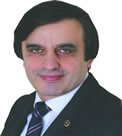
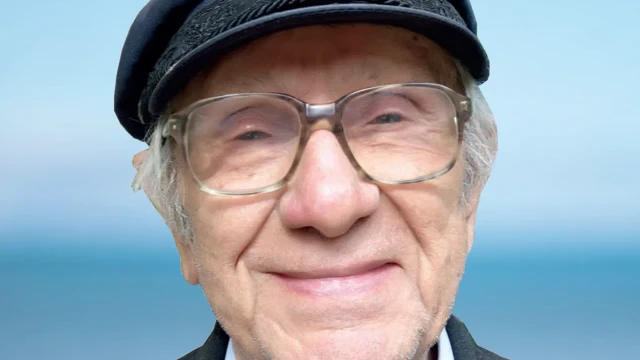
Refik Ağabey, for so we called him, our elder brother of the sea, used to send me his articles. We would publish them on DenizHaber. A few days would pass, and then the telephone would ring. “Cahit, why are these comments not being published?” He suspected that unseen hands were erasing the comments left beneath his writing. I would open the site and look. The comment section worked exactly as it should. Nothing had been erased.
I did not understand it then. I searched for the fault on the screen. Yet Refik Ağabey was not asking me a technical question. He was asking as a master asks who has called from the bridge on the radio and stands waiting for an answer. Every seafarer knows that silence. You call, and the channel is mute. You call again. As the silence lengthens, a man first doubts his instrument. For it is far heavier to believe that no one on the other side is listening.
He knew from his own life where a piece of writing may carry a person. He tells the tale in the interview Nermin İstikbal Ocaklı conducted for SeaNews in 2019. He was born in Ordu in 1927, four years younger than the Republic, the son of a schoolteacher. Having finished Trabzon High School, he made his way to Istanbul in the very midst of the war, waiting days on end for a train. His dream was medicine. They turned him away because he was sixteen. In those days the newspaper Akşam printed a story every evening. One evening, at the place where the story ended, he saw the notice of the Higher School of Maritime Commerce. Had he not read that story, had the notice stood on another page, he would never have seen it. That notice led him to Ortaköy, to the gate of a school at the water’s edge. The last line of a story became the first line of a life.
The memory I love best in that same interview is set aboard the tramp steamer Ardahan. The year is 1951, and he is third officer. At Derince they have loaded wheat bound for Italy. The master places a pink sheet of paper in his hand and bids him prepare a time sheet. He is hearing the term for the first time. He did not hide his ignorance. He confessed it plainly. The chief officer handed him a book. He read it on the passage to Italy. By the time they made port, that sheet had become his own work.
To me, the whole of Refik Ağabey’s life seems gathered within that scene. A young man honest enough to say that he does not know. A shipmate who does not begrudge the book in his hand. And between them a long sea road, open for reading.
This is what the sea teaches. In one port you stumble upon a custom, aboard one ship upon a word. A thing you believed could be done in only one way at home, you find done quite otherwise elsewhere. First you are astonished, then you begin to think. When you return, you look with other eyes upon all that you had for years taken as given. The eye that holds its own culture above every other grows gentle as it comes to know other worlds. A man goes on loving what is his own. But he learns to treasure what is another’s as well. Thus do harbours enlighten the seafarer.
That is how I knew Refik Ağabey. He thought with his own mind. Kant defines enlightenment as the courage to use one’s own understanding. Refik Ağabey’s generation learned the same lesson from Atatürk, holding science to be the truest guide in life. And in all his days he sought no other guide. He took delight in learning what he did not know.
Before the one who has found the light lie two roads. He may keep it for himself, or he may share it. Refik Ağabey chose the second. As a cadet he had filled two notebooks with the English equivalents of maritime terms. Those notebooks grew into a dictionary, in pursuit of whose every word he spent twenty-five years. He printed his book on maritime commerce with his own retirement gratuity. He taught young seafarers, and he published a magazine for children. He placed his dictionaries on the internet, free to all, and called himself “the man who sends dictionaries wandering across the sky for seafarers.” All this labour he counted a debt of fidelity, owed for the care his school had once shown him. The book a shipmate had held out to him aboard the Ardahan, he in turn held out, years later, to seafarers he would never meet.
Ibn Khaldun writes in the Muqaddimah that learning and the crafts flourish only where they are sought after. Knowledge, he holds, multiplies in a society that asks for it, where ʿumrān, civilisation itself, has advanced. Which is to say that the reader is as needful as the writer, and the one who wonders as needful as the one who tells. And ʿasabiyyah, that feeling of solidarity which in the same book binds men to one another, was in Refik Ağabey the devotion he bore to his profession and to its young. He gave his own share, and more than his share. He asked neither wealth nor office in return. He waited for a question. He waited for an objection, for someone to say, “This part I did not understand.” Every writer longs to be read, longs to be understood. When a society’s curiosity cannot keep pace with what its writer gives, what remains is those telephone calls.
Today I find myself thinking. There truly was a power that erased the comments, Ağabey. Its name was indifference. And we were part of it. Did we ever hold that conversation with you as fully as we should have?
If he was wounded, he never turned away. He would call again. “I have an article,” he would say. While we were still speaking of one piece, his mind had long since sailed on to the next. He was ninety-nine years old, and still he spoke of the work he meant to do. Attilâ İlhan, in his poem An Gelir, tells of the moment when the old ardour within a man is suddenly extinguished. That moment never came to Refik Ağabey. His body grew old. His ardour did not. What kept him upright was less the years he had left astern than the work that lay ahead of his bow.
A lighthouse burns without waiting for the thanks of ships. But it is a man who lights the lamp. And a man wishes to know that his light has shown some vessel the way. Upon how many young officers’ first time sheets, upon how many students’ sleepless nights before an examination that light of his fell, he himself could never know. We knew. We were late in telling him.
We lost him on the eleventh of November. Yesterday, at the hour of the afternoon prayer, we stood in our rows at Şakirin Mosque. That brief sovereignty which Cahit Sıtkı Tarancı foretells for us all at the close of his poem Otuz Beş Yaş, that last honour lasting no longer than a single prayer, was yesterday Refik Ağabey’s. Then we laid him in the earth at Karacaahmet. I believe that, until he reached that stone, he did in full all that this world had laid upon him. He was enlightened, and he enlightened. He did not keep the light to himself.
One more leaf has fallen from the bough this November. The leaf falls, the tree remains. His books stand on the shelf, and his dictionaries wander the sky still. Now, when I open one of his articles, it is I who wish to make the call. To say, “Ağabey, I have read your article. Shall we talk a little?”
Your call has been received, Refik Ağabey. Late, but received.
May your way lie open, and your last haven be full of light.