
SeaNews Türkiye - Maritime Intelligence
    Opinion

    Costa Concordia and Titanic: Same errors, same fate!

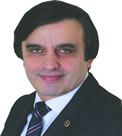
    Capt. Atty. Cahit İSTİKBAL

    Capt. Atty. Cahit İSTİKBAL

    Columnist

    16 views

    It is one of the most tragic maritime accidents in recent times. The 7-year old, 291 meters long cruise ship Costa Concordia capsized outside Giglio Island harbor on the 13th of January 2012, killing 32 people. 

    The Costa Concordia was carrying 4,252 people from all over the world and was on the first leg of a cruise around the Mediterranean Sea. She had left the Italian port of Civitavecchia in Lazio, when she hit a reef during an unofficial near-shore salute to the local islanders. 

    To perform this manoeuvre, Captain Francesco Schettino had deviated from the ship’s computer-programmed route, claiming that he was familiar with the local seabed.

    It was 20:43:25 in the evening when the Costa Concordia set course on a heading to Le Scole rocks. There was only a distance of 2 ship’s length when the Costa Concordia’s bridge team saw the razor-sharp Le Scole rocks right ahead, if not a little bit on her starboard side. At this moment the Captain gave the order: “Hard to starboard” 

    The ship had a speed of 15.9 knots. She had started to turn to her starboard side, but at the same time she was drifting in a direction opposite to where she was being steered to: right onto the Le Scole rocks. The time was 20:44:53 and the speed was 15.3 knots when the Costa Concordia’s bow just missed the rocks but the ship was still drifting towards the lethal Le Scole rocks. 

    And now comes the contentious point. 

    Could the Costa Concordia have missed the rocks, if the ship was put “hard to port” when the bow had just missed the rocks?

    Well, this is the most recent argument of Captain Schettino, who has put the blame on the Indonesian helmsman of the ship. 

    Schettino said: “From the black box, you can hear that I had asked the helmsman to move the rudder to port and said “port, 20 to the port!”. At that time the ship had an angle leaning towards the starboard and the error of not putting it to the port immediately -, the delay of this action has, caused this accident”  

    Well, on paper, Schettino is right! In ship maneuvering terms, such a command would have resulted in the starboard-side swing of the ship’s stern (away from the rocks).   Theoretically this could have saved the ship’s stern from hitting the rocks hard. Of course this is if you can forget about the initial drift.

    As a ship maneuvering expert, I analyzed the ship’s AIS track many times, and also watched the animation made by Transas which shows how the ship had drifted towards the rocks.  From the speed data, it is clear that the ship’s speed had dropped during the whole process, which was good for reducing the impact of collision but bad for the maneuverability of the ship. My final thought is that the collision with the rocks was inevitable from the point when Captain Schettino took the wrong decision at 20:43:25 to take the ship just 600 meters away from the rocks!

    This reminded me of another tragic disaster, when the Titanic hit an iceberg in the Atlantic, probably an iceberg as sharp as the rocks of Giglio Island. 

    “Iceberg, right ahead!”

    These three words were spoken by Lookout Frederick Fleet at 11:40 p.m. on 14 April 1912 from the crow’s nest of the ill-fated RMS Titanic. The story goes that, reacting to this three-word warning, First Officer William Murdoch ordered “hard a-starboard.” The ship started to turn to port, but its bow grazed the iceberg.

    Looking at both incidents- Titanic and Costa Concordia- I see that the situations were nearly the same, preventive actions were nearly the same, and results, also were nearly the same! Both ships were badly damaged from the side, that made the transvers bulkheads useless and as a result, their sinking was inevitable.

    (Attentive readers might have noticed the above command and resultant reaction of the Titanic: Helmsman was ordered hard to starboard and ship moved to port. The reason is that in the British Merchant Navy steering orders used to be given as helm orders as though the helmsman at the wheel was actually holding a tiller. So ‘hard a starboard’ would mean ‘put your helm or tiller hard a starboard’. This would turn the ship’s rudder to port and so the ship would turn to port.)

    In both situations, both with the Titanic and  the Costa Concordia , a preventive command could have stopped the ship in  the shortest time possible; which is: 

    “Stop! Full astern!”

    On ships, this action is called as “Crash stop” in which the engine is put to full-astern without any concern about possible damage to the main engine A modern cruise ship with strong engines can stop within 3 ship’s length at 24 knots speed when put to full astern. In the case of Costa Concordia which was at 15,9 knots and at a distance of more than 2 ship’s length to the rocks ahead- the  time when Schettino had ordered “hard to starboard”; nothing but a “crash stop” could  have saved the ship and lives of 32 passengers, including the Captain’s  own professional life.

    During a crash-stop manoeuvre, the ship’s heading can be maintained by the bow thrusters in order to avoid damage to the sides. A head-on crash onto the rocks at low speed-in case the ship could not have stopped before- would result in insignificant damage to the ship and the bulkhead doors would have perfectly prevented the ingress of water... ν

    Capt. Atty. Cahit İSTİKBAL

    About the Author

    Capt. Atty. Cahit İSTİKBAL

    Columnist

    Born in Rize, he completed his primary, secondary, and high school education in his hometown. He subsequently pursued his undergraduate studies at the Istanbul Technical University Maritime Faculty (formerly known as the Yüksek Denizcilik Okulu – YDO).

    Early in his maritime career, he served aboard vessels operated by DB Deniz Nakliyat. He then discharged his National Service as a Reserve Officer at the General Staff Headquarters, where he rendered his services as an English interpreter.

    Following his military service, he embarked on a career in commercial shipping by serving on passenger vessels of the Turkish Maritime Lines (Denizyolları İşletmesi), holding the positions of Deck Officer and Second Captain. Thereafter, he commenced his long-standing career as a harbour pilot within Turkish Maritime Enterprises. His seafaring expertise has been applied in the Istanbul and Çanakkale Straits as well as at the Port of Istanbul, where he now holds the post of Chief Harbour Pilot under the auspices of the Directorate General of Coastal Safety.

    In addition to his maritime vocation, he is accredited as an English-speaking national tourist guide. Leveraging this qualification together with his extensive knowledge and practical experience of the Bosphorus and surrounding straits, he has had the distinct honour of guiding special Bosphorus cruises for foreign ministers and heads of state.

    Since the 2016–2017 academic year, he has been imparting technical maritime instruction and Maritime English at the Faculty of Water Sciences, Istanbul University, in his capacity as a certified Maritime Educator. Furthermore, he lectures on Maritime Law at both the Faculty of Ship Construction and Marine Engineering and the Faculty of Marine Machinery Operation Engineering at Yıldız Technical University.

    Between 1997 and 1999, he served on the Turkish Delegation during the Turkish Straits negotiations at the International Maritime Organisation (IMO). From 1998 to 2004, he held the office of General Secretary of the Turkish Harbour Pilots Association, and between 2006 and 2008, he was elected President of the same Association.

    At the 2002 general assembly in Germany, he was elected Deputy President of the International Association of Harbour Pilots. He was re-elected to this prominent post for a second term in 2006 in Cuba and for a third term in 2010 in Australia.

    Since 1997, he has actively participated in numerous significant meetings—including those of the IMO’s Maritime Safety Committee, the Sub-Committee on Navigational Safety, and the Assembly—serving as a member of the Turkish delegation. In these capacities, he has represented the Turkish Harbour Pilots Association, the International Association of Harbour Pilots (IMPA), and, in his role as President, the Maritime Safety Association (DEDER).

    Since 2015, he has assumed the role of race commodore responsible for surface water safety at the Bosphorus Intercontinental Swimming Championships organised by the Turkish National Olympic Committee. In addition, he served as race commodore for swimming competitions arranged by the Istanbul Metropolitan Municipality on the Kınalıada–Maltepe leg and in the environs of Kınalıada in 2018 and 2019, and he was accepted as a member of that organisation in 2019.

    He maintains memberships in several professional bodies and non-governmental organisations—notably the Turkish National Olympic Committee—and currently presides over the Maritime Safety Association (DEDER).

    A pioneer in maritime online publishing, he was among the first to contribute to the inception of the Turkish Harbour Pilots Association’s website in 1998, thereby setting the trend for internet-based dissemination of maritime news in Turkey and internationally. In 2002, with a view to further expanding comprehensive maritime news reportage, he established his own maritime news website.

    His written work has been featured in numerous national and international books, periodicals, and online platforms. He has also delivered papers on subjects such as the Turkish Straits, maritime risk and its management, and the prevention of marine pollution at a multitude of national and international seminars, symposiums, and panel discussions.

    In 2020, he successfully completed his master’s thesis—entitled “The Eastern Mediterranean Issue in Terms of Energy Resources and Maritime Jurisdiction”—at the Department of Maritime Transportation Engineering, Institute of Natural Sciences, Istanbul Technical University; this thesis forms the foundational basis of the present book. In the same year, he authored the volume “The Eastern Mediterranean Issue”, published by Seçkin Publications.

    An alumnus of the Faculty of Law at Maltepe University, he is presently pursuing doctoral studies in Private Law at the Institute of Social Sciences, Maltepe University. In parallel with his academic pursuits, he currently serves as a consultant lawyer at a prominent law firm. He is proficient in both English and French, and on a personal note, he is married with two children.

    Capt. Atty. Cahit İSTİKBAL — All Columns

    Comments (0)

    Leave a Comment

    Your comment will be reviewed before publishing.

    SeaNews Türkiye - Maritime Intelligence

    The leading source for global maritime news, shipping intelligence, and logistics analysis. Connecting the oceans of information.

    Lojiturk - Kamer Sokak No: 12/1
    Küçüksu Kandilli 34684
    Üsküdar/İstanbul, TÜRKİYE

    Popular

    • Check back soon...

    Newsletter

    Subscribe to our daily briefing and never miss a headline from the maritime world.

    You can unsubscribe at any time. Privacy Policy

    © 2025 SeaNews Türkiye. All rights reserved.