
Maritime Autonomous Surface Ships (MASS) and the Future of Maritime Careers and Pilotage
Capt. Cahit İSTİKBAL*
cahit@istikbal.org
ABSTRACT
In 2017, during a demonstration at the Port of Copenhagen, the 28-meter-long tug Svitzer Hermod successfully executed a series of remotely controlled maneuvers. While the captain was located at a remote operation center in Svitzerheadquarters, the tug was moored along the quay, anchored, then rotated 360°, and finally returned to the quay—all without direct human presence on the bridge. In parallel, a fully qualified crew remained onboard the tug in case of any technical failure or loss of communication. Meanwhile, a global initiative led by Japanese shipbuilders and maritime shipping companies has aimed to significantly reduce marine accidents by realizing autonomous commercial vessels by 2025.
These developments raise important questions about the future of traditional maritime professions, such as ship captains, deck and engine officers, and maritime pilots. Some experts argue that large-scale vessels will never become entirely unmanned due to the risks posed by potential communication failures, while others question whether electronic systems are currently robust enough to ensure safe navigation. Moreover, key industry organizations such as the International Maritime Organization (IMO) and the International Association of Marine Aids to Navigation and Lighthouse Authorities (IALA) are preparing for a new era by advancing the concept of “e-navigation.”
Although expert opinions vary, there is consensus that maritime careers will undergo a significant transformation. This paper evaluates the possibility and scope of unmanned vessels in the future and discusses how maritime careers could mutate or adapt in response to developments in autonomous ship technology. Finally, it outlines recommendations for industry, educational institutions, and Administrations to consider in their medium- and long-term career planning.
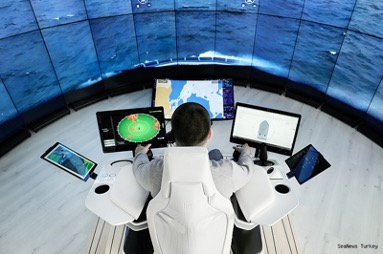
Photo-1: Remote-Captain of the tug operating the tug Svitzer Hermod at Remote Operation Centre. (Photo: SeaNews Turkey- www.seanews.com.tr)
Maritime Autonomous Surface Ships (MASS) and the Future of Maritime Careers and Pilotage
INTRODUCTION
Throughout maritime history, the industry has continually adapted to emerging technologies and evolving operational standards. In an environment as unpredictable as the open sea, unforeseen technical failures and accidents can lead to significant losses of vessels, cargo, scientific data, and commercial reputation. Therefore, maritime systems require high safety performance and sustainable safety levels.
Recent advancements in automation, artificial intelligence, and systems integration have introduced the concept of Maritime Autonomous Surface Ships (MASS). These developments promise to reduce operational costs, mitigate risks, and achieve more environmentally friendly maritime operations.
The idea of autonomous ships is not entirely new. In 1898, the renowned inventor Nikola Tesla demonstrated a small boat controlled by radio waves, which he maneuvered in a water tank and even switched on and off the lights remotely—without any visible connection between the controller and the vessel [1]. This demonstration laid the groundwork for the concept of remotely controlled vehicles. Since the late 20th century, progress in unmanned air, underwater, and ground vehicles has further propelled the possibility of unmanned commercial ships.
Today, several major projects are advancing the concept of autonomous and unmanned vessels. AAWA (The Advanced Autonomous Waterborne Applications Initiative) studies the designs and technical enablers needed for autonomous ships. ReVolt is a Norwegian concept study funded for short-sea container transport in fjords, envisioning a battery-powered unmanned vessel. The MUNIN (Maritime Unmanned Navigation through Intelligence in Networks) project has investigated the feasibility of unmanned bulk carriers operating on deep-sea routes [2]. All these endeavors aim to satisfy the maritime industry’s sustainability demands—economic, ecological, and social.
In addition to the technological feasibility, the transition to autonomous vessels has critical operational and regulatory implications. Large ships cannot be left entirely unmanned without addressing potential communication breakdowns, system failures, and hazardous weather conditions. At the same time, the widespread introduction of electronic navigation and automation may significantly impact traditional maritime professions and require new competencies in the field of e-navigation, a concept being developed by organizations like the IMO and IALA.
Regardless of differing views, experts agree that ship captains, deck and engine officers, and pilots will not retain their roles as they exist today. Instead, these professions are likely to evolve or be reshaped by new skill sets and responsibilities related to autonomous systems, remote operations, and digital technologies.
THE DEVELOPMENT OF AUTONOMOUS SHIPS AND KEY CONCEPTS
Autonomy and Levels of Automation
Autonomy refers to a system’s ability to make and implement decisions without external intervention, even in uncertain or unexpected situations. A Maritime Autonomous System (MAS) is not necessarily unmanned; in some operational phases, human supervision and control may still be necessary. The degree of autonomy indicates how extensively a system can decide, problem-solve, and apply strategies while limiting the need for human input [3].
The most widely known framework for autonomy levels was proposed by Sheridan, who formulated a ten-level scale. At Level 1, the human operator exercises full manual control, whereas at Level 10, the system operates completely autonomously, with no provision for human intervention (Table-1). Yet, Sheridan’s classification does not fully account for the specific requirements of maritime operations. Consequently, researchers like Porathe, Prison, and Man have proposed more application-focused models for autonomy in ships [4].
Below is a summary of Sheridan’s autonomy levels:
| Level | Definition |
|---|---|
| 10 | The computer does everything autonomously and disregards the human. |
| 9 | The computer informs the human only if it (the computer) deems it necessary. |
| 8 | The computer informs the human only upon request. |
| 7 | The computer automatically executes actions and informs the human if needed. |
| 6 | The computer allows the human a limited time to veto its automatic execution. |
| 5 | The computer executes its suggested action once the human approves it. |
| 4 | The computer proposes a single course of action. |
| 3 | The computer narrows the choices to a few possible actions. |
| 2 | The computer provides a complete set of decision alternatives. |
| 1 | The computer offers no assistance; the human makes and executes all decisions |
Table-1: Sheridan’s Autonomy Levels (Summary)
For maritime applications, a distinct four-level autonomy scheme has been suggested, focusing on practical needs. In this scheme, Level 0 represents complete remote control, while Level 3 indicates a fully autonomous state (Table-2). Intermediate stages reflect different modes of human-computer collaboration in decision-making.
| Level | Concept | Definition |
|---|---|---|
| 0 | Remotely Controlled | The vessel is operated entirely from a remote center by a human operator. |
| 1 | Automatic | The vessel is under the remote operator’s control, but certain subsystems (e.g., dynamic positioning) may function autonomously. |
| 2 | Semi-Autonomous | The vessel executes certain predefined tasks (e.g., collision avoidance) autonomously, while the operator retains major decision-making authority. |
| 3 | Fully Autonomous | The vessel sails from berth to berth with minimal human intervention. |
Table-2: A Four-Level Autonomy Scheme for Maritime Operations
Depending on navigational risk and operational complexity, vessels may shift between these autonomy levels dynamically. While a ship may run fully autonomous in open ocean (Level 3), it may revert to partial or remote control(Level 0-2) in congested areas, narrow straits, or harbor approaches (Table-3).
| Maritime Zone | Description | Recommended Level |
|---|---|---|
| High Seas | Open ocean regions (e.g., Atlantic, parts of the Mediterranean) | 3 |
| Coastal Areas | Archipelagos, regions with significant navigational hazards | 2 |
| High-Risk Areas | Traffic Separation Schemes, reefs, straits, areas prone to piracy | 1 |
| Pilotage Waters | Harbors, approaches, narrow channels, straits | 0 |
Table-3: Recommended Autonomy Levels by Maritime Zone
REMOTELY CONTROLLED MANEUVER: THE CASE OF SVITZER HERMOD
In January 2017, the Svitzer Hermod—a 28-meter-long tug—demonstrated a successful series of remotely controlled maneuvers [5]. Operating in the Port of Copenhagen, the captain, situated in an onshore remote operating center at Svitzer’s headquarters, handled berthing, anchoring, and a 360° rotation before guiding the vessel back to the quay.
Built at the Sanmar Shipyard in Turkey based on a Robert Allan design, the vessel employs the Rolls-Royce Dynamic Positioning System as the core element of its remote-control functionality. It is also equipped with Rolls-Royce MTU 16V4000 M63 diesel engines, each rated at 2000 kW. Through sensor fusion and advanced software integration, the captain in the remote operating center maintains a high level of situational awareness.
The Remote Operation Center (ROC) was specifically designed using experienced captains’ input to optimize human-machine interaction, rather than merely replicating a conventional wheelhouse arrangement. During the demonstration, a qualified onboard crew stood ready to intervene in the event of any technical or communication failure.
THE HUMAN ELEMENT AND THE “LOOKOUT” CHALLENGE
Human error accounts for approximately 85% of maritime accidents. In modern commercial vessels, the bridge is often manned by minimal personnel, increasing the risk of fatigue and stress-related errors. Shifting the human operator from onboard duty to a shore-based control room can mitigate some of these risks. Nevertheless, new risks may emerge due to the operator’s physical detachment from the vessel and the surrounding environment.
Moreover, significant legal and regulatory questions remain unresolved, such as how to fulfill the “proper lookout” requirement under COLREG Rule 5, which mandates every vessel maintain a lookout by sight and hearing at all times. Sensor technologies—visible and infrared cameras, radar, and LIDAR—offer the potential to replicate and even surpass human visual capacity, particularly in challenging conditions like night or fog [2]. However, concerns persist regarding reliability, maintenance, and cybersecurity.
Within the MUNIN project (2016), camera technology was combined with computer vision in the visible and infrared spectrum, demonstrating that sensor-based lookout could be safer than relying solely on human watchkeepers, under certain conditions. Although some navies and small-scale commercial applications have tested autonomous navigation systems successfully over the past two decades (Bertram, 2008; Manley et al., 2016), the full-scale civilian operation of large unmanned or autonomous ships remains subject to ongoing research and practical demonstration.
The removal of the conventional bridge, or its substantial alteration, would alter ship design significantly: living quarters, previously necessary for the crew, might no longer be essential, leading to lighter vessels with increased cargo capacity and better fuel efficiency. However, these design changes also raise questions about emergency response and onboard maintenance.
MASS AND THE E-NAVIGATION CONCEPT
E-navigation is a concept developed by the International Maritime Organization (IMO), in collaboration with the International Association of Marine Aids to Navigation and Lighthouse Authorities (IALA) and other stakeholders, to reduce the risks associated with human error by achieving more harmonized and efficient use of existing data (İstikbal, 2015). By integrating various data sources, e-navigation aims to facilitate safer and more secure maritime operations.
While MASS technology goes beyond the current scope of e-navigation, there are notable parallels. The vision for unmanned or autonomous vessels includes continuous monitoring from a shore-based control station through robust satellite or terrestrial communication networks [6]. Interoperability with e-navigation services is crucial for real-time decision-making, route optimization, and coordinating with port authorities and traffic management centers.
THE INTERNATIONAL MARITIME ORGANIZATION (IMO) AND MASS
During its 98th session (MSC 98) in June 2017, the IMO initiated a “Regulatory Scoping Exercise for the Use of Maritime Autonomous Surface Ships (MASS)” under documents MSC 98/20/2 and MSC 98/20/13. This process involves assessing whether existing IMO instruments—such as SOLAS, COLREG, STCW, and MARPOL—adequately cover autonomous or unmanned ship operations, and identifying any necessary amendments. A targeted completion date for the initial study was set for the early 2020s.
MASS might have impacts on maritime safety, port operations, security, incident response, and environmental protection. Many member states also emphasize the importance of human factors in evaluating how shipboard roles and responsibilities would be redistributed.
WHICH MARITIME CAREERS WILL BE AFFECTED?
The introduction of MASS will potentially reshape multiple aspects of maritime operations. At the IMO MSC 98 session, it was recognized that autonomy could affect safety, security, pilotage, port interactions, and other operational areas:
-
Ship Captains and Deck/Engine Officers
- Future captains may oversee vessels from remote operation centers, relying on advanced sensor data and communication links.
- Critical decision-making (e.g., collision avoidance) could still fall under human responsibility, but bridge watchkeeping roles might diminish.
- Engine officers may likewise transition to shore-based maintenance and monitoring facilities.
-
Maritime Pilots
- Pilotage is crucial in congested or high-risk waters. However, for autonomous vessels, pilotage may be conducted onboard or remotely.
- IMPA (International Maritime Pilots’ Association) currently defines pilotage as an activity performed on the ship’s bridge, creating a potential discrepancy with remote pilotage.
- In the near term, pilotage requirements may be addressed on a case-by-case basis, particularly in national or regional waters frequently used by autonomous or semi-autonomous vessels.
- The question remains whether remote control by a licensed pilot can be legally considered “pilotage” if the individual is not physically onboard the vessel.
-
Engineers and Technicians
- Certain complex maintenance tasks might still necessitate onsite staff; however, in some scenarios, unmanned operations could rely on scheduled remote diagnostics and specialized drone inspections.
- Shore-based control centers may employ engineers for real-time troubleshooting of ship systems, enhancing efficiency yet redefining traditional onboard roles.
-
VTS Operators and Remote Operations Center Personnel
- As automation progresses, Remote Operation Centers staffed by engineers, navigators, and data analysts will become a significant new field of employment.
- Collaboration between VTS (Vessel Traffic Service) operators and remote operation center personnel will require new training, certifications, and operational protocols.
In summary, maritime careers will shift, placing greater emphasis on digital literacy, artificial intelligence systems management, remote maintenance, and cybersecurity.
DISCUSSION
The feasibility of autonomous ships hinges on factors such as technical infrastructure, communication networks, software reliability, and legal frameworks. A single vessel engaged in international voyages must comply with numerous regional and international regulations, many of which were formulated with the assumption of onboard human presence.
Regulatory revisions cannot be performed without considering the potential operational and legal outcomes. The integration of remotely controlled or unmanned vessels raises critical questions about accountability, insurance, liability, and crew rights, as well as maritime environmental protection under instruments like UNCLOS.
Unmanned vessels or those operated remotely share many technical and operational challenges, including reliability of communication links, redundancy in propulsion and control systems, and robust cybersecurity. The assumption that unmanned ships can be as safe and reliable as crewed ships has not yet been definitively proven and requires extended trials, risk assessments, and continuous refinement of emerging technologies.
Rather than an immediate jump to completely unmanned deep-sea vessels, a phased approach is more plausible. Many projects consider partially unmanned or semi-automated ships where an onboard crew, albeit smaller, can intervene during critical operations, while the vessel remains autonomous or remotely controlled in open ocean settings. This hybrid model reduces operational costs by cutting down on crew numbers but still maintains a human presence for complex maneuvering or adverse weather conditions.
CONCLUSION AND RECOMMENDATIONS
The maritime industry stands at the threshold of profound change driven by digitalization, autonomous systems, artificial intelligence, advanced sensor technologies, and high-bandwidth communication. In the short-to-medium term, fully unmanned vessels may only see limited operation on specific routes. Over the long term, however, traditional occupations such as master, deck officer, engine officer, and pilot will likely transform in scope and practice. Rather than disappearing entirely, these professions will adopt new roles, emphasizing technological expertise, remote monitoring, and shore-based control.
-
Education and Certification
- Maritime education institutions should incorporate digital navigation, remote operation, and cybersecurityinto their curricula.
- Training simulators and research labs need enhancement to produce specialists in remote operations and advanced automation.
-
International and National Regulations
- Active engagement in IMO’s scoping exercises is essential, along with prompt national-level alignment of regulations.
- Defining the authority, status, and liability of maritime pilots and remote operation center personnel is a critical priority.
-
Technical Infrastructure and Communications
- Developing reliable, high-capacity satellite and shore-based communication networks is vital to meet autonomous vessels’ data requirements.
- System redundancies and robust cybersecurity measures should be integrated into vessel designs.
-
Emergency Response and Safety Procedures
- Tiered emergency protocols must be established for different autonomy levels, coordinating with VTS and onshore operations centers.
- In unmanned vessels, firefighting, rescue, and maintenance might rely on drone-based solutions or special intervention teams.
-
Employment and the Social Dimension
- New roles (e.g., remote operation specialists, data analysts, systems integrators) must be created, and existing maritime professionals should be retrained to fill these positions.
- Retraining and certification pathways should be supported for mariners transitioning to remote or digital roles.
In conclusion, autonomous vessels and remotely controlled maritime platforms present significant opportunities to enhance safety, efficiency, and sustainability in the shipping industry. This technological leap requires a holistic transformation involving legal, educational, infrastructural, and workforce considerations. The recommendations outlined in this paper aim to guide stakeholders—industry, academia, and government administrations—in strategic planning during this transitional era.
Literature
- Technical University of Denmark (TUD). 2017. A pre-analysis on autonomous ships. Retrieved on 29/08/2017 at https://www.dma.dk/documents/publikationer/autonome%20skibe_dtu_rapport_uk.pdf
- AAWA, 2016. Remote and autonomous ships: the next steps. London: Rolls-Royce.
- MUNIN, 2016. Marine Unmanned Navigation through Intelligence in Networks. [Online] Retrieved on 29/08/2017 at: http://www.unmanned-ship.org/munin/
- Levander, O., 2017. Autonomous Ships on the High Seas. IEEE Spectrum, Issue February.
- Bertram, V., 2008. Unmanned Surface Vehicles a Survey. s.l., s.n.
- Manley, J.E., Leonardi, A. & Beaverson, C., 2016. Research to operations: Evaluating unmanned surface vehicles. IEEE explore.
- Kongsberg, 2016. Automated Ships Ltd. and KONGSBERG to build first unmanned and fully-automated ves-sel for offshore operations. [Online] Retrieved on 29/08/2017 at: https://www.km.kongsberg.com/ks/web/nokbk0238.nsf/AllWeb/65865972888D25FAC125805E00281D50?OpenDocument
- Herman, D., Galeazzi, R., Andersen, J.C. & Blanke, M., 2015. Smart Sensor Based Obstacle Detection for High-Speed Unmanned Surface Vehicle. IFAC-Papers Online, 48(16), pp. 190-197.
- İstikbal, C. 2015. All about e-navigation [Online] Retrieved on 29/08/2017 at: http://www.seanews.com.tr/yazarlar/cahit-istikbal/all-about-e-navigation/144154/
- Hans-Christoph Burmeister, Wilko Bruhnb, Ørnulf, Jan Rødsethb, Thomas Porathec. Autonomous Unmanned Merchant Vessel and its Contribution towards the e-Navigation Implementation: The MUNIN Perspective,International Journal of e-Navigation and Maritime EconomyVolume 1, December 2014, Pages 1-13
- Rødseth et al., 2013. Rødseth, Ø.J., Kvamstad, B., Porathe, T. and Burmeister, H.-C. (2013), Communication Architecture for an Unmanned Merchant Ship. OCEANS - Bergen, 2013.