Shanghai Port has successfully completed its first dual bunkering of biomethanol and LNG for international vessels, enhancing green fuel supply capabilities.
Shanghai Port has, for the first time, simultaneously completed the bunkering of two types of green marine fuel for two international vessels at an offshore anchorage, marking a milestone in the port's ability to provide diversified, large-scale supplies of alternative marine fuel, chinanews.com reported on Sunday.
The operation took place at the Luehuashan Anchorage off Shanghai from Saturday to Sunday. Two dedicated bunkering vessels serviced two international container ships in parallel, demonstrating the port's growing capacity to support the shipping industry's transition to lower-emission fuels.
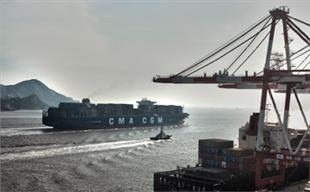
The methanol bunkering vessel Haigang Zhiyuan supplied domestically produced biomethanol to CMA CGM Osmium, a Malta-flagged, methanol-powered containership. At the same time, the LNG bunkering vessel Haigang Weilai supplied liquefied natural gas (LNG) to Kota Elan, a Singapore-flagged, dual-fuel LNG container ship.
Most of the biomethanol used in the operation was produced by Shanghai Electric's Taonan project, according to the report. The methanol feedstock was transported by land from Taonan, in Northeast China's Jilin Province, to Dalian Port in Liaoning Province. From there, it was shipped by sea to storage tanks in Shanghai before being used to bunker vessels at Shanghai Port.
This process established a cross-regional supply chain linking production in Jilin, transshipment in Dalian, and bunkering in Shanghai, the report said.
The cross-provincial supply chain from Northeast China to Shanghai expands the market for domestically produced biomethanol and highlights progress in building a north-to-south green fuel transportation corridor, according to the report.
For shippers and cargo owners, the development signals broader access to green fuel bunkering at one of the world's busiest container ports. A more diversified fuel supply supports both regulatory compliance for vessels operating on methanol and LNG and greater reliability for carriers scheduling refueling along major trade lanes. The parallel bunkering of two fuel types also points to improved operational efficiency at the anchorage, reducing the time vessels spend waiting for service.
The successful operation reinforces Shanghai Port's position as a hub for alternative marine fuel supply, strengthening its capacity to meet rising demand as global shipping advances toward lower-carbon operations.