
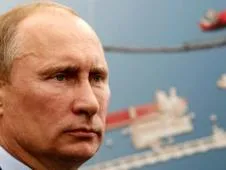
Putin reaffirms Russia's commitment to year-round Arctic shipping route development with China and partners at the Eastern Economic Forum.
Russian President Vladimir Putin, addressing the plenary session of the 11th Eastern Economic Forum, reaffirmed Russia's commitment to advancing the development of the Arctic shipping route in partnership with China and other strategic collaborators.
Putin noted that in August of this year, a Chinese container vessel completed the first-ever transit through Russian northern waters to Murmansk - a milestone the Russian side intends to build upon through deepened cooperation with partner nations in the near term.
Putin further outlined that the trans-Arctic transport corridor originates from St. Petersburg and Murmansk, extends along the Northern Sea Route to Vladivostok, and connects onward to Asia-Pacific nations. Russia has set a clear and deliberate objective: to achieve year-round navigability along this strategically significant passage.
Against the backdrop of mounting complexity in global shipping and trade, Putin emphasized that the Arctic route is positioned to serve as a guarantor of flexibility and security in international transport - opening new opportunities for transit shipping, coastal navigation, and the uninterrupted supply of goods to Russia's Arctic territories.
The 11th Eastern Economic Forum convened from 1 to 4 September in Vladivostok under the theme 'Far East - Development for the People.' Spanning more than 3,000 nautical miles (approximately 5,556 kilometers), the Northern Sea Route connects the Barents Sea to the Bering Strait, forming the shortest maritime corridor between Europe and Asia and the most direct sea link between Russia's Far East and its European regions. Cargo transported from the Far East to Europe via the Arctic route covers a distance of approximately 14,000 kilometers.
The sustained deterioration of security conditions across the Red Sea and the Persian Gulf continues to drive a measurable rise in industry attention and freight demand along the Arctic corridor - reinforcing its position as a credible and increasingly vital alternative in the architecture of global trade.