
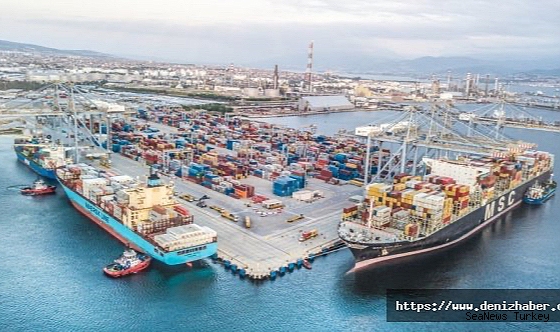
MSC will deploy megamax container ships on its Sentosa service, enhancing capacity and reliability at the Port of Long Beach starting September 2026.
Mediterranean Shipping Company (MSC) is revising its Sentosa service to introduce regular weekly calls by 'megamax' container ships of more than 23,000 TEU at the Port of Long Beach. The first vessel is scheduled to arrive in September 2026.
The change marks a milestone for Southern California, where regular weekly calls by ultra-large container vessels on the transpacific trade would establish a new benchmark for vessel size at one of the region's principal gateways.
The Sentosa service links Southeast Asia with the US West Coast. Its rotation has included port calls at Port Klang, Singapore, Laem Chabang, Vung Tau, Busan, Long Beach, and Oakland, positioning the loop as a direct connection between key Asian manufacturing hubs and the North American market.
MSC's decision reflects growing confidence in the Port of Long Beach's capacity to accommodate the largest vessels afloat. Port leadership has cited the performance of Total Terminals International, which has demonstrated its ability to handle ultra-large ships without operational disruption. The terminal recently processed approximately 41,000 vessel lifts in a single week, according to port officials.
The deployment aligns with a wider industry trend. Ocean carriers are increasingly concentrating megamax tonnage on transpacific routes served by ports with the berth depth, crane reach, and terminal throughput required to work vessels of this scale efficiently. As global fleets add larger ships, gateways capable of handling them are drawing a rising share of cargo volumes.
For cargo owners, the revision carries implications for both capacity and reliability. Larger vessels can increase available space on the Southeast Asia–US West Coast lane, though the concentration of high volumes at fewer calls places added weight on terminal productivity and inland connections. Shippers routing goods through Long Beach will monitor berth availability, discharge times, and dray and rail capacity to gauge the impact on end-to-end transit performance.
The introduction of megamax calls on the Sentosa service underscores the continuing evolution of the transpacific trade, where vessel upsizing and port readiness are increasingly shaping how cargo moves between Asia and North America.