China's container shipping is increasingly using the Northern Sea Route, offering faster and more efficient trade links to Europe.
China's container shipping industry is increasing its use of the Northern Sea Route as an alternative to traditional passages, according to Google's combined dispatches.
The 4,890-TEU Istanbul Bridge completed its first direct voyage from China to the UK via the Arctic corridor, covering about 7,500 nautical miles in 26 days. The journey took half the time of traditional routes such as the Suez Canal.
China carried out 14 containership voyages between Asia and Europe in 2025, compared with 11 in 2024 and seven in 2023. The figures show steady growth in Chinese-led activity along the Northern Sea Route.
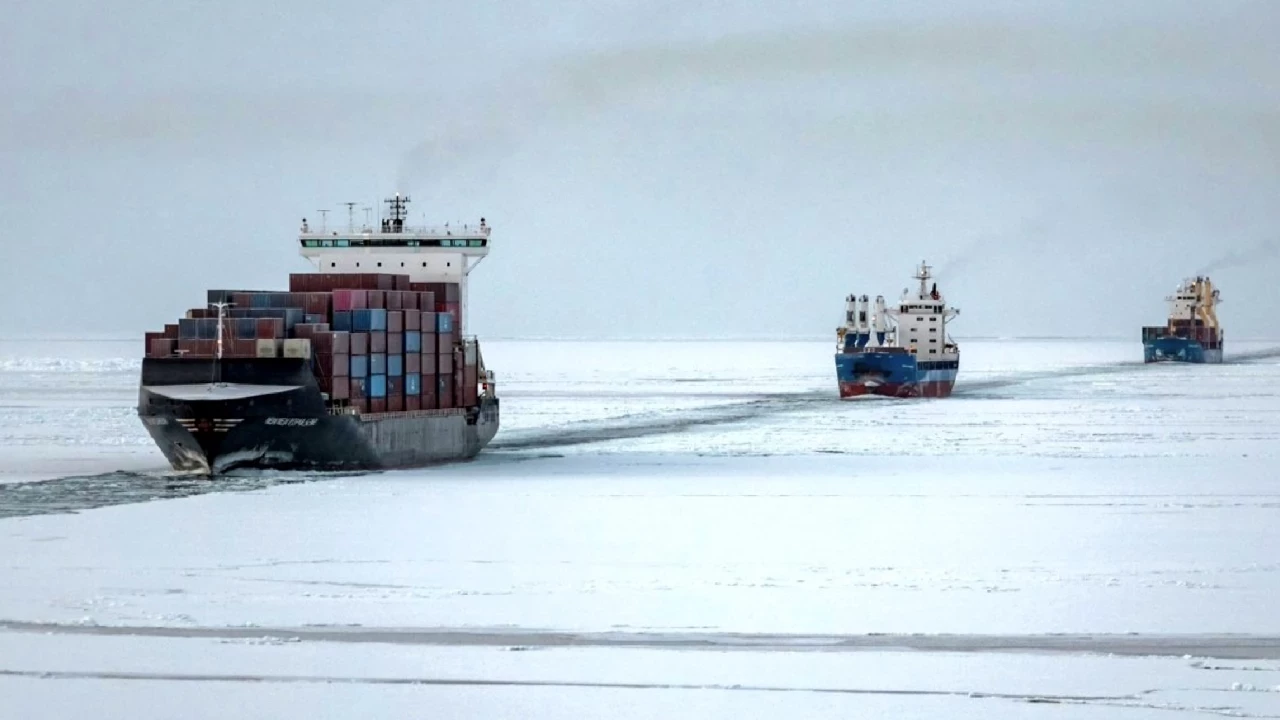
The Arctic passage offers a direct link between Asia and Europe, bypassing congested and politically sensitive areas. It can shorten voyages by 22 days and cut one-way carbon emissions by about 50 percent.
The Northern Sea Route is developing quickly, supported by advanced technologies, new-generation nuclear icebreakers, and rising interest from international shippers. It is becoming a viable global logistics option.
The developments underline China's strategic interest in Arctic shipping to improve trade efficiency with Europe. However, challenges remain, including environmental risks to the Arctic ecosystem and limited support if vessels face difficulties or casualties.