Maersk's share price hits an all-time high, up nearly 70%, but analysts warn of potential risks ahead in the shipping market.
Maersk's share price has once again reached an all-time high. On October 6, A.P. Moller-Maersk's B shares climbed intraday to DKK 24,960, setting a new historical peak; by the close of trading, the B shares settled at DKK 24,050, representing a year-to-date gain of approximately 69% and establishing Maersk as one of the strongest performers on Copenhagen's C25 index.
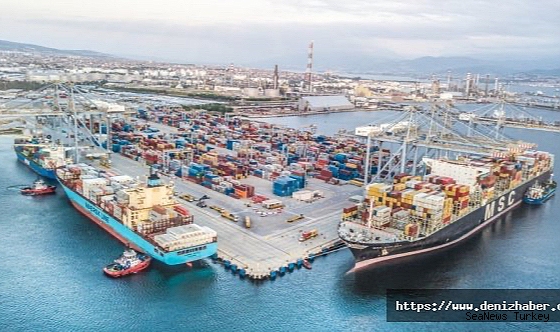
The sustained upward momentum in Maersk's share price is rooted in a marked improvement in the global container shipping market. Philip Jagd, head of equities at Sampension, attributes the rally to a convergence of favorable conditions: escalating global conflicts that have driven up shipping costs and freight rates, port congestion generating higher terminal revenues, and the unwinding of previously significant short positions—all combining to propel the stock higher.
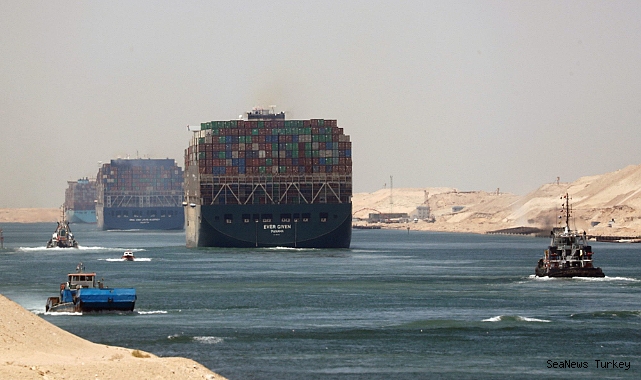
Throughout the year, ongoing tensions in the Middle East have continued to disrupt global shipping networks. A number of carriers have reduced sailings through the Suez Canal, rerouting vessels around Africa—lengthening voyage times, constraining effective capacity, and pushing freight rates higher on affected trade lanes. The latest data from the Shanghai Shipping Exchange show the SCFI standing at 3,662.30 points in early October, up approximately 174.7% from 1,333.11 points recorded on February 27. It should be noted that this figure represents an index value rather than a direct market quote for a single twenty-foot equivalent unit. As of October 5, the SCFI had edged down 0.66% from the prior reading, signaling that the rate of increase on certain trade lanes has begun to moderate.
Maersk has been a direct beneficiary of this market shift. In the second quarter of the current financial year, the company reported revenue of USD 15.76 billion—a 20% increase year-on-year—alongside EBITDA of USD 3.0 billion. Citing stronger-than-anticipated container demand, spot rates, and port congestion, Maersk raised its full-year guidance in August, projecting underlying EBITDA for 2026 in the range of USD 10.5 billion to USD 12.5 billion. The share price appreciation at Maersk is not an isolated phenomenon; the broader improvement in shipping market conditions has been progressively reflected in the valuations of publicly listed carriers across the sector.
Nevertheless, as the share price ascends to elevated levels, divergent views are beginning to surface. Philip Jagd cautions investors that Maersk at DKK 24,000 represents a fundamentally different investment proposition from Maersk at DKK 12,000. His assessment rests on two pillars: first, that the company's current valuation is meaningfully higher than it was previously; and second, that the continued expansion of the global container fleet risks introducing additional capacity that could once again exert downward pressure on freight rates.
Fearnley Securities had adopted a relatively constructive stance ahead of the recent surge. In September, the firm upgraded its rating on Maersk from Hold to Buy and raised its target price sharply from DKK 15,500 to DKK 26,000, arguing that robust freight rates, firm demand, port congestion, and contract rate dynamics would together be sufficient to absorb a meaningful portion of the 9.8% capacity growth anticipated for 2027.
From a broader market consensus perspective, however, investor sentiment remains cautious. According to LSEG data, only a minority of analysts covering Maersk currently hold a Buy rating, with the majority maintaining Hold or Sell recommendations. This distribution reflects a clear divergence in market opinion: while Maersk continues to benefit from elevated freight rates and supply chain disruptions, considerable uncertainty persists over how long the current cycle of favorable conditions can be sustained.
For Maersk, the central question may have already shifted—from whether the stock could advance to this level, to how long the underlying conditions that justify its current valuation can endure. Should the Red Sea and broader Middle East situation continue to disrupt global trade lanes, and port congestion and capacity constraints persist, the company's earnings trajectory is likely to remain well-supported. However, as new vessel deliveries accumulate, global fleet capacity expands, and certain trade routes gradually normalize, any sustained retreat in freight rates will subject Maersk's elevated valuation to renewed and rigorous scrutiny.