
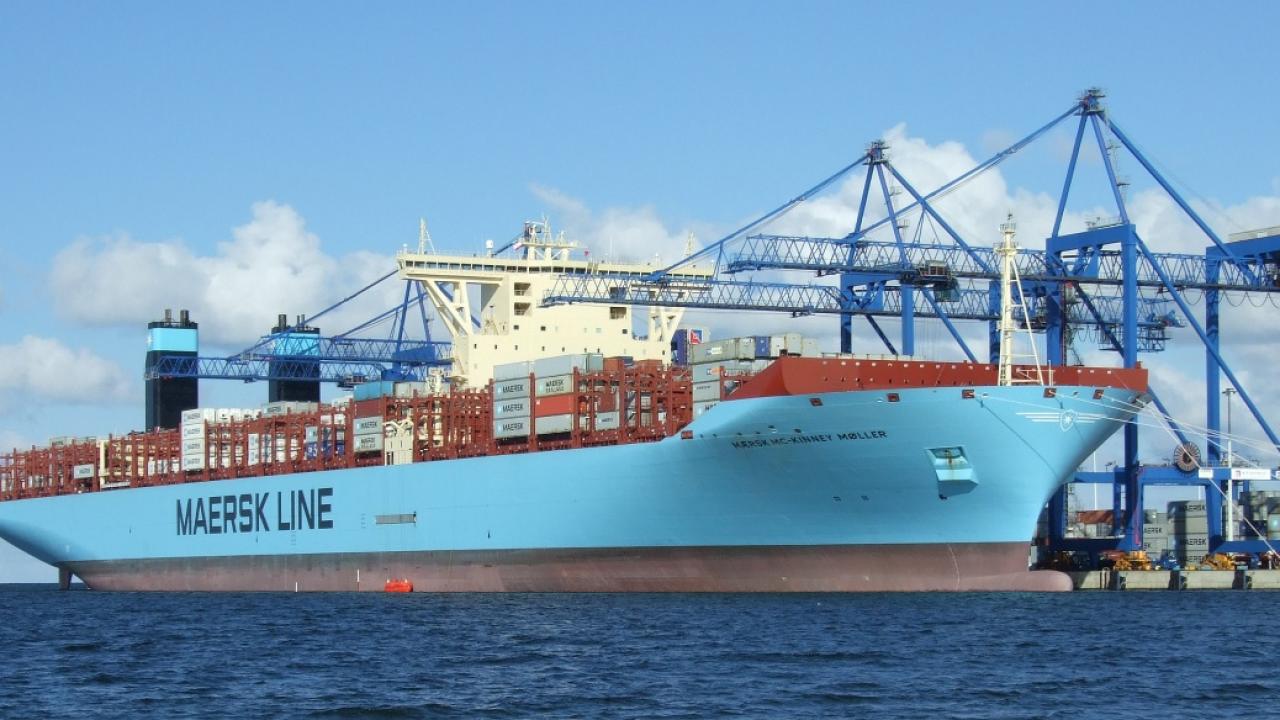
Maersk orders 8 container ships from New Times Shipbuilding, enhancing operational flexibility and reducing emissions in its fleet renewal strategy.
One of the world's leading container shipping companies, Danish A.P. Moller-Maersk, has signed an official contract with Chinese shipbuilding company New Times Shipbuilding (NTS) for the construction of 8 large-scale container ships. The company stated that the order is part of its strategic fleet renewal program and focuses on operational flexibility and emission reduction.
The new ships are designed with the aim of broader port access, differing from the 'Ultra Large Container Vessel (ULCV)' approach that has dominated the sector in recent years.
Each ship will have a carrying capacity of 18,600 TEU. With dimensions of approximately 366 meters in length and 58.6 meters in width, these vessels will be able to dock at more ports compared to giant container ships exceeding 400 meters. This feature will contribute to operational flexibility by increasing route diversity in Maersk's global service network.
In line with Maersk's goal of achieving net zero emissions by 2040, the ships will be equipped with dual-fuel engines. The vessels will be able to operate on lower-emission fuels such as liquefied natural gas (LNG) in addition to traditional fuels.
With this investment, the company aims to optimize fuel costs and ensure compliance with the FuelEU Maritime emission regulations that will come into effect starting in 2026.
The delivery of the ships is planned to take place in 2029 and 2030. With this agreement, Maersk's order book has reached a total of 33 vessels. Industry analysts view this investment as a move to create a competitive advantage through efficiency and port compatibility rather than merely increasing capacity.
Maersk's Head of Leasing and New Construction, Anda Cristescu, stated, 'These ships will be the cornerstone of our future network planning. By offering 18,600 TEU capacity with a compact design of 366 meters, we will gain significant maneuverability in our operational network.'
Source: SeaNews Türkiye


