Maersk and Hapag-Lloyd are enhancing Red Sea trade routes, marking a cautious recovery of operations amid ongoing security challenges.
Maersk and Hapag-Lloyd are gradually rebuilding their presence in Red Sea trade lanes, signaling a cautious recovery of pre-crisis operations. The carriers, part of the Gemini Alliance, have announced an addition to their AE15 Asia-Mediterranean service, which now includes a stop in Jeddah, Saudi Arabia.
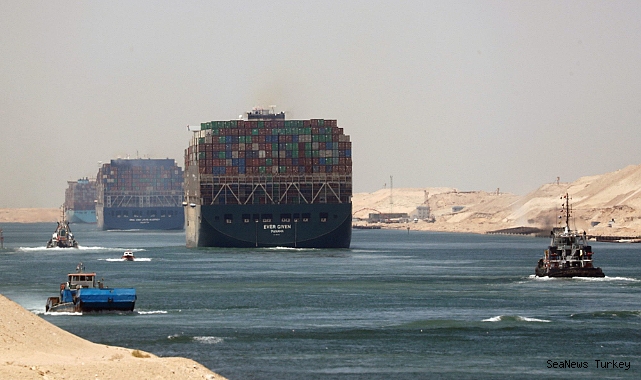
This adjustment restores Suez Canal routing alongside the new Saudi port call, marking significant progress for regional trade.
The revised AE15 rotation, completed by the vessel Madison Maersk, now includes key ports such as Qingdao, Ningbo, Tanjung Pelepas, Jeddah, and others along the Mediterranean and Suez Canal. Jeddah's inclusion is noteworthy, as major carriers had previously bypassed the Red Sea due to heightened security risks. This move reflects a measured attempt to rebuild Red Sea trade networks, which were disrupted by persistent instability in the region.
The path to recovery began in mid-2026 when Maersk and Hapag-Lloyd resumed Suez Canal routing for the AE15 service, reducing the need for costly diversions around Africa's Cape of Good Hope. The shift followed a careful evaluation of security conditions in the Red Sea. Maersk has also announced that its MECL service, which connects India, the Middle East, and the US East Coast, will reintroduce Red Sea routing, further incorporating Jeddah by August.
Despite these advancements, security challenges remain. Renewed hostilities between Yemen's Houthi forces and Saudi Arabia have complicated Red Sea operations. The Houthis have declared a maritime embargo targeting Saudi-affiliated shipping and claimed attacks on tankers such as Encelia and Layla, escalating risks in the region. These developments continue to test the resilience of carriers re-entering the area.
The Red Sea's instability has disrupted global shipping since late 2023. Widespread Cape of Good Hope diversions added 10-14 days to voyages, reducing efficiency and raising costs across supply chains. A stable return to Suez routing would improve transit times and operational efficiency for Asia-Europe trade, but progress hinges on sustained security improvements.
Maersk has emphasized its contingency plans, ready to revert to Cape of Good Hope routing if risks worsen. While the addition of Jeddah to the AE15 service represents meaningful progress, full normalization of Red Sea operations will depend on how the regional security environment evolves in the coming months.