MSC's LNG-powered EXPLORA III has been delivered, ready for its inaugural Mediterranean voyage today.
MSC's LNG-powered EXPLORA III has been delivered, with its first voyage commencing today.
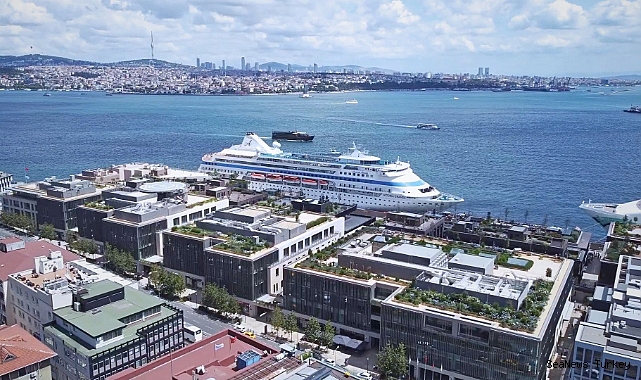
The EXPLORA III, built for MSC Group's luxury cruise brand Explora Journeys, was delivered at Fincantieri's Sestri Ponente Shipyard in Genoa. The 72,810 GT vessel is scheduled to embark on its inaugural Mediterranean voyage today.
The Italian shipbuilding group Fincantieri has officially delivered the new cruise ship named EXPLORA III, constructed for Explora Journeys, which is part of the MSC Group.
The delivery ceremony took place on July 23 at the Sestri Ponente Shipyard in Genoa. EXPLORA III is the third of six ships planned for the Explora Journeys fleet and is the first in the series to utilize LNG fuel.
The ship, with a gross tonnage of 72,810 GT, is set to begin its inaugural program named 'Mediterranean Prelude Journey' on July 24. The naming ceremony for EXPLORA III is expected to take place in Barcelona on August 1, followed by its first main voyage to Lisbon on August 3.
EXPLORA III features 463 suites, all with ocean views and private outdoor spaces. Of these, 313 are Ocean Suites, 109 are penthouses, 39 are residences, and two are Owner's Residences. The ship is reported to be 19.2 meters longer than the previous two vessels, with a public space per passenger reaching 19.5 square meters.
The ship is equipped with dual-fuel engines capable of using LNG, bio-LNG, synthetic LNG, and some biofuels. If suitable infrastructure is available in port, it can be connected to the shore power system to reduce generator operation.
With the delivery of EXPLORA III, half of the six-ship program has been completed. EXPLORA IV and EXPLORA V are planned to enter service in 2027, while EXPLORA VI is expected to be operational in 2028. Fincantieri has announced that the total investment value of the six-ship program being built in Italy exceeds 3.5 billion euros.
The use of LNG can significantly reduce sulfur oxide and particulate emissions compared to traditional heavy fuels. However, LNG still retains its fossil fuel characteristics. Methane, which can escape into the atmosphere during combustion in engines, along with emissions from the production and transportation stages of the fuel, must be considered in the overall assessment of climate impact.
Therefore, the term 'zero-emission' should not be used for the ship. A more accurate description would be a new generation cruise ship powered by LNG, technically suitable for the use of alternative and low-carbon fuels.
Source: SeaNews Türkiye