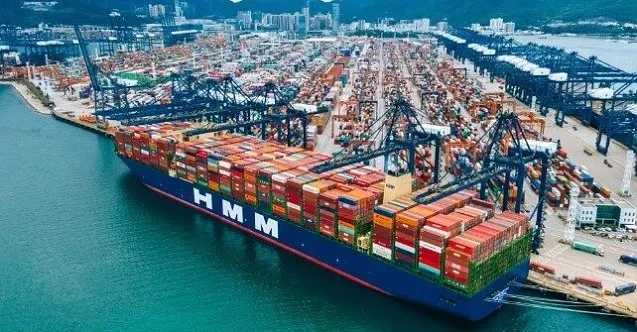
Red Sea commercial shipping traffic has plummeted by nearly 50% due to risks from Yemen's Houthi movement, impacting global trade routes.
Commercial shipping in the Red Sea has dropped to nearly half of normal levels as vessels face heightened risks from Yemen's Houthi movement, reports Baku's News.az.
Ship-tracking data showed that on March 6-7, only 30-35 vessels passed daily through the southern Red Sea and Bab el-Mandeb Strait, compared with an average of about 70. The decline represents a fall of 50-60 percent in traffic.
The Red Sea corridor links the Gulf of Aden with the Suez Canal and is a vital artery for global trade. Oil, LNG, raw materials, and container cargo usually move through the route, but container traffic has been notably reduced.
AIS maps indicate ships are sailing individually, keeping wider distances from Yemen's coast and slowing in sensitive areas. Most vessels transiting are oil tankers, bulk carriers, and general cargo ships.
The Houthis, who control much of Yemen's Red Sea coastline, have threatened or carried out attacks using missiles and drones. The risk has forced shipping firms to adopt precautionary measures, including rerouting farther offshore and boosting onboard security.
Some carriers have diverted vessels around the Cape of Good Hope, adding 10-14 days to Asia-Europe voyages and raising fuel costs and freight rates. Despite diversions, the Red Sea remains open, with tankers and bulk carriers continuing to pass daily.
Analysts warn that any escalation could disrupt supply chains linking Asia, the Middle East, and Europe, with knock-on effects for energy markets and shipping costs.