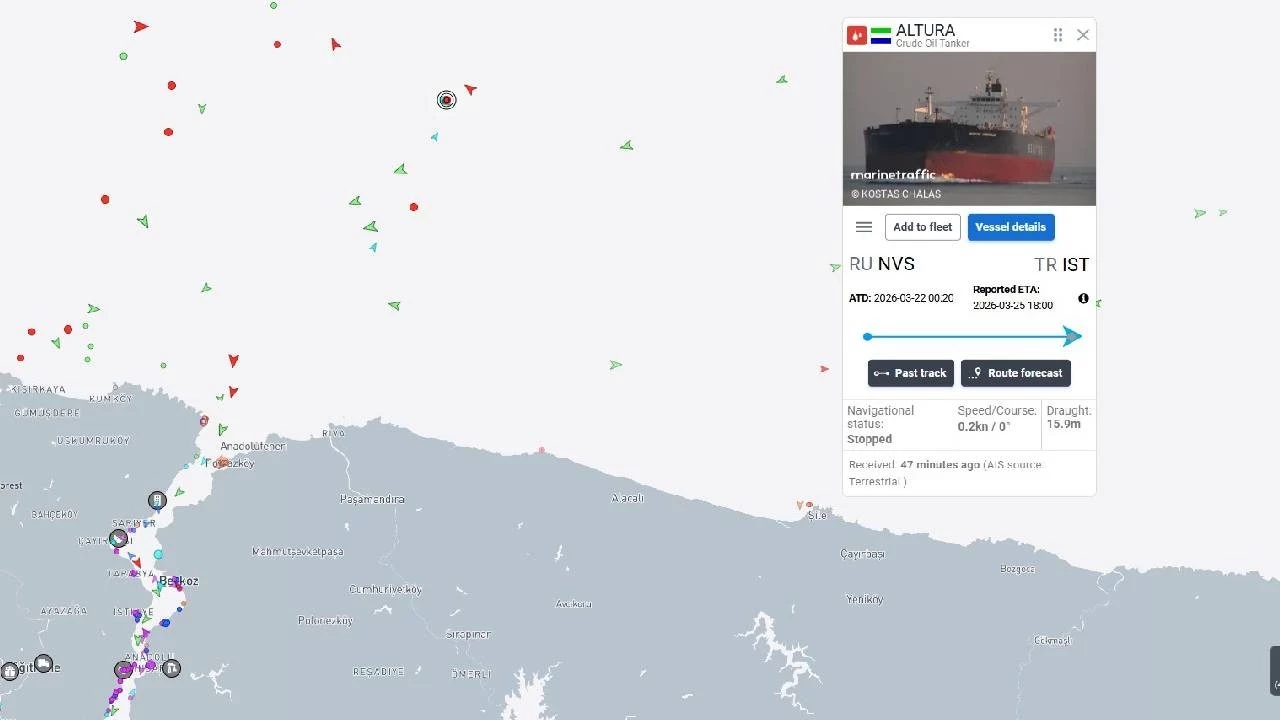
Hello everyone again, Entering the 21st century at 50 in Singapore, I see that values learned in the first 50 years have been lost or changed in the last 25.
Hello again everyone,
I entered the 21st century at the age of 50 in Singapore, and looking back at the past 25 years, it indicates that all the values, truths, and virtues I learned in the first 50 years have been lost or changed. As the world we live in is polluted and nature is ruthlessly destroyed, humanity is also changing. The values that make a human a human, which separate the biological being known as man from other living beings as the most honorable of creatures, are disappearing, and a new definition of Man is needed. Civilized countries have become uncivilized, and the apostles of democracy have started to act as autocrats. Actions claimed to be done as a requirement of their beliefs do not conform to any moral, human, or conscience value. In this context, we are facing a different kind of war in our region these days. It is clear that the strong crush the weak, engaging in mafia-style actions to seize economic values and resources, while intergovernmental organizations established to maintain order and peace are ineffective and inactive, and other countries remain silent, turning a blind eye to genocide and unacceptable barbarism, a disgrace to humanity.
Interestingly, the main actors of this war are religious states, and they fabricate a justification based on religion. AYATOLLAH KHOMEINI established the Islamic Republic in IRAN by overthrowing Shah REZA PAHLEVI on April 1, 1979, thus starting to impose and spread its sectarian regime to other Islamic countries in the region. Through the Islamic organizations it supports (Hezbollah in Lebanon, Hamas and Palestinian Islamic Jihad in Palestine, the Houthi Movement (Ansar Allah) in Yemen, Hashd al-Shaabi in Iraq, militias supporting Assad in Syria; Fatemiyoun Brigade, Zeynabiyoun Brigade, Syrian Hezbollah, and Syrian National Defense Forces), it has engaged in proxy wars to stop Israel's expansionist actions in Gaza and the West Bank, in short, in Palestinian territories and beyond, and to increase its dominance in the region.
The religious state of Israel, according to the TORAH, is trying to seize the lands promised to the children of Israel to establish a great ISRAEL state as a superior race when the Mahdi comes to earth and to achieve world domination by acquiring land from the countries in the region. (However, establishing such a state before the Mahdi (MOSHIYAH) comes is against the TORAH, and there is no certainty about where the promised lands are.)
The situation is different for the USA; approximately 25-30% of the population, about 100 million people, are Evangelical Protestants, and their numbers are rapidly increasing. This sect, which emerged in the early 19th century, is a radical Protestant branch that supports Israel's control over Jerusalem and the establishment of a great Israel state in the promised lands, waiting for salvation. According to their beliefs, the rulers of the earth will be the children of Israel, while the rulers of the afterlife will be Christians. After the children of Israel establish the great ISRAEL state, the apocalypse will occur, and Christians will establish their dominion in the afterlife and be saved. For this, the Messiah Jesus will descend to earth, representing good in the battle between good and evil, defeating the representative of evil, the Antichrist, leading to a Golden Age lasting 1000 years, after which the apocalypse will occur. As can be seen from this, there is a shared destiny, albeit not entirely, between Jews and Evangelicals. Both aim for the establishment of the great Israel state. Catholics are said to dislike Jews, claiming that this PROTESTANT sect consists of Christian Zionists founded by Jews. This group, which is influential and dominant in US politics, supports Republicans like the Jewish community. Trump's son-in-law KUSHNER is a US Jew, and although Trump claims to be a "non-denominational Christian," throughout his political life, he has received strong support from Jews and Israel, and in return, he has stood by and supported them in his policies and practices.
The US's entry into this war is driven by various reasons, including ensuring Israel's security, Trump's desire to appear favorable to his voters, the intention to control China's relationship with Iran, and the intention to secure the supply of crude oil and natural gas from strategic alliance partners in the Persian Gulf for itself and its friendly countries. (After the US gained the ability to extract shale gas and oil, it became self-sufficient and has the potential to be a net oil exporter, lifting the ban on crude oil exports imposed by the EPCA 1975 Gerald Ford law, which was enacted to protect itself after the 1970-73 Oil Crisis, in 2015. Additionally, the US produces light (low density) and sweet (low sulfur, easy to refine, suitable for gasoline and diesel production) crude oil known as WTI (West Texas Intermediate) in Texas and New Mexico. However, it imports heavy (high density) salty (high sulfur) crude oil from Canada and Venezuela. Due to the lack of a pipeline connection to California, it needs to import for the refineries there due to the arbitration policy. However, the US is not dependent on Persian Gulf oil.)
However, more importantly and alarmingly, the subject of this article is TRUMP's management of the state like a company, his disregard for laws and rules, his impulsiveness, vandalism (bombing historical structures, openly threatening to destroy a civilization), seizing the properties of independent countries by fabricating flimsy excuses through mafia-style actions, violating their sovereignty rights (kidnapping the President of Venezuela and his wife to seize its oil, offering NATO countries to seize Iran's crude oil), his arrogance, inconsistency, and lack of conscience (conscience is the God within a person; unfortunately, in this war conducted under the pretext of religion, there is no God present) — in short, he is a single ruler who acts on his emotions, does not consult with the experts around him, does not listen to them, and has no knowledge of history.
This individual has expelled Ukrainian Prime Minister Zelensky from the White House, conditioned the sale of Rare Earth Elements to the US on protecting Ukraine against Russia, reprimanded the POPE, who advocates peace and condemns the Israel-US attack on Iran, stated that he would not provide financial support to NATO as before, yet requested NATO to stand by him in his war, contrary to NATO's founding purpose and agreement, threatened NATO members who did not accept this with expulsion from the alliance, condemned them, and, in violation of international agreements, blockaded HORMUZ, obstructing Iran's maritime trade. In short, he is acting like a rogue, relying on the military power of the US, putting the US at risk as well.
Such a person, as the president of a country with the largest military power, the largest economy, the richest natural resources, the most advanced technology, and competent universities, is unable to cope with IRAN and poses a significant threat to the world.
He wants to take Canada and Greenland, wishes for the Panama Canal to come under US control, does not accept the KYOTO protocol and the PARIS agreement, and claims that there is no global warming or greenhouse gas emissions threatening life, asserting that these are fabrications of China. Despite being contrary to the principles and rules of the World Trade Organization, which has a significant US weight in its establishment and functioning, he imposes heavy tariffs on imported goods from many countries, including China and EU countries, harming international trade. (The global economic slowdown in 2019 was also due to the trade wars initiated by Trump.)
However, the perception of AMERICA that has been attempted to be created since our childhood through films, novels, artworks, and projects like the MARSHALL aid has been the complete opposite of such an application. Now, TRUMP is revealing the criticized imperialist identity of the US.
As can be understood from the issues mentioned above, this man, who acts with his emotions, disregarding reason, wanting everything right or wrong, and acting according to his whims, poses a potential threat to the world.
The ancient Greek philosopher Plato, who lived from 427/428 - 347/348 BC, explains such a situation with the example of a chariot, expressing emotions, desires, and wants as horses harnessed to the chariot.
According to Plato, emotions run wildly like horses, and it is reason that should rein them in. In this metaphor, reason is the charioteer driving the chariot. The CHARIOT can be a real person, institution, or state. If emotions, desires, and wants are not reined in and controlled by reason, the chariot can overturn.
Desires and wants can be for the good of a person or humanity, but feelings of help and kindness must also be under the control of reason. It is not rational for a benevolent person to satisfy this feeling by distributing the household's livelihood to charities, leaving their family hungry.
Plato's teacher, SOCRATES, explained being a slave to emotions with the metaphor of a man who falls into the sea and cannot swim.
According to this metaphor:
The Sea: Represents uncontrolled, boundless, and powerful emotions (passion, anger, fear).
The Man Who Cannot Swim: Is a person who has not learned to manage his emotions through reason (logos) and has not educated himself.
Situation: When someone who cannot swim falls into the water, they panic and flail; the more they flail, the more they sink. According to Socrates, a person enslaved by their emotions is like this; they are swept away by their emotions' currents because they cannot think logically and ultimately drown in their own passions. Just like TRUMP.
The fundamental message here from Socrates is that a lack of knowledge and self-control (sophrosyne) will make a person a slave to their emotions. The way to escape is not to flail but to learn to stay afloat (manage emotions) under the guidance of reason.
If we develop Socrates' metaphor a bit, it is also irrational for another man who sees this situation on land and cannot swim to jump into the sea to save the drowning man. Because in this case, both will drown and die.
From this, it can be seen that in this war, both NETANYAHU and Trump are acting with their emotions, disregarding reason, thinking only of their own interests. This does not mean they are crazy or foolish. On the contrary, Trump is a smart person. Calling Trump crazy would imply legalizing his lawless behavior because madness is a disease. However, Trump is not sick; he is ARROGANT, NARCISSISTIC, and inadequate and unsuitable in terms of state management.
Because anyone who knows history knows that Iran is not an easy target that can be seized overnight like Venezuela. Iran has a long-rooted state tradition of approximately 2500 years, dating back to the Achaemenid (Persian) Empire established in 559 BC. The Ottoman Empire took its systems and laws regarding state administration from Iran in the context of the Eastern Roman Empire (after the conquest of Istanbul). The Persian language, as a legacy of the Seljuks, remained dominant as the language of the palace, bureaucracy, literature, science, high culture, and art until the 19th century. The late Prof. Dr. Teoman Duralı placed Persian second in the ranking of the most beautiful languages after Italian. The late Prof. Dr. İlber Ortaylı also found Persian to be very rich. As is known, the richness of a nation's language, the number of words, and grammatical structure reflect the richness of that country in high culture, science, technology, and art according to its era. Indeed, throughout history, IRAN has produced many important PHILOSOPHERS, SCIENTISTS, POETS, LITERARY FIGURES, PHYSICIANS, HISTORIANS, ASTRONOMERS, ISLAMIC SCHOLARS, and ARTISTS; Geylani, Gazali, Shirazi, Razi, Hallaj Mansur, Jabir ibn Hayyan, Mukaffa, Azophi, Biruni, Bukhari, Juvayni, Abu Hanifa, Fergani, Gurgani, Ferdowsi, Kashani, Giyasettin Cemşit, Ibn Sina, Omar Khayyam, Nizam al-Mulk (Political Scientist), Salman al-Farsi are just a few of them. During the dark ages of the West, they produced science and revived the works and thoughts of Greek philosophers known as the Golden Age of Philosophy.
Militarily, even if the IRAN army is defeated in battlefield wars, it has historically been very difficult to OCCUPY IRAN and remain there. They have a resilient nation and army that does not easily give in and shows resistance.
For this reason, the Iranian or Persian civilization/state has existed in this geography for 2500 years. The Ottoman Empire, which generated income through conquests by applying a war economy, did not conduct many campaigns towards the East, especially Iran, due to high costs. It conducted its conquest policy by focusing on the Balkans, the interiors of Europe, and the Roman legacy within the framework of the "GHAZWA" ideology.
Historically, especially after the regime change in Iran, despite the tensions and difficulties caused by sectarian differences, Turkey has established commercial, economic, and strategic partnerships based on ancient neighborly relations with Iran, while maintaining a politically competitive but balanced relationship in the region. These two countries are neither completely friends nor enemies. In this context, the RCD (Regional Cooperation Organization for Development) was established in 1964 with the participation of Turkey, Pakistan, and Iran, and this organization continued until the regime change in Iran, transforming into the Economic Cooperation Organization (ECO) with the İzmir Agreement in 1985, later joined by Turkic states.
In 1955, the United Kingdom established the Baghdad Pact between IRAN, Pakistan, Iraq, and Turkey to prevent the spread of the Soviet Union in the Middle East, and after Iraq's withdrawal in 1959, the name of this pact became CENTO, and this organization, supported by the US, ceased its activities after the Iranian Islamic Revolution in 1979. Before these agreements, two states signed the Treaty of Qasr-i Shirin with the Safavid state in 1639, a border agreement with Iran in 1932, and the Sadabad Pact in 1937.
From this, it can be seen that until the "Iranian Islamic Revolution," Iran had good relations with Turkey and the West, but after the revolution, it changed, trying to implement a policy of spreading and imposing its sectarian belief on regional countries, including adopting a more distant attitude towards secular Turkey compared to before the revolution.
Interestingly, the actor behind the regime change in Iran, which is now seen as a threat to the region and especially Israel, has been the US. In the late 1970s, disputes over the borders determined by the Algiers Agreement made between Iran and Iraq in 1975 escalated, and Iraq, particularly Saddam Hussein, who was increasing its armament and moving closer to the Soviet Bloc, posed a threat to Iran, which had very friendly relations with the US at that time. Leftist movements and anti-Shah and anti-US actions began to rise in Iran. Seeing this as a risk to US interests in the region, President CARTER visited Iran on December 31, 1977, and met with Shah Reza Pahlavi, describing Iran as an island of stability in the region in his statements after the meeting and praising the SHAH. However, in a secret meeting not disclosed to the press, Carter requested Pahlavi to respond more violently to Iraq and to combat the leftist movements more effectively. Pahlavi avoided actions that would lead to conflict or war with Iraq, claiming that the issue could be resolved through negotiation and that they were monitoring the leftist movements through SAVAK, suggesting that increasing their welfare levels could prevent their revolutionary movements. (During his visit to Turkey, Pahlavi expressed concern about a coup by radical Islamic groups rather than leftist groups in his country.) After this meeting, in 1978, uprisings and political unrest against the Shah and the regime increased in Iran, and the throne of the US's best friend and ally in the region, Shah REZA PAHLEVI, began to shake, and the possibility of a coup in Iran started to rise. The radical Islamic turmoil in Iran was backed by Ayatollah Khomeini, who asked Carter to help him return to Iran and overthrow the Shah, requesting to keep the army under control to ensure this.
In response, President Carter, seeing that the coup in Iran could no longer be stopped, helped Khomeini, even though he did not embrace Khomeini and the regime he defended, believing that the coup would be under his control and would serve the US's Green Belt Project.
To this end, some parts of the warplanes Iran received from the US went to the US for maintenance but were not returned, and the air force equipment and personnel were put under control.
The coup was not bloody; the SHAH and his family were exiled. Thus, KHOMEINI carried out the coup with the support of women, Islamic groups, leftists, artists, and intellectuals, and then interned many of the groups that helped him, establishing a regime based on sharia rather than democracy. The deteriorating relations between the US and Iran peaked on November 4, 1979, when a group of pro-revolution students stormed the US Embassy in Tehran and held 52 Americans hostage for 444 days. The reason for this occupation was the US's acceptance of the deposed Shah Pahlavi for treatment. Thus, there were two major states in the region that had poor relations with the US and whose majority of the population belonged to the Shia Islamic sect. To turn this situation to its advantage, the US secretly incited SADDAM in IRAQ to declare war on Iran. Its aim was to weaken both Saddam and Khomeini, eliminating the threat posed by these two countries to itself and its allied countries. The US pitted its two enemies against each other. The financing of this war was ensured by the contributions and/or loans provided by the Gulf countries, which were threatened by Iran, to Iraq, which was fighting Iran to protect them from this threat. Thus, the Iran-Iraq war began with Iraq's invasion of Iran on September 22, 1980, and ended on August 20, 1988. During the war, when IRAQ gained an advantage and was on the verge of winning, the US aided Iran through Pakistan, and conversely, supported Iraq via Turkey. The cost of this war was around 150 billion, while Iraq's external debt increased to 40 billion (some sources state 60 billion) USD due to the war, with a significant portion of this debt provided by Saudi Arabia and Kuwait. As a result, although the economies of both Iran and Iraq deteriorated in this war, neither regime changed; Saddam and Khomeini maintained their positions, and despite significant losses, their armies gained experience from the war and began to pose a threat to the region, especially to Israel, or the existing threat's intensity increased.
In this situation,
Source: SeaNews Türkiye