
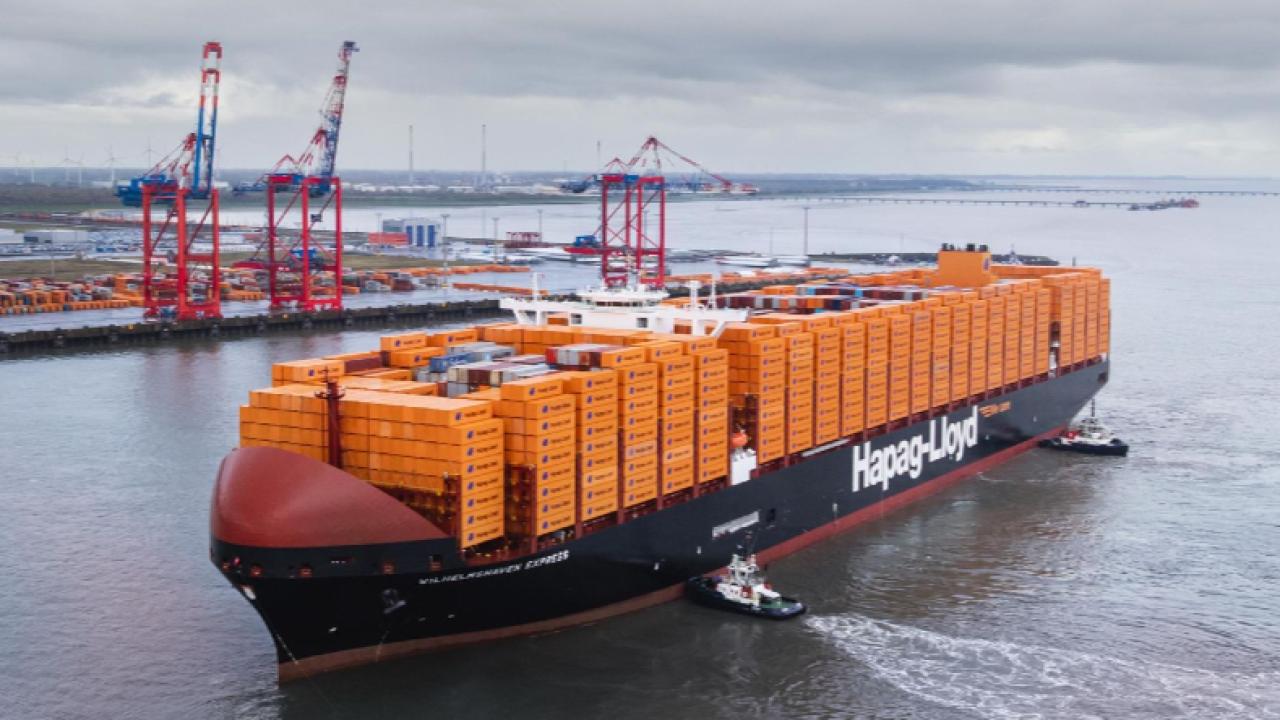
Hapag-Lloyd's CEO emphasizes terminal investments and core operations, rejecting end-to-end logistics during a recent webinar.
Hapag-Lloyd CEO Rolf Habben Jansen made clear the company's strategic direction during a webinar on September 1, emphasizing continued investment in vessels, containers, and terminals while rejecting a shift toward end-to-end logistics. Unlike peers such as Maersk and CMA CGM, Hapag-Lloyd remains committed to its core liner operations, steering clear of integrated logistics solutions.
Habben Jansen reiterated that Hapag-Lloyd has no plans to enter the end-to-end logistics space, arguing that such services cater to only a small segment of the market. He stated that inland logistics at origin and destination are sufficient, with specialist logistics providers better suited for full-service solutions. This approach aligns with Hapag-Lloyd's strategy to avoid direct competition with logistics companies. Analysts like Xeneta's Peter Sand noted the company's traditional focus has served it well, though its increased investment in terminals reflects a broader service orientation.
Sand highlighted that while Maersk's integrated logistics model aims to reduce shipping's cyclicality and offer a single-provider experience, customers increasingly value transparency and cost efficiency over convenience.
Hapag-Lloyd is doubling down on terminal investments, aiming to own 30 terminals by 2030. Habben Jansen linked this investment to improving service quality and highlighted its alignment with the recently formed 'Gemini' alliance with Maersk. Addressing port congestion, he described the issue as structural, predicting it will persist for years as infrastructure struggles to match growing cargo volumes.
Congestion, while challenging for shippers, contributes to higher freight rates and effective capacity demand. Despite anticipated capacity surpluses, Habben Jansen emphasized the cyclical nature of the industry.
Hapag-Lloyd is targeting 3 million TEU of standby capacity by 2030, maintaining an ambitious fleet expansion strategy. Habben Jansen also expressed optimism regarding the company's proposed acquisition of ZIM, stating regulatory approvals are progressing well. He expects the transaction to close by year-end, pending decisions from Israeli authorities and other regulatory bodies.
Until then, ZIM and Hapag-Lloyd remain competitors, with the Israeli government's upcoming decision expected to significantly influence the deal's outcome. The acquisition is closely watched as a major development in container shipping consolidation.