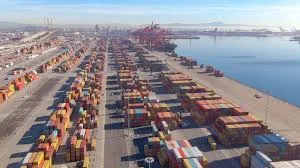
Global container shipping demand rises as importers act early to avoid disruptions, driven by fuel shortages and tariff expirations.
Global container shipping is experiencing an earlier than usual surge in demand as importers move ahead of expected disruptions, reports Bloomberg.
Trade activity typically rises before the third quarter and Christmas holidays, but this year, orders have shifted forward. Analysts indicate that concerns over fuel shortages, tariff expirations, and rising costs are prompting importers to book earlier. The US Trade Representative's temporary tariffs on all imports are set to expire on July 24, adding urgency to shipments.
Capacity has tightened due to closures in the Strait of Hormuz and restricted access in the Red Sea. The US Retail Federation has revised its June import forecasts upwards as retailers frontload merchandise. Ben Hackett, founder of Hackett Associates, noted that the surge resembles a raised volume pattern rather than a sharp peak.
Bloomberg reported that European importers are leading this trend, with Transpacific demand expected to follow suit. Brendan Murray of Bloomberg highlighted that importers are concerned about how turmoil in the Middle East will impact the second half of the year.
Forwarders are advising customers to book at least three weeks in advance as vessel space becomes scarce. Bookings from the US and China-Southeast Asia rose by 10 percent in week 19, with premium services fully allocated through June. JPMorgan's Global Manufacturing PMI indicated that Asia's output is expanding at its fastest pace in years, supported by clients advancing their purchases.
Carriers are planning to increase Transpacific capacity to 2.3 million TEU in July, compared to 2.1 million TEU in June and 1.9 million TEU in May. Logistics firm Kuehne+Nagel has advised shippers to plan proactively, maintain flexibility, and provide accurate forward visibility to avoid disruptions during the peak season.