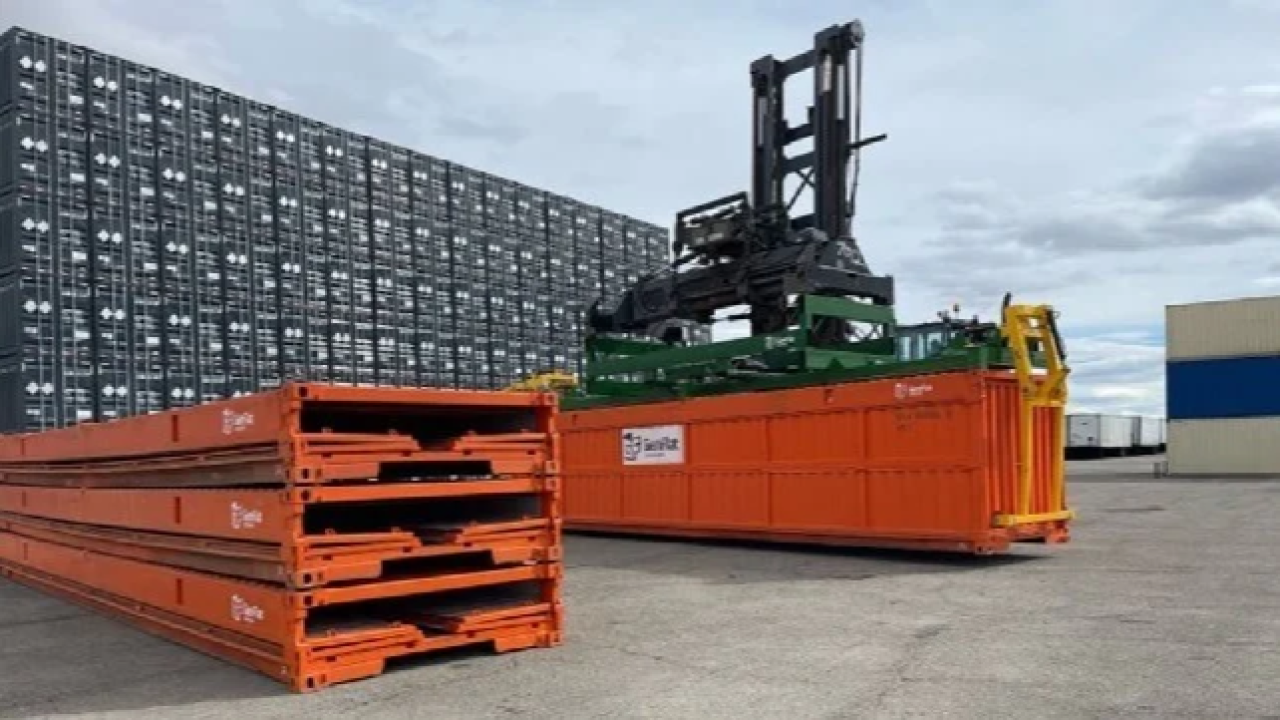
Arkas Line and GenFlat launch a trial in April 2026 to reduce costs and carbon emissions in empty container transport using collapsible technology.
Turkey's leading container line operator Arkas Line has signed a trial agreement with global player GenFlat, which specializes in collapsible container technology. The pilot application, set to begin in April 2026, aims to address the high costs and carbon emissions associated with empty container transportation.
ISTANBUL – A new era focused on efficiency and sustainability in maritime transportation is beginning. GenFlat Holdings (OTCQB: GFLT), a developer of sustainable collapsible container solutions, has partnered with Arkas Line, one of the leading brands in the Turkish logistics sector, for a strategic testing process.
"Collapsible" Solution to the Empty Container Problem
The issue of "the return and storage of empty containers," which is one of the largest cost items in maritime transportation, is being addressed with the technology developed by GenFlat. During the trial phase, which will last for six months starting in April 2026, Arkas Line will incorporate these innovative containers into its operational processes.
Sustainable Logistics and Carbon Emissions
The collaboration is not only cost-focused but also encompasses environmental goals. The collapsible structure allows for a reduction in the number of voyages made by ships, trucks, and trains, significantly decreasing the total carbon emissions in the supply chain. Additionally, a 75% optimization in space utilization at ports and distribution centers is targeted.
Statements from Senior Management:
GenFlat CEO Drew Hall stated, "This agreement with Arkas Line is a critical step in proving the performance of our technology under real-world conditions. With our collapsible containers, we aim to reduce our customers' costs while alleviating congestion in the global supply chain."
Arkas Line Operations Director Erdem Atmaca remarked, "As Arkas Line, we value innovations that enhance operational efficiency and sustainability. This trial process will allow us to overcome chronic challenges in the industry, such as the repositioning of empty containers, and maximize space utilization on our trade routes."
Source: SeaNews Türkiye