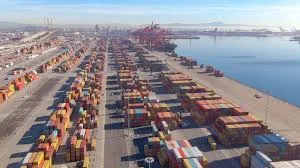
Sogese's August report reveals demand drives the 2026 European shipping peak season, overshadowing capacity issues and impacting operational stability.
In its August 2026 European Container Market Update, Italian logistics company Sogese highlights market demand as the key factor impacting this year's European shipping peak season, overshadowing capacity concerns.
The report, based on Sea-Intelligence's Global Liner Performance Report, indicates a decline in global schedule reliability from 64.5% in May to 62.6% in June. Nearly 40% of vessels missed published schedules, with delays averaging 5.3 days.
Schedule reliability disparities among carriers remain significant. Maersk led the top 13 liner operators with 77.1% reliability, followed by Hapag-Lloyd (75.6%) and MSC (72.1%), with only three carriers surpassing 70%. At the alliance level, Gemini Cooperation set the highest reliability at 93.4%, while Premier Alliance lagged at just 53.6%. For shippers, vessel punctuality depends not only on contracted carriers but also on broader market conditions.
Sogese CEO Andrea Monti notes that the 2026 peak season challenges operational stability more than capacity. Successful businesses are not moving significantly higher volumes but are reducing last-minute logistics adjustments, building inventory ahead of demand, and maintaining consistent operational rhythms. The gap between available capacity and reliably predictable capacity is shaping the season more than acknowledged, as early procurement, longer inventory cycles, vessel diversions, and carrier strategies spread freight demand across the year.
This shifting dynamic has altered logistics pressures. Warehouse utilization cycles are lengthening, in-transit dwell times are increasing, and transport plans require constant updates. Rolling demand leaves planning teams with little recovery time between cycles, forcing operators to sustain high operational intensity over extended periods instead of managing short-term surges.
This year has also seen rising freight rates. The Drewry World Container Index hit $4,639 per 40-foot container on 9 July, the highest since September 2024. Meanwhile, factors such as early procurement and extended inventory adjustments amplify operational challenges, decreasing transportation predictability.
Amid these conditions, businesses are rethinking strategies to prioritize reliability and operational stability. With demand as the defining variable of 2026's peak season, shippers and logistics providers face a need for flexibility and resilience to navigate ongoing disruptions in global shipping.