
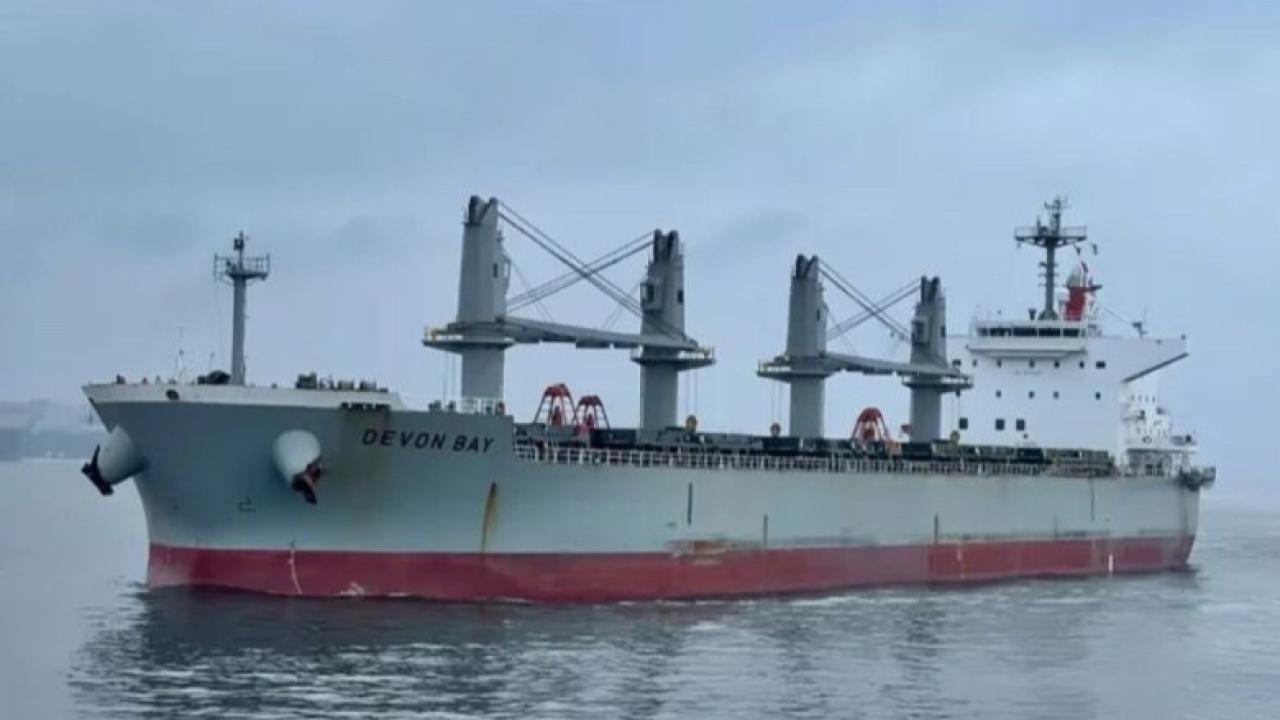
The Devon Bay capsized near Scarborough Shoal, raising alarms over nickel ore liquefaction risks. Four sailors remain missing after the incident.
Nickel Ore-Laden Devon Bay Capsized: Suspicions of Liquefaction Strengthen
Another fatal bulk carrier accident related to nickel ore, a high-risk commodity, has occurred in recent years. In the latest incident, the ultramax bulk carrier named Devon Bay is believed to have capsized off the controversial Scarborough Shoal primarily due to the liquefaction of the nickel ore cargo it was carrying.
Voyage to China Ended in Disaster
The Devon Bay, registered under the Singapore flag and built in 2013 with a carrying capacity of 56,095 dwt, was owned by K Line Pte Ltd, a subsidiary of the Japanese shipping company Kawasaki Kisen Kaisha (K Line). The vessel capsized shortly after listing while carrying approximately 55,000 tons of nickel ore from the port of Gutalac in the southern Philippines to Yangjiang, China, on the night of January 22.
Coast Guard: Initial Findings Indicate Cargo Imbalance
Philippine Coast Guard Commander Admiral Ronnie Gil Gavan stated that initial testimonies from the crew indicated that the accident could be cargo-related.
Gavan expressed the following in a statement to local media:
'According to the crew's initial statements, liquefaction occurred in the cargo carrying approximately 55,000 tons of nickel ore. The moisture content of the cargo caused the weight to shift to the ship's left, or port side. The weather conditions were also unfavorable; there were large waves. We do not have definitive data yet, but this is our first and strongest suspicion.'
Four of the 21 Sailors Missing
Out of the 21 Filipino sailors on board, 17 were rescued alive from the sea through a joint search and rescue operation conducted by Chinese and Philippine coast guard units. Two of the rescued sailors later died in the hospital. Four crew members, including the ship's captain Elimar Jucal, are still missing.
Admiral Gavan described Captain Jucal's conduct as 'heroic' in a public statement, emphasizing that the captain remained on duty until the last moment without abandoning the ship.
This latest accident has once again brought to light the risks associated with nickel ore, classified as Group A cargo under the IMSBC Code. Intercargo, which represents international dry bulk shipowners, has long described nickel ore as 'the world's most dangerous cargo.'
Experts indicate that when the moisture content of nickel ore exceeds the Transportable Moisture Limit (TML), the cargo, which normally appears solid, can behave like a liquid. This situation can lead to sudden and uncontrollable weight shifts in the ship's holds, often leaving the crew with little opportunity to abandon ship.
Similar Disasters Have Occurred in the Past
Most previous nickel ore accidents occurred during shipments from the Philippines and Indonesia to China. Numerous vessels, including Nasco Diamond, Jian Fu Star, Hong Wei, Vinalines Queen, and Emerald Star, have been lost in these incidents.
Intercargo's latest Bulk Carrier Casualty Report revealed that 89 sailors lost their lives in bulk carrier disasters between 2015 and 2024, with 55 of these fatalities resulting from cargo liquefaction, primarily involving nickel ore and bauxite.
Source: SeaNews Türkiye


