
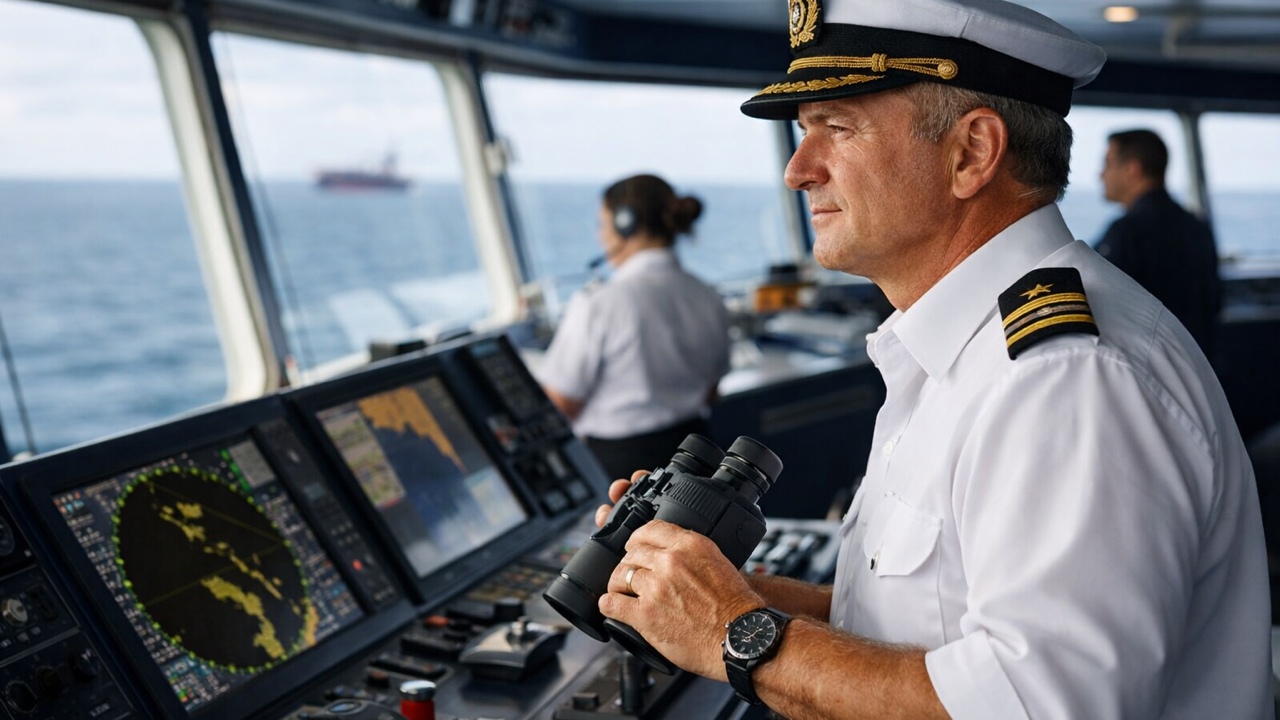
As the Year of the Horse approaches, maritime leaders stress the importance of the human element in addressing new challenges and opportunities.
Optimism of the Year of the Horse in Maritime: Opportunities Increasing, Risks Closely Monitored
As the Year of the Horse approaches, a cautious optimism emerges in certain segments of the maritime sector. However, the industry also faces significant concerns due to the rapid pace of technological transformation, new regulations, and the uncertainties brought by alternative fuels.
Captain John Lloyd, CEO of the Maritime Institute, emphasizes that opportunities and risks are inseparable. According to Lloyd, as new technologies, regulatory frameworks, and alternative fuels reshape the industry, the real test is whether maritime professionals at the forefront of this transformation are adequately supported.
“We are aware that the Year of the Horse symbolizes optimism, and we are confident that the coming year will be filled with changes,” says Lloyd, expressing that the foundation of this confidence lies in refocusing on the human element. He notes that it is now widely accepted that people are at the center of safe, effective, and sustainable shipping, highlighting that in a period of unprecedented change, knowledge, competence, and professionalism are of vital importance.
Human Factor and Decision-Making Pressure
Lloyd describes the global reach of the Maritime Institute as a significant advantage. He emphasizes that the institution is in a unique position to share insights gained from listening to maritime professionals worldwide with the industry. He states that this approach supports better decision-making processes and a more resilient industry structure.
However, Lloyd warns that the challenges should not be underestimated. He points out that the main concern is not the change itself, but the number and complexity of decisions that need to be made at sea and on land. He underscores that these decisions directly affect the safety of people, vessels, and the environment.
One of the most critical questions is whether the crew and shore personnel are prepared for these responsibilities. Lloyd stresses the vital importance of all maritime professionals having access to reliable information, embracing continuous professional development, and working within a strong safety culture.
Three Key Topics That Will Shape 2026
Lloyd points to three fundamental developments that will shape daily operations as we enter 2026. The first is the transition to alternative fuels. He notes that new fuels bring new operational and safety risks, stating that these risks must be properly identified and managed.
The second topic is digitalization, automation, and artificial intelligence. Lloyd emphasizes that these technologies are rapidly transforming the sector, stating that there is “no luxury of trial and error” when adopting new systems.
The third element is an unchanging reality: human resources. Lloyd indicates that as change accelerates, the skill requirements and workforce expectations are increasing, asserting that leadership and decision-making processes will be one of the biggest challenges in the coming year.
The Central Role of the IMO Continues
Despite increasing pressures on the regulatory front, Lloyd believes that the International Maritime Organization (IMO) will maintain its central role. He states that the IMO is indispensable for global trade and shipping, emphasizing that the organization ensures that ships and seafarers can operate safely across borders. He also expresses that the IMO continues to be a fundamental platform for collaboration and open discussions for the development of the sector.
The “Does It Work at Sea?” Test in Technology
Lloyd notes that technology suppliers are flooding the market with new products and bold promises, drawing attention to a simple yet critical criterion: whether it works under real maritime conditions. According to him, the essential question is whether the technology supports safe operations and informed decision-making.
This approach also forms the basis of the new STEER Project of the Maritime Institute, funded by the Lloyd’s Register Foundation. Under this project, direct feedback will be collected from seafarers worldwide to investigate which technologies genuinely support good decision-making and how innovation can be balanced with human capability.
Source: SeaNews Türkiye


