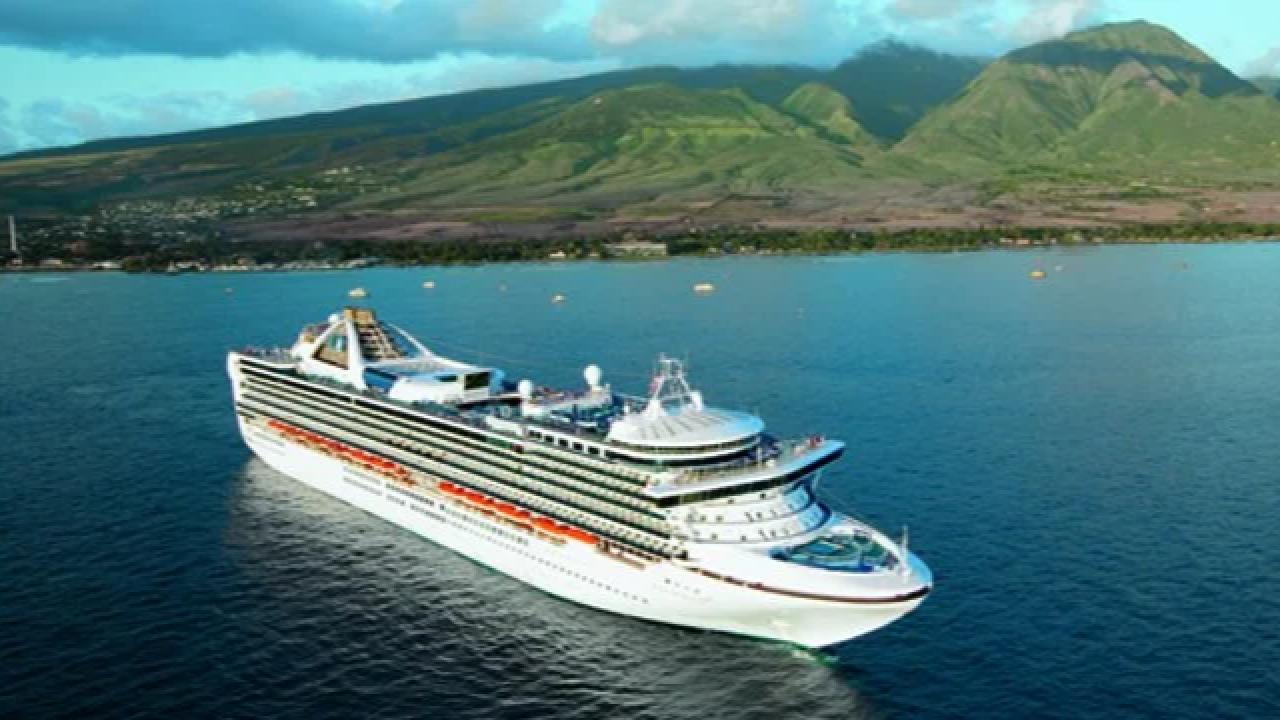
Prince Albert Edward and Princess Alexandra Christina visited Istanbul in 1869, documented by William Howard Russell and illustrated by Oswald Walters Brierly.
Prince Albert Edward of Wales and His Fiancée Princess Alexandra Christina in Istanbul
William Howard Russell, a writer for The Times, chronicled the journey of Prince Albert Edward, who would become King Edward VII, and his fiancée Alexandra Christina during their visit to Istanbul in 1869. The maritime painter Oswald Walters Brierly, known for his depictions of maritime life, also illustrated the experiences in Istanbul. This article details the visit of the prince and princess to Istanbul, drawing from Russell's travel notes and Brierly's illustrations.
Oswald Walters Brierly's painting of the Ariadne near Dolmabahçe.
Prince Albert Edward and his fiancée Princess Alexandra Christina requested a royal expedition due to their boundless curiosity about the Egyptian Pyramids. In 1869, the prince and princess completed their archaeological explorations in Egypt. During this trip, they also visited the nearly completed Suez Canal. Among the royal guests were Sir Samuel Baker, who explored the mysterious civilizations and riches of Africa, naturalist Richard Owen, marine painter Oswald Walters Brierly, and William Howard Russell from The Times, along with Engineer M. de Lesseps.
The book published by William Howard Russell, composed of his detailed travel notes, recounts the specifics of this journey.
Prince Albert Edward and Princess Alexandra Christina first visited the area near Aswan in Egypt, referred to as the "First Cataract," in 1865. During their 1869 trip, their archaeological interests were primarily focused on the excavations in Nubia, known today as Lake Nasser, which is referred to as the "Second Cataract." The final notes of this journey pertain to the days they spent in Istanbul, which are quite intriguing.
March 20, 1869, a Monday coinciding with Easter, was a breezy and beautiful day, and the royal yacht Ariadne departed from Rhodes around 8:00 PM. Traveling at a speed of 10 nautical miles per hour, it began to leap over regular waves, accompanied by the escort vessel Psyche. While they were pleased to catch a good wind, it intensified, causing the sails to strike the mast. Although they reduced all sails, the waves continued to crash over the bow. The princess, feeling unwell, withdrew to her cabin.
Ariadne passed through the Dardanelles on March 31 and arrived in Istanbul on the morning of April 1.
Approaching the Dardanelles
William Howard Russell describes the events as Ariadne approached the Dardanelles:
“On March 30, we are sailing between the Aegean Islands. With the light of day, Patnos appeared as a black spot wrapped in white foam on the blue sea. It was followed by Levitha. Not wanting to enter the Dardanelles before dawn, we reduced our speed. Psyche passed us. However, we gradually caught up. In the afternoon, while both ships sailed together in a foggy atmosphere that severely restricted visibility, we were on the port side of the Trojan Plain.
On March 31, here is the Dardanelles! At 10 AM, on our port side was Kilitbahir, and on our starboard side was the Dardanelles Fortress. As we dropped anchor, we were greeted by salutes from both fortifications.
After Ariadne anchored, His Majesty's Hon. H. Elliot, Mr. Lionel Moore, Mr. Kennedy, and Assistant Consul Mr. Wrench came on deck. Rauf Pasha also arrived on the royal yacht Pertev Piyale to welcome the royal guests on behalf of the sultan and pay his respects.
The prince and his entourage boarded the boat that would take them to Çanakkale, greeted by cannon salutes from the fortresses and ships. The prince was welcomed by the governor of Çanakkale, Eyüp Pasha, and after exchanging greetings, he entered the fortress. A massive cannon was prepared for firing. The prince and his entourage took their places on the ramparts to watch the cannon fire.”
Following Ariadne, which was accompanied by Psyche, Caradoc, and Pertev Piyale, the royal yacht made a stop in Gallipoli in the afternoon.
As Ariadne began to approach the old dock, the crowd on the shore started to run towards it. When the boats that would take the prince and his entourage ashore were lowered, a large crowd awaited them at the dock. They were greeted by an officer sent by the pasha and the British Consul.
Together, they immediately passed through narrow streets to visit the graves of many British soldiers who had died during the Crimean War.
The Prince and Princess in Istanbul
On the morning of April 1, Thursday, Ariadne was now in front of Istanbul. The prince and princess began to admire the enchanting tableau of Istanbul's soaring mosques and minarets with their guests. As they approached Sarayburnu, boats filled with English residents adorned with flags approached, and the voices of “God Save the Queen” rose to the skies.
Upon seeing the prince and princess, the applause and cheers from the steamers and boats grew louder. On deck, the marines, led by Captain Poere, were fully equipped and ready.
William Howard Russell narrates: “The boats were lowered, and the prince, along with his entourage, disembarked from the ship in the magnificent royal barge provided by the sultan. As His Majesty transferred to the boat, the applause from the people on the docks echoed, and Turkish warships adorned with flags saluted him, while the waves danced with boats and steamers.
Accompanied by Ariadne and Psyche, the royal standard was carried by Pertev Piyale, which reached the Tophane docks. The sultan's royal barge, the most magnificent of all floating vessels, followed by three other royal barges, was manned by rowers in silk shirts with fourteen pairs of oars, while the Minister of Protocol, Grand Vizier Ali Pasha, and Kâmil Bey accompanied them.”
At the dock, Sultan Abdulaziz welcomed them, and after conversations about the friendship between the two countries, he escorted them to their very comfortable rooms in the Nusretiye Pavilion, which, although not very grand, were still quite pleasant.
After settling in, the prince and the protocol were taken by the sultan's royal carriages to Dolmabahçe Palace, located further up the Bosphorus. At Dolmabahçe Palace, they were greeted by the guard regiment and the band. As soon as they stepped out of the carriage, the prince was welcomed by the sultan and taken into a very grand hall, amidst palace officials lined up on both sides of the entrance. The prince introduced Captain Campbell and Sir F. Blackwood along with his entourage to the sultan.
After a brief conversation, the sultan escorted the prince to the threshold of the door, and he returned to Salıpazarı with his companions. After lunch, Their Majesties, the princess, and Mrs. Grey went to the British Embassy with protocol. They were welcomed by the ambassador and his wife, Elliot, and the embassy staff. The visit of the prince and princess lasted until six o'clock. As they returned in the royal carriages provided by the sultan, they were respectfully greeted by a large crowd lined along the roadside.
William Howard Russell describes the situation: “There was a noticeable change in the people and structure of Istanbul. Since no wooden structures were allowed after the great fire of 1864, there were many vacant spaces among the other buildings. Gas lamps were present on the main roads on both sides of the Golden Horn, and many fountains could be seen. However, the changes observed in the people were not particularly pleasing to the eyes. Old, elegant garments were rarely seen among men. Women had also abandoned yellow slippers or sandals and were wearing the latest French-style patent leather boots.
The dinner served at Salıpazarı, presented on gold and silver plates, was commendable. In the room adjacent to the dining hall, the sultan's band, led by Paşa Guatelli, surprised everyone by playing opera music perfectly. The orchestra stood up and sang the tune of “God Save the Queen,” and although everyone was quite tired, there was a general desire to follow them as they departed.
On April 2, Friday, breakfast at Salıpazarı was very pleasant and beautifully presented. The servants spoke French or Italian. Mr. Moore and the sultan's entourage were among the guests. The meal given by the sultan in honor of the prince and princess was extremely splendid in taste and richness, as well as incomparable in beauty.
The honor guard, horse-drawn carriages, riding horses, boatmen, and a large group of servants were continuously on duty. Every evening, an orchestra of 84 remarkable musicians trained by Italian instructors enchanted everyone during dinner. The conductor was Señor Guatelli Paşa, and among the orchestra, there were at least twenty musician officers ranging from colonel to lieutenant.
The table was covered with exquisite dishes. The sultan sent trays filled with the rarest flowers and fruits every morning. Valets in green and gold uniforms with white collars and cuffs waited in the passages. Black-uniformed attendants were also ready to bring nargiles with amber mouthpieces, which had carved places to set small coffee cups adorned with jewels, whenever you snapped your fingers.
Their kitchen could not be better, and their wines were exquisite. Everyone related to the palace could speak English or French. Turkish baths were available in the palace and were prepared immediately upon request. Officers of the guard regiment, attendants, cavalrymen, and aides-de-camp were dazzling in their golden and red uniforms as they paraded in the halls and corridors. One finds it hard to remain humble under such attention.
When the royal barge assigned to the prince and princess appeared, all the ramparts filled with guards, and music began to emanate with every breeze from the walls. On the docks, the crew stood ready, and they rushed at the slightest movement; any small request was treated as a command. It seemed that the sultan remembered how he was received during his visit to London and was showing it. All the sultan's officials were trying to convey to the prince's entourage that they had not forgotten how their sultan was treated and how friendly they were during England's hard times.”
Russell also describes the Turkish women they encountered during their travels:
“Sherbet, orange juice, and violet-scented sweets were offered to Their Majesties and Mrs. Grey. In the grassy area separated by low walls on the other side of the road, Turkish women, dressed in a riot of colors that only Eastern women could manage, resembled a moving flower garden.
Since the Allied forces visited Turkey's capital, noticeable innovations were evident. The veils or yashmaks worn by women were now often made of the finest muslin—woven as delicately as the wind in Dhaka—and when the lines were smooth and the colors dazzling, they generally enhanced the attractiveness of the women rather than obscuring their appearance. The milk-white faces with black eyes under straight brows looked at you with an unmistakably bright expression.
Will the fashion designers ever bring this delicate charm to Europe? It is undeniable that in situations where even Parisian designers could not find a solution, Eastern women's fashions would be very effective in inspiring their clothing. Despite all the beauty of the yashmak, there were religious factors and traditions that restricted a woman's entire social life from civilization.”
The Sultan Invites to the Naum Theatre
During their stay in Istanbul, the prince and princess were invited by the sultan to the Naum Theatre on two separate evenings to watch an opera performed by an Italian troupe. The sultan also attended the theatre with his entourage.
On April 3, 1869, in the morning, the prince and his entourage set out towards the dock at Sarayburnu in three royal barges, where they toured the Topkapi Palace and the historical sites in Sultanahmet.
The state ball at the British Embassy was extremely grand. When the prince and princess arrived at the ball, for which six hundred invitations had been sent, they were welcomed by the ambassador and his wife. The crew of Ariadne was also waiting in the courtyard inside the garden gate.
William Howard Russell notes: “In the courtyard decorated with flags, there was a royal marine honor guard. For the first time since the Crimean War, the footsteps of British infantry echoed in Pera. The corridors, stairs, and halls were adorned with flowers and exotic plants. The sultan arrived late. Behind him was a large group of ministers and officers. In the courtyard of the British Embassy, the prince and princess were welcomed by the protocol and the ambassador. The Princess of Wales and Mrs. Elliot greeted her in the first open space.”
After taking their places on the platform with the prince and princess, all the guests rushed to see the sultan attending a ball for the first time. The prince and princess were the first to rise for the first dance, followed by Mr. and Mrs. Elliot, General and Mrs. Ignatieff, and M. Bourre. Sultan Abdulaziz left the event shortly after midnight. The royal group continued to enjoy themselves until the early hours of the day.
On April 4, 1869, Sunday, the royal group attended a religious ceremony at the church in the British Embassy. They went there in a convoy of three open carriages drawn by four horses, surrounded by guards, in protocol order.
The Church at the Embassy
They were followed by a guard unit and servants. The streets and windows were filled with people watching them. The prince and princess were greeted by the ambassador and Mrs. Elliot on the veranda and were taken to the crowded church. After the prayer read by Reverend Mr. Gribble, lunch was served at the embassy, and they returned to the palace afterward.
At 3:30 PM, the prince, princess, and protocol crossed the Bosphorus in the sultan's barge, accompanied by three other boats, to visit the cemetery where British soldiers who died in the Siege of Sevastopol were buried in Üsküdar. In the afternoon, clouds coming from the Black Sea indicated that it would rain; shortly after the visitors entered the cemetery, rain began. They were greeted by a crowd, mostly Europeans; many groups of ladies and gentlemen were waiting for them inside the walls.
The cemetery attendant, Sergeant Lyne, appeared clever and hardworking, with only two assistants. Some graves were in dire need of cleaning, and it seemed that the attendants were not working well enough. If the salaries given to the attendants were accurately reported, they were not small at all.
The Üsküdar Cemetery
The British Cemetery at Haydarpaşa was established for the English soldiers who died during the Crimean War. William Howard Russell insists that local authorities neglected their inspection duties and that money was wasted, recounting what he saw:
“Despite the increasingly heavy rain, the prince and princess carefully toured the cemetery, reading the short life and service information inscribed on the stones at the heads of these individuals lying under marble sarcophagi near Üsküdar's barrack hospital, filled with bones and corpses. The most striking object in the cemetery was a rectangular column inscribed with ‘Here lie those who fell in battle against Russia for their homeland in 1854, 1855, and 1856,’ with inscriptions on all sides. However, these inscriptions were so poorly carved that, except for the French inscriptions on the west-facing side, the others were hardly legible. Those who appreciate Marochetti's works will admire the expressions of the angels serving as the four feet carrying the obelisk on the column. The obelisk is a copy of the Luxor column. The entire appearance was not very beautiful or valuable. The cost of this statue, including transport, was a staggering amount of £17,500, which astonished us.”
Sultan Abdulaziz organized another grand ceremony in honor of his guests, and as they proceeded to Beylerbeyi Mosque in the royal barge, ships on both sides of the Bosphorus saluted them with cannon fire, their masts adorned with flags. The royal party disembarked at Beylerbeyi, passing through boats filled with English and other European foreigners and curious onlookers that filled the sea. After resting for a while, they were taken back to Dolmabahçe Palace in royal carriages. A magnificent welcome awaited them, and they returned once again to the Nusretiye Pavilion at Salıpazarı.
William Howard Russell's observations also include the following points: “In Istanbul, which suffered a great fire in 1864, the construction of wooden houses is now prohibited, and vast areas remain from the ruined houses. Gas lamps can be seen in the streets, and there are fountains along the way.”
The journey of Prince Albert Edward of Wales and his wife Princess Alexandra Christina, which encompassed Egypt, Istanbul, and Sevastopol, was documented by the renowned painter of the era, Oswald Walters Brierly, through colored pencil and watercolor paintings. Some of these belong to Istanbul, and Oswald Walters Brierly's name and works are featured in the Turkish press on this occasion.
Upon returning from the trip to Egypt, Prince Albert Edward, heir to the British throne, and his future wife Princess Alexandra Christina participated in the ceremony at the Crimean War Cemetery established in Haydarpaşa, and on April 8, 1869, they visited Orientalist painter Amadeo Preziosi in his studio on Hamalbaşı Street, where they purchased several of his works.
William Howard Russell, one of the writers from The Times invited on the prince's journey, documented this trip shortly after returning to England in a work titled “Diary in the East During the Tour of the Prince and Princess of Wales,” published by George Routledge and Sons. Various paintings related to this trip are in the collection of the British royal family.
Sir Oswald Walters Brierly was born in 1817, the son of a physicist and amateur painter in Chester. He studied at Sass Academy and then went to Plymouth for shipbuilding and maritime studies. In 1841, he embarked on a world voyage aboard a ship named Wanderer. Upon reaching Australia, he decided to settle in New South Wales. While working in mining, he also painted many works, primarily in watercolor, pencil, and colored pencil.
In 1851, he returned to England and joined the St. Jean Acre as an observing painter in the Baltic Fleet. In 1855, he went to Istanbul with the warship Rodney to depict the events of the Crimean War, and from there, he went to Crimea.
In 1864, Brierly traveled to Norway aboard the warship HMS Racoon under the command of Count Glichen and then joined HMS Galatea under the command of Prince Alfred.
In 1867, he was invited by the Duke of Edinburgh for a world voyage, but an assassination attempt against the duke caused the cancellation of this program. After a while, he was invited by Prince Alfred Edward of Wales and his wife Princess Alexandra Christina to participate as an observing artist in a long journey in 1869, which included stops in Egypt, Istanbul, and the Black Sea.
In the last years of his life, while he faced difficult living conditions, he was granted a title of nobility and honored as Sir Oswald Walters Brier
Source: SeaNews Türkiye