TurkishMaritimeNews
Home FAQ RSS Links Site Map Contact Sunday, 26.May.2013, 10:17 (GMT+3)
All News
COLUMNISTS
   » CAHIT ISTIKBAL
   » NILUFER ORAL
   » STEVE PELECANOS
   » SULEYMAN SAVAS
WORLD SHIPPING
SHIPPING NEWS
   » TURKISH STRAITS
   » ENERGY
      » Pipelines
   » CONTAINER
   » PORTS
      » HELLENIC SHIPPING NEWS
   » CRUISE NEWS
   » PILOTAGE&TOWAGE
   » SAFETY&SECURITY
   » Environmental
   » Towage & Salvage
   » NAVY NEWS
   » Fishing
   » TANKERS
   » DRY BULK
SHIPBUILDING
ACCIDENTS
MARKETS
LOGISTICS
DEMOLITION
IMO&EU NEWS
PIRACY
TURKISH PRESS REVIEW
SEA SPORTS
NEWS FROM TURKEY
   » Anatolian Agency
   » Hurriyet Daily News
   » HDAILYNEWS
LLOYD'S LIST
INSIGHT/OPINION
SHIPBROKER REPORTS
Poll
What you expect from freight market in 2013?
Better than 2012.
Worse than 2012.
Continue recovering.
Steady up.
Rapid rise.
None


SHIPPING NEWS » DRY BULK


Dry Bulk experience lowest freight rates since 2002

Dry Bulk experience lowest freight rates since 2002

At a time when analysts anticipate record profits for the biggest mining companies and a third year of gains in commodity prices, shipping lines carrying raw materials are set for the lowest freight rates since 2002.
Monday, 10.Jan.2011, 13:42 (GMT+3)

At a time when analysts anticipate record profits for the biggest mining companies and a third year of gains in commodity prices, shipping lines carrying raw materials are set for the lowest freight rates since 2002.

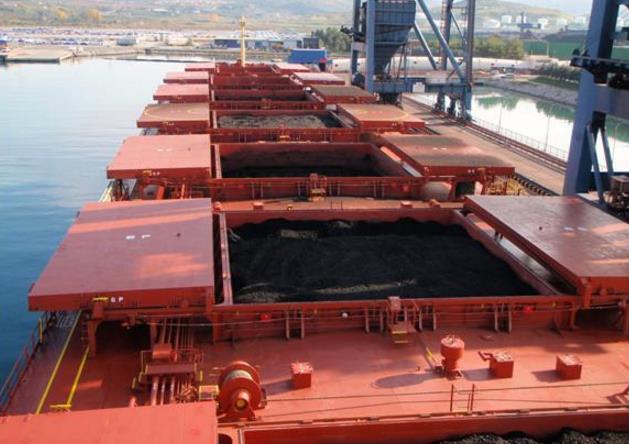
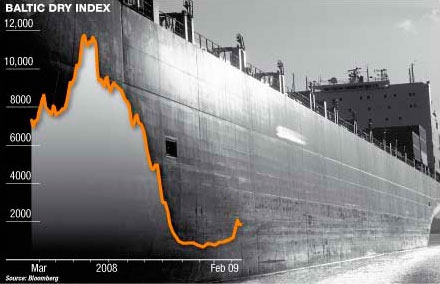
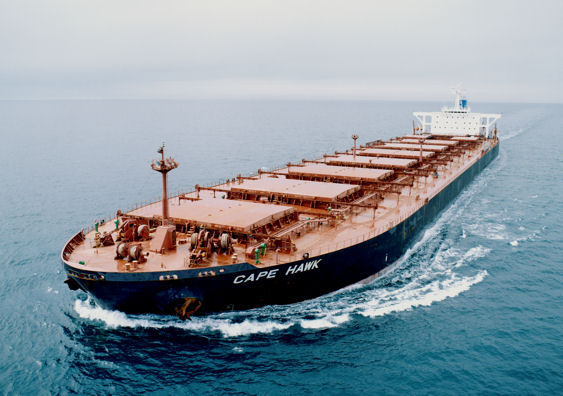
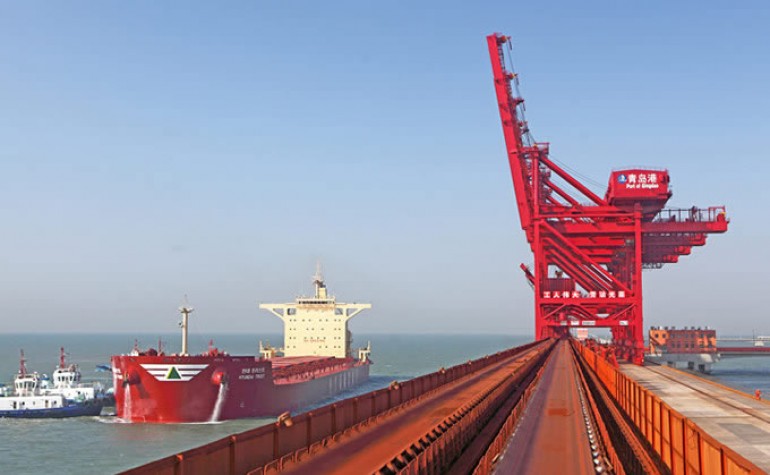
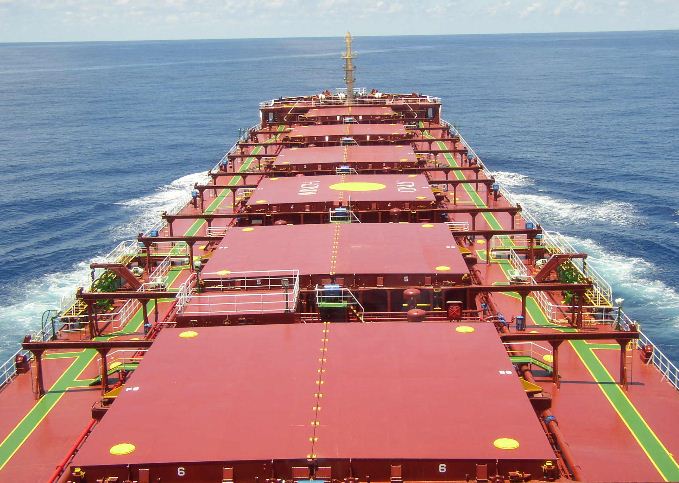
Leasing costs for capesizes, 1,000-foot-long ships hauling iron ore and coal, will drop 34 percent to average $22,000 a day this year, according to the median in a Bloomberg survey of eight fund managers and analysts. The last time that happened, China’s economy, the biggest consumer of the minerals used in steel and power, was 75 percent smaller and the benchmark Standard & Poor’s GSCI commodity index 67 percent lower.

While Clarkson Plc, the world’s biggest shipbroker, expects seaborne trade in the two cargoes to exceed 2 billion metric tons for the first time this year, the 7 percent increase won’t be enough to eliminate a glut. About 200 capesizes, spanning some 35 miles end-to-end, will leave shipyards this year, expanding the fleet by 18 percent, the Bloomberg survey showed.

“The market was able to take a punch in the face in the form of 200 capesizes and loads of smaller vessels last year but I doubt it will manage another punch without having to hit the deck,” said Erik Nikolai Stavseth, an analyst at Arctic Securities ASA in Oslo who correctly forecast in July that rental costs would more than triple by the fourth quarter.

Rates averaged $34,913 a day in the final three months of 2010, 33 percent more than in the previous quarter. Tariffs are already plunging, dropping 36 percent last week to $12,897, as ships leave yards in China, Japan, the Philippines and South Korea, according to data from the London-based Baltic Exchange, which publishes assessments for more than 50 shipping routes.
Dry Ships

Read: 6672 Times- Dry Bulk, Freight, -


Rating (Votes: 5 . Average: 1/5)
Add your comment(Existing: 0)  Tell friend  Print

COMMENTS ( 0 Existing)

Related Articles:


Events
May 2013
Su Mo Tu We Th Fr Sa
      1 2 3 4
5 6 7 8 9 10 11
12 13 14 15 16 17 18
19 20 21 22 23 24 25
26 27 28 29 30 31  
 

News in Pictures


Big Yellow bird taking off as big blue EBBA MAERSK is coming into Port of Rotterdam


Hot News
USA: Conditions in Dry Bulk Market Remain Challenging, Eagle Bulk Shipping
Iron Ore Ship Rates Rally Longest Since July as Cargoes Increase
Ore-Carrier Rates Climb to 10-Week High as Chinese Demand Gains
Dry bulk capacity growth slows further, encouraging sign for later half of 2013
Ore-Ship Rates Climb to a One-Month High as Charters Increase
Japan's 'K' Line makes yards in India, offers bulk coastal shipping
Drewry: Coal Continues Capesize Problems
Hellenic Carriers Enters Charter Contract for MV Konstantinos D (Greece)
Fredriksen eyes 35 Capesize Bulkers
Maxi Brazil passed Suez Canal

 
Archive Search